
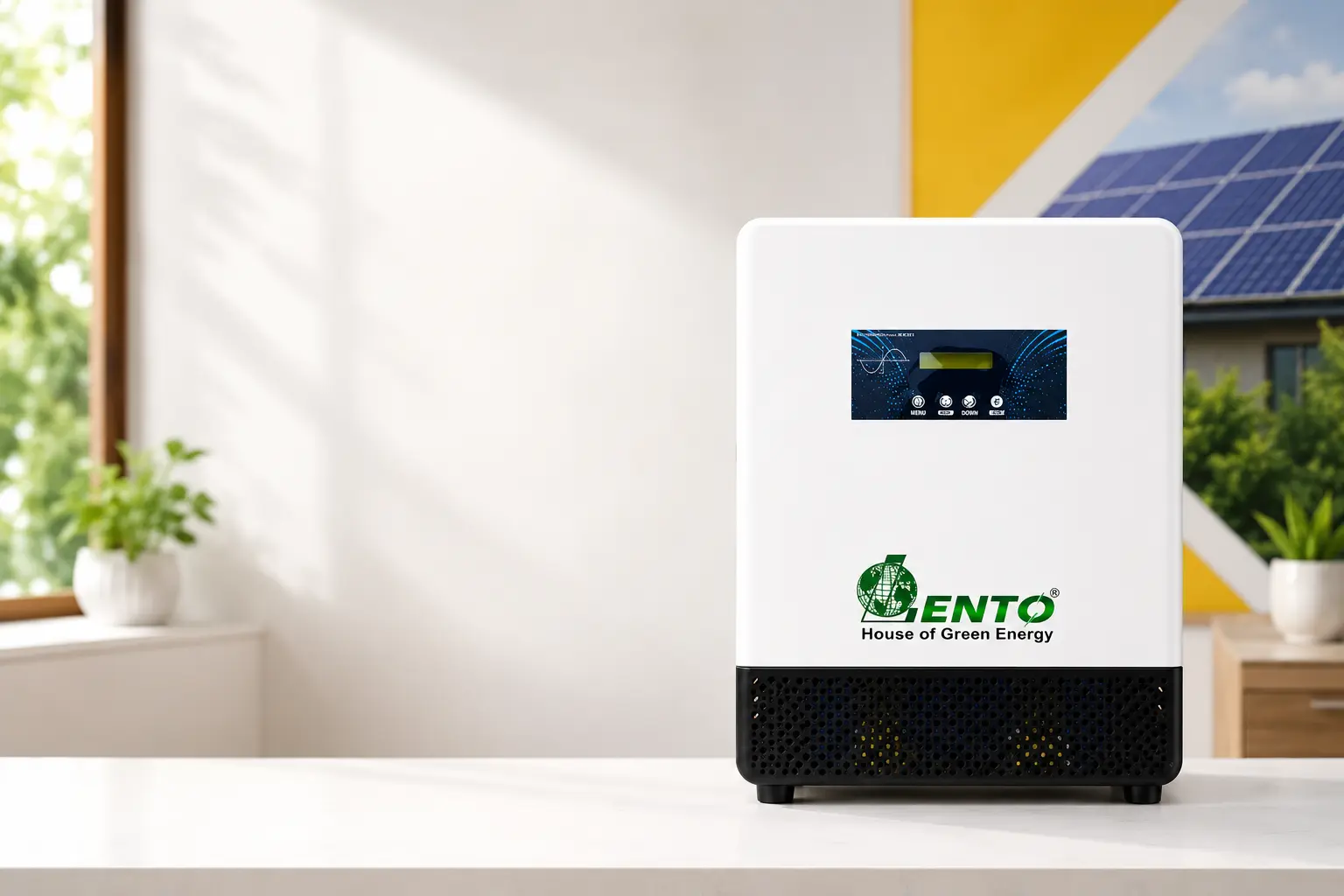
How Many Hours Can a Lithium Battery Inverter Run?
25 August 2026
One of the most common questions homeowners ask before buying a Lithium Battery Inverter is simple: how long will it actually keep the lights, fans, and appliances running during a power cut? The answer depends on battery capacity, load size, and inverter efficiency. Lento Industries Private Limited breaks down real backup runtimes so buyers can choose the best inverter for solar panels or standalone backup with confidence, rather than relying on vague marketing claims.
What Determines Inverter Runtime?
Runtime is governed by three factors: battery capacity (measured in VA or kVA), the connected load (measured in watts), and the inverter's conversion efficiency. A higher-capacity inbuilt Lithium Battery Inverter will naturally sustain a given load longer than a smaller unit, while running fewer or lower-wattage appliances extends backup time on any single system. This is why the same inverter model can deliver very different runtimes depending on whether it is powering a light household load or a full office setup.
Real-World Backup Runtimes for Lento Inverters
Lento designs its lithium-ion systems with integrated batteries for consistent, dependable backup. Below is what you can expect under standard household and office loads:
|
Lento Inverter Model |
Expected Runtime at 400W Load (e.g., 3 Fans, 4 Lights, 1 TV) |
Expected Runtime at Full Load |
|
Lento 1.1KVA (12.8V) |
~3 Hours 15 Minutes |
~1 Hour 15 Minutes |
|
Lento 2.1KVA (25.6V) |
~6 Hours 15 Minutes |
~1 Hour 40 Minutes |
|
Lento 2.5KVA (25.6V) |
~7 Hours 30 Minutes |
~2 Hours 10 Minutes |
Runtimes are approximate and vary based on battery health, ambient temperature, and connected appliance efficiency.
Amazon Availability (Single Unit Purchase)
Lento Inverters and Online UPS are available on Amazon, allowing you to:
- Buy single units
- Compare features and pricing
- Check customer reviews
- Get home delivery
This makes Lento products a convenient and reliable choice for homes, offices, and businesses across India.
Why Lithium Outperforms Lead Acid on Runtime Consistency
Unlike lead acid batteries, which lose usable capacity as they discharge, a lithium-ion solar inverter maintains a stable voltage output through most of its discharge cycle. This means appliances run at consistent performance right up until the battery nears depletion, rather than gradually weakening. For buyers comparing the best inverter in india for reliable backup, this consistency is a key advantage of lithium technology over older chemistries.
Pairing Runtime with Solar Charging
For homes using a solar inverter for home setup, daytime solar generation can recharge the battery while simultaneously powering the household load, effectively extending usable backup hours well beyond the standalone runtime figures shown above. A best on grid solar inverter in india configuration allows excess solar power to top up the battery throughout the day, ensuring maximum charge is available before evening peak-usage hours.
How Much Solar Panel Capacity Supports Longer Runtime?
Runtime also depends on how much solar capacity feeds the battery. Estimating how much solar panel required for home use typically means pairing a 2.1kVA inverter with a 2–3kW panel array, while a 2.5kVA system performs best with 3–4kW of solar input for faster daytime recharge and extended nightly backup.
Choosing the Right Inverter Capacity
Buyers researching the top 5 solar inverters in india or a broader top 10 solar inverters list should match inverter capacity to actual household load rather than buying the largest available unit. Oversizing increases upfront cost without proportional runtime benefit, while undersizing leads to frequent overload trips. A consultation with a trusted best inverter company in india ensures the right balance between capacity, cost, and backup duration.
Frequently Asked Questions
- How long does a lithium inverter battery last?
A good lithium battery can typically last 8–15 years, depending on usage, charging cycles, temperature, and maintenance. - What is the 80/20 rule for lithium batteries?
The 80/20 rule generally means keeping the battery between 20% and 80% charge for regular use to help maximize its lifespan. - Which inverter is best for a 100Ah lithium battery?
A lithium-compatible inverter with the correct voltage and charging profile is best. For a 12V 100Ah battery, choose an inverter designed for a 12V lithium battery system. - Can an inverter run for 24 hours?
Yes, an inverter can run for 24 hours if the battery capacity, solar generation, and connected load are sufficient for continuous operation. - What is the biggest problem with lithium batteries?
The main drawback is their higher upfront cost, while proper BMS protection and temperature management are important for safe, reliable operation. - Do lithium batteries stop charging when full?
Yes. A lithium battery's BMS and compatible charger/inverter regulate charging and stop or reduce the charging current when the battery reaches full charge.
Conclusion
Inverter runtime is never a single fixed number — it depends on battery capacity, connected load, and whether the system is supported by solar charging. Lento's lithium-ion inverter range, from the 1.1KVA to the 2.5KVA models, delivers dependable, consistent backup for households and offices of varying sizes. By matching the right inverter capacity to actual power needs and pairing it with adequate solar panel input, buyers can maximize both runtime and long-term savings. Lento Industries Private Limited continues to help households across India choose the best inverter and solar combination for reliable, uninterrupted power.
Contact Lento Industries Private Limited
Solar Inverter Manufacturer & Solutions Provider
International: +91 9810173869
Toll-Free: 1800 313 0746
Sales & General Enquiries: info@lentoindia.com
Read More:-
Why Is My Inverter Showing a Red Light? Common Causes and Solutions
How Much Electricity Does a Solar Panel Generate?
Solar Panel Maintenance Guide
How to reset an Inverter a step by step guide?
Lithium Battery Inverter vs Lead Acid Inverter: Which Is Better?