
Solar Panel Maintenance Guide: How to Choose the Best Solar Inverter for Home in India
25 August 2026
A solar power system is only as good as its weakest link — and for most rooftop setups in India, that link is the solar inverter. Panels can last 25+ years with minimal upkeep, but the wrong or poorly maintained inverter is the single biggest cause of lost generation, high electricity bills, and early system failure. This guide covers practical solar panel maintenance, how to pick the best inverter for solar panels, and what to know before buying a solar inverter for home use in India.
Why the Solar Inverter Is the Heart of Your System
Solar panels generate DC (direct current) electricity, but Indian homes run on AC (alternating current). The solar inverter converts DC to usable AC, syncs your system with the grid, tracks maximum power output (MPPT), and protects your appliances from voltage fluctuations. A poorly chosen or poorly maintained inverter can waste 15–20% of your annual generation — even if your panels are performing perfectly. That's why finding the best solar inverter matters as much as the panels themselves.
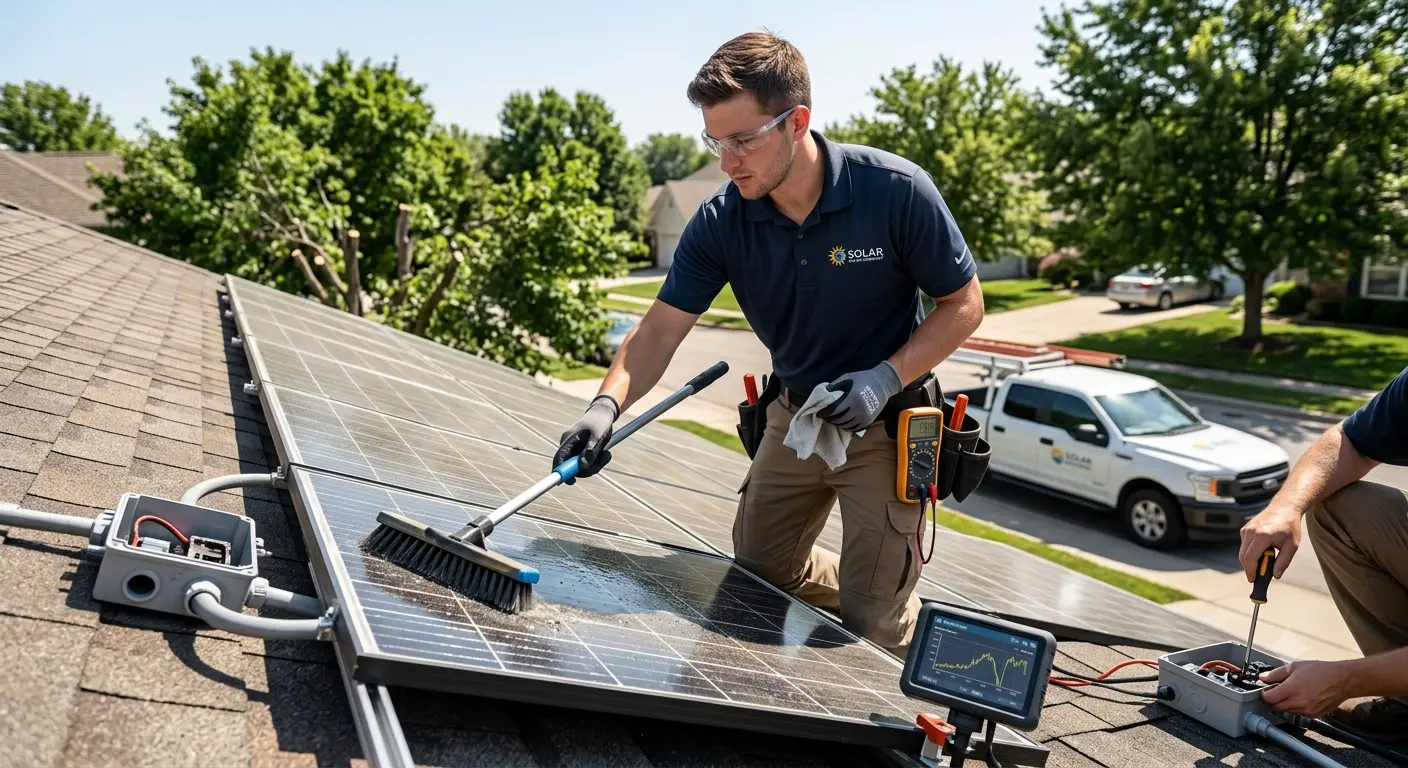
Solar Panel Maintenance: Core Checklist
Regular maintenance protects your investment and keeps generation close to rated capacity.
- Clean panels every 2–4 weeks (more often in dusty regions) using water and a soft brush — dust and bird droppings can cut output by 15–25%.
- Inspect wiring and connectors for corrosion, loose joints, or rodent damage twice a year.
- Check the inverter display/app weekly for error codes, efficiency drops, or fault alerts.
- Keep the inverter ventilated and dust-free, since overheating shortens its lifespan.
- Trim nearby trees to prevent shading, which disproportionately reduces output.
- Schedule an annual professional inspection covering earthing, DC/AC cabling, and mounting structure integrity.
- Monitor generation data monthly and compare it against expected output for your location and panel capacity.
How to Choose the Best Inverter for Solar Panels
When comparing options for a solar inverter for home, evaluate these factors:
- Type – On-grid (grid-tied), off-grid, or hybrid (grid + battery backup).
- Efficiency rating – Look for peak efficiency above 97%; higher efficiency means less energy lost in conversion.
- Capacity match – The inverter's kW rating should closely match your panel array size.
- Warranty and after-sales network – A strong India-based service network matters more than brand prestige, since inverters typically need support within their 5–10 year window.
- BIS/ALMM compliance – Ensures the product meets Indian safety and quality standards.
- Smart monitoring – App-based monitoring helps you catch performance drops early, which ties directly into maintenance.
Best On-Grid Solar Inverter in India: What Buyers Look For
For homes connected to the electricity grid, an on-grid solar inverter is the most common and cost-effective choice, since it doesn't require batteries. When researching the best on-grid solar inverter in India, buyers typically prioritize high MPPT efficiency, low startup voltage (so generation begins early in the morning), and oversized DC input support to maximize output on cloudy days.
Top Solar Inverter Companies in India
Industry coverage in 2026 consistently points to a mix of established Indian names and global manufacturers as leading solar inverter companies in India, including Growatt, Sungrow, Solis, and Deye among imported brands, and Luminous, Microtek, and UTL Solar among domestic manufacturers. Other frequently cited names in top 10 solar inverters in India roundups include Waaree, Havells, Delta, GoodWe, Tata Power Solar, Servotech, and SolarEdge, each with strengths across residential, commercial, and utility-scale segments. Since rankings vary by publisher and update frequently, it's worth comparing current warranty terms, local service coverage, and third-party reviews before finalizing any best inverter company in India shortlist rather than relying on a single list.
How Much Solar Panel Is Required for Home?
A common question alongside inverter selection is: how much solar panel is required for a home? As a general rule of thumb for Indian households:
- 1 kW system → suits homes with a monthly bill of roughly ₹800–1,000 (small households, 2–3 BHK with basic loads).
- 3 kW system → suits average urban homes with fans, ACs, and standard appliances (bill range ₹2,500–4,000/month).
- 5 kW system → suits larger homes with 2+ ACs and higher consumption.
- 10 kW system → suits villas or homes running heavy appliances and EV charging.
A rough estimate: 1 kW of solar panels requires about 100 sq. ft. of shadow-free roof space and produces approximately 4–5 units of electricity per day in most parts of India.
Common Maintenance Mistakes to Avoid
- Ignoring minor efficiency drops instead of investigating the cause.
- Skipping annual professional servicing to save cost.
- Using harsh chemicals or high-pressure water on panels.
- Overlooking inverter firmware/software updates that improve performance and safety.
- Choosing the cheapest inverter without checking warranty or local service availability.
Conclusion
A well-maintained solar system paired with the best solar inverter for your home's load profile is the difference between a 25-year asset and a costly disappointment. Regular cleaning, wiring checks, and inverter monitoring go a long way, but the foundation is choosing the right inverter type, capacity, and manufacturer with strong after-sales support in India. Whether you're comparing the best on-grid solar inverter in India, evaluating the top 5 inverter companies in India, or simply working out how much solar panel is required for your home, prioritize efficiency, compliance, and service reliability over price alone — your system's long-term performance depends on it.
Frequently Asked Questions (FAQs)
- What maintenance is required on solar panels?
Regularly clean the panels, check for dust or debris, inspect cables and connections, and monitor system performance for any issues. - What is the 33% rule for solar panels?
The 33% rule generally refers to keeping a portion of a solar panel system’s capacity available for future expansion or managing system limitations, depending on the context. - What is the proper procedure for maintaining solar panels?
Clean the panels safely, inspect for physical damage, check wiring and mounting, monitor energy output, and schedule professional inspections when needed. - What is the 20% rule for solar panels?
The 20% rule commonly refers to allowing around 20% extra capacity to account for system losses and variations in solar generation. - How many hours will a solar battery last?
Battery backup depends on its capacity and connected load. For example, a 5 kWh battery powering a 1 kW load can provide roughly 5 hours before accounting for system losses.
Read More:-
Why Is My Inverter Showing a Red Light? Common Causes and Solutions
How Much Electricity Does a Solar Panel Generate?
How Much kW Required for Home in India
How to reset an Inverter a step by step guide?