
How Much Electricity Does a Solar Panel Generate?
25 August 2026
Understanding how much electricity a solar panel generates is the first step toward building an efficient home solar system. Output depends on panel wattage, sunlight hours, and — critically — the quality of the solar inverter converting that energy into usable power. Lento Industries Private Limited breaks down real-world generation figures and explains why pairing panels with the best solar inverter makes the biggest difference to actual household savings.
Typical Solar Panel Output Explained
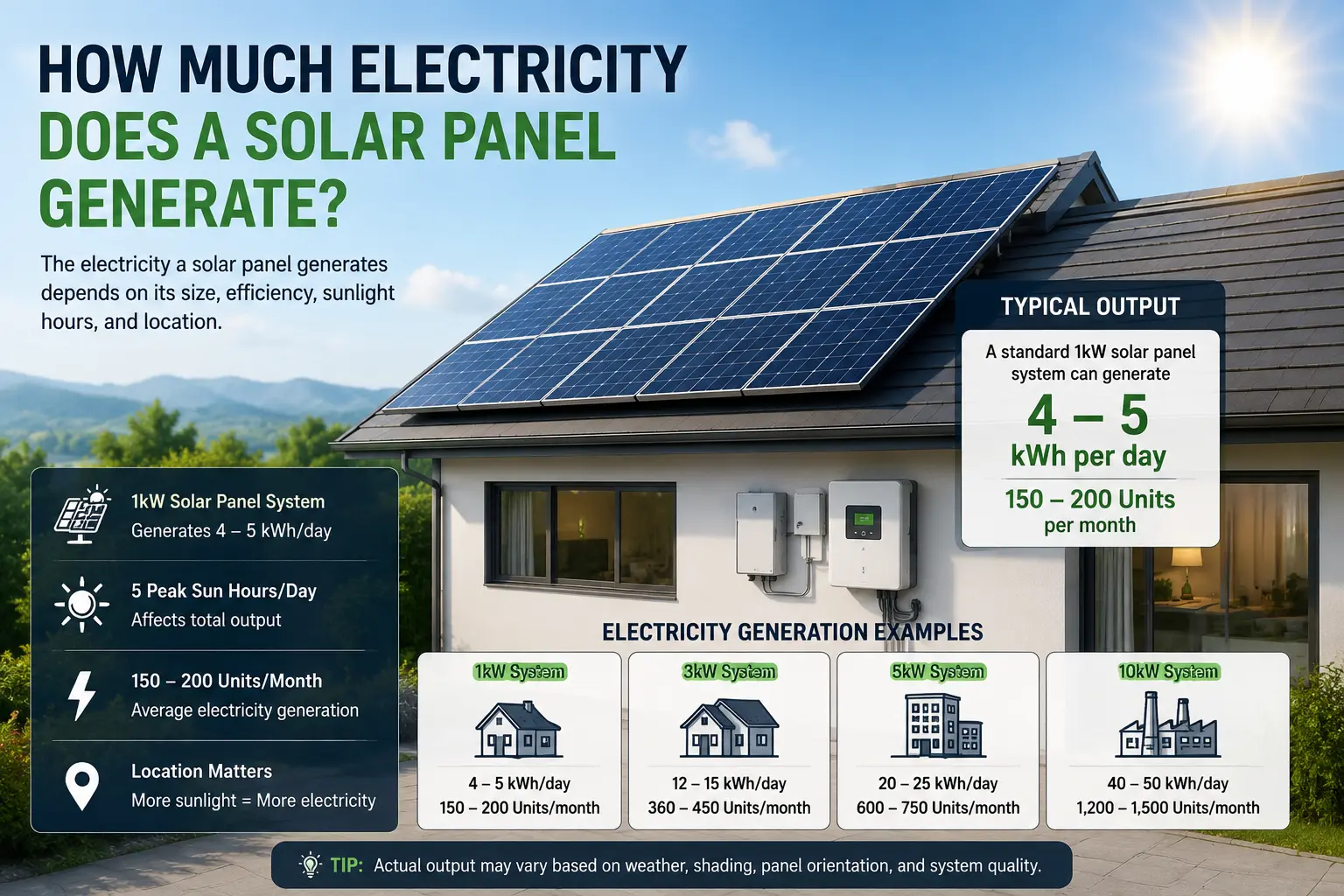
A standard 1kW solar panel system in a location with 5 peak sunlight hours generates approximately 4–5 units (kWh) of electricity per day, translating to roughly 120–150 units per month. Larger residential setups of 3kW to 5kW can produce 12–25 units daily depending on panel orientation, shading, and regional irradiance. However, raw panel output only tells half the story — the efficiency of the solar inverter for home use determines how much of that generated DC power is actually converted into usable AC electricity for appliances.
Why the Right Solar Inverter Matters
Even high-output panels underperform without the best inverter for solar panels installed alongside them. A quality inverter typically converts 95–98% of generated DC power into usable AC power, while a low-grade unit can lose significantly more to inefficiency and heat dissipation. This is why homeowners researching best inverter in india options should prioritize conversion efficiency, MPPT (Maximum Power Point Tracking) technology, and warranty coverage over price alone.
On-Grid vs Off-Grid Solar Inverters
For households connected to the utility grid, a best on grid solar inverter in india synchronizes generated power with grid supply, allowing excess electricity to be exported back through net metering. Off-grid and hybrid inverters, by contrast, store surplus energy in batteries for use during outages. Choosing between the two depends on grid reliability in your area, backup power needs, and long-term energy goals — a decision best made with guidance from an established best solar inverter company in india.
How Much Solar Panel Is Required for Home Use?
Estimating how much solar panel required for home installations starts with your average monthly electricity consumption. A household consuming 300 units per month typically needs a 2–3kW solar system, while consumption of 500–600 units may require a 4–5kW setup. Actual requirements shift based on sunlight availability, roof space, and appliance load, so a site assessment from a qualified best inverter company in india is recommended before finalizing system size.
Top Solar Inverter Categories to Consider
When comparing the top 5 solar inverters in india or browsing a broader list of top 10 solar inverters, buyers should evaluate string inverters, microinverters, and hybrid inverters based on system size and budget. String inverters suit straightforward rooftop installations, microinverters optimize performance for partially shaded roofs, and hybrid inverters offer battery integration for backup power. Reviewing performance data from multiple top 5 inverter companies in india helps buyers match inverter type to their specific energy needs rather than choosing based on price alone.
Maximizing Solar Panel Efficiency
To get the most electricity from installed panels, homeowners should minimize shading, keep panels clean, ensure correct tilt angle for their latitude, and pair the array with a best inverter rated appropriately for system capacity. Oversized or undersized inverters relative to panel wattage can both reduce overall energy harvest, making correct sizing just as important as panel selection itself.
Frequently Asked Questions
- How much power does 1 solar panel produce?
A typical solar panel produces 400–550 watts. Actual output depends on the panel capacity, sunlight, weather, and installation. - Is 10 kW enough to run a house?
Yes, a 10 kW solar system can power a large home, including multiple ACs and appliances, depending on total electricity usage. - Can I run 2 ACs on a 3 kW solar system?
Usually, no. Two ACs can exceed 3 kW, especially during startup; a larger solar system is recommended. - What is the 20 rule for solar panels?
The 20% rule generally refers to allowing around 20% extra system capacity to account for losses and variations in solar generation. - How many batteries are required for a 3.3 kW solar system?
It depends on the battery voltage, capacity, and required backup time. A proper battery size should be calculated based on your load and backup requirement. - How much is an AC bill for 1 hour?
A typical 1.5-ton AC may consume around 1–1.5 units of electricity per hour, so the cost depends on your electricity tariff.
Conclusion
Solar panel output is only as valuable as the inverter converting it into usable electricity. Understanding daily generation estimates, system sizing, and the difference between on-grid and off-grid technology helps homeowners make informed decisions before investing. Lento Industries Private Limited combines engineering expertise with a commitment to reliable, efficient solar solutions, helping households across India select the right panel and inverter combination for maximum energy savings and long-term performance.
Contact Lento Industries Private Limited
Solar Inverter Manufacturer & Solutions Provider
International: +91 9810173869
Toll-Free: 1800 313 0746
Sales & General Enquiries: info@lentoindia.com
Read More:-
Why Is My Inverter Showing a Red Light? Common Causes and Solutions
Top 10 Inverter Brands in India (2026)
How Much kW Required for Home in India
How to reset an Inverter a step by step guide?