Which Is the Best Inverter for Home Use in India?
20 November 2025
Which Is the Best Inverter for Home Use in 2027?
Choosing the best inverter for home use in 2027 depends on your electricity requirements, the appliances you want to operate during power cuts, your preferred battery type and your budget. A suitable inverter can help keep essential appliances running when the grid supply is interrupted.
For most households, a pure sine wave inverter is a practical option because it produces a smooth AC output suitable for common household appliances, including fans, lights, televisions and computers. If you want to reduce dependence on grid electricity, a solar inverter may also be worth considering.
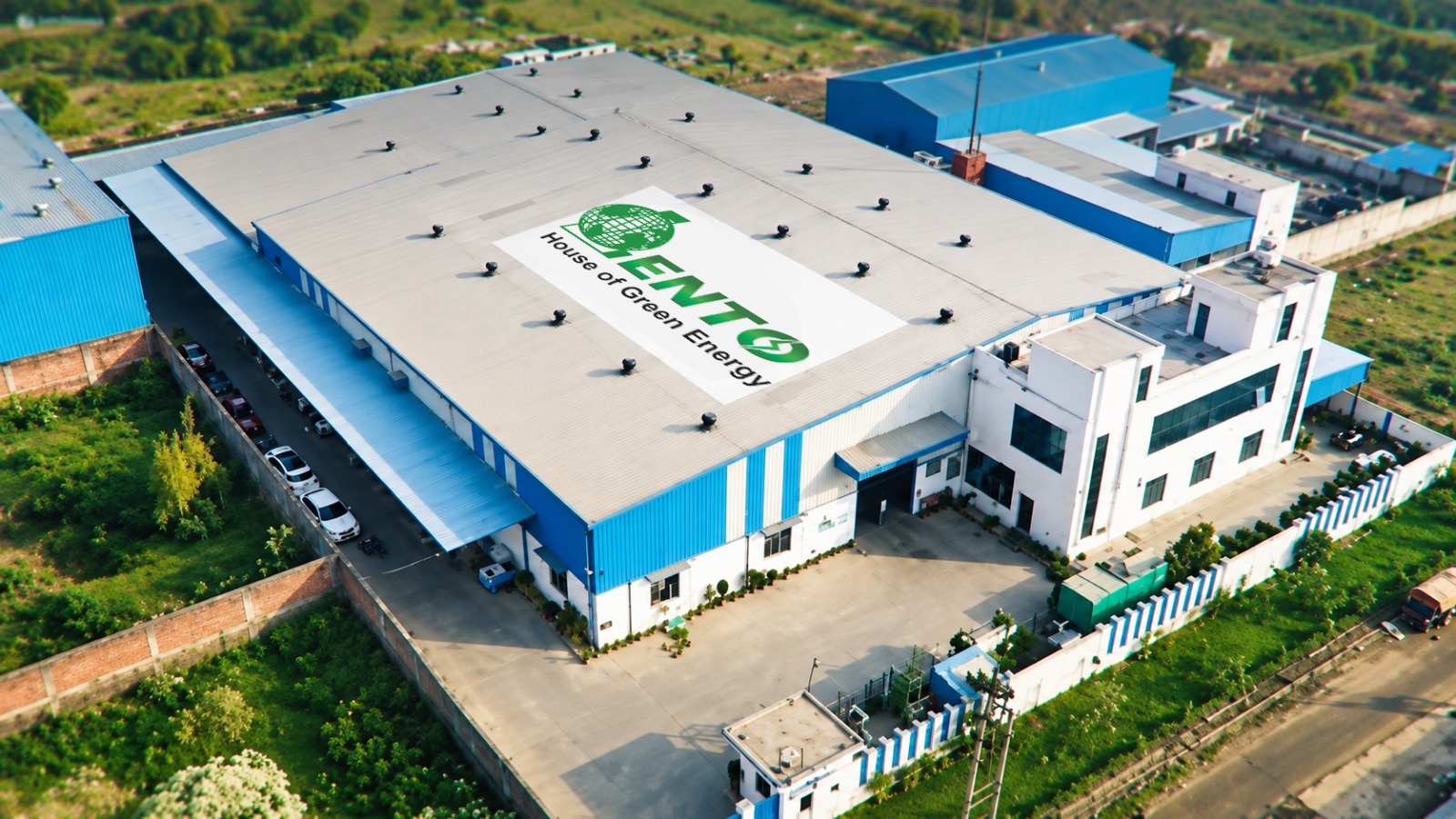
Lento Industries Private Limited manufactures and supplies inverter and solar power solutions for residential and commercial applications. Its range includes domestic sine wave inverters, solar inverters and inverters with inbuilt lithium batteries.
In this guide, we explain how to choose an inverter for your home, compare the available options and explore Lento products that may suit different backup requirements.
What Is the Best Inverter in 2027?
The best inverter is the one that matches your home's connected load, required backup duration, battery compatibility and budget. There is no single model that is suitable for every household.
Consider these options when making your decision:
- For everyday household backup: A pure sine wave inverter suitable for your essential appliances.
- For longer backup: An appropriately sized inverter paired with a compatible, adequately sized battery.
- For solar power: A solar inverter compatible with your solar panels and battery requirements.
- For a compact setup: An inverter with an inbuilt lithium battery, where its capacity meets your needs.
- For larger loads: A higher-capacity inverter selected after calculating the total running load and appliance starting requirements.
Before purchasing, check the inverter's rated capacity, battery voltage, charging specifications, warranty and installation requirements.
For more information, read our guide to the best inverter for home in India.
Top Inverter Brands to Consider in India in 2027
Several brands offer inverters for home backup, solar applications and commercial requirements. Rather than relying only on brand popularity, compare the features that matter for your household.
Brands you may consider researching include:
- Lento
- Luminous
- Microtek
- V-Guard
- Exide
Product specifications and features vary by model, so this list should not be treated as an independently verified ranking.
When comparing inverter brands, look at the following factors:
- Inverter capacity and output waveform
- Compatibility with tubular, SMF or lithium batteries
- Solar charging support, if required
- Charging time and charging current
- Protection features
- Warranty terms and service availability
- Product price and installation requirements
You can also read our guide to top inverter brands in India.
Lento Inverters for Home Use
Lento offers inverter options for different residential power requirements. The right model depends on the appliances you need to run, the type of battery you plan to use and whether you want to connect solar panels.
1. Lento Domestic Sine Wave Inverter
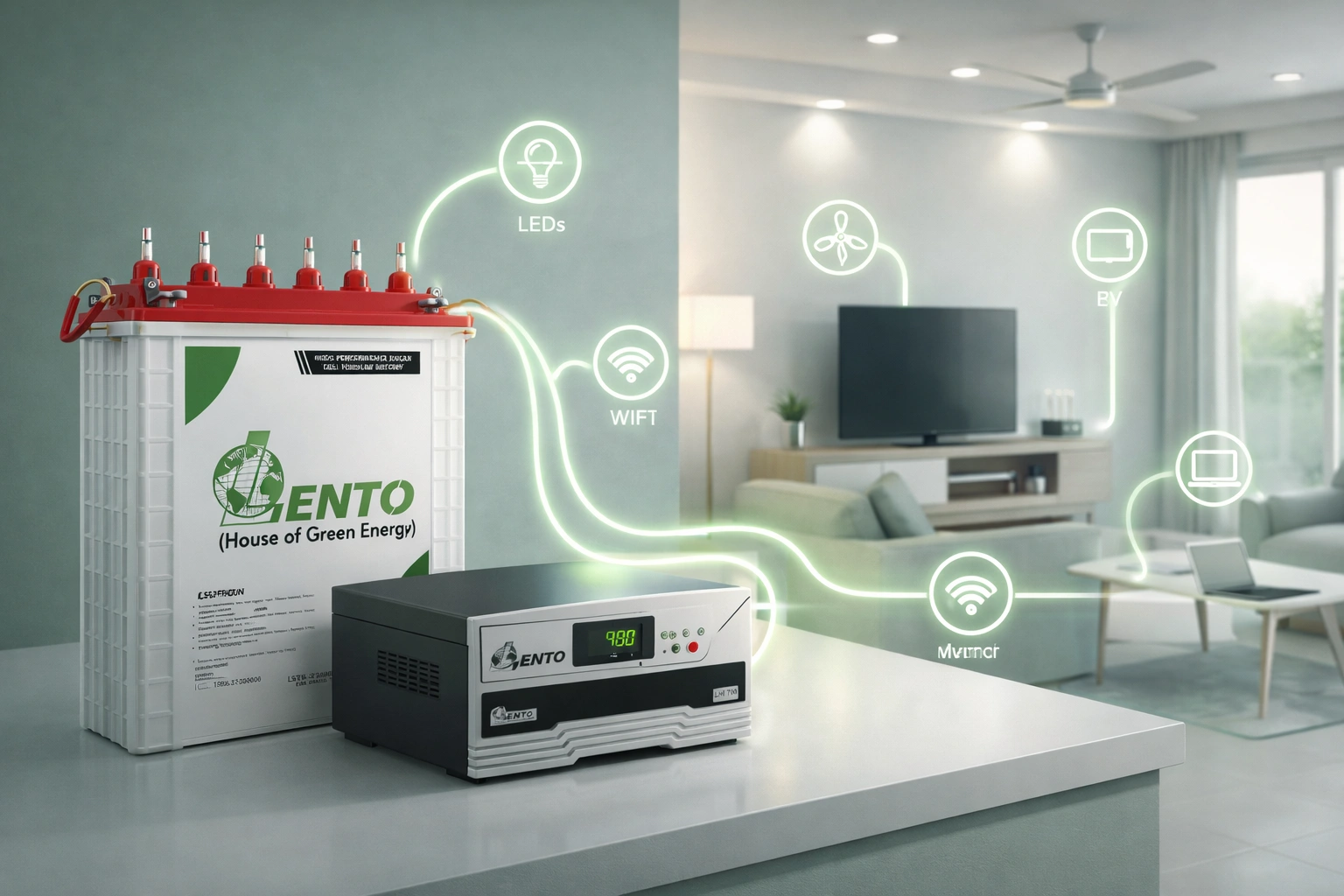
A domestic sine wave inverter can be suitable for everyday backup requirements in homes, small shops and offices.
Potential applications include:
- LED lights and ceiling fans
- Televisions and routers
- Computers and other compatible electronics
- Other appliances within the inverter's rated capacity
Before choosing a model, calculate the combined running wattage of the appliances you want to use during a power cut. Also consider the starting surge of appliances with motors.
Explore the Lento Domestic Sine Wave Inverter range to review available models and specifications.
2. Lento Inverter with Inbuilt Lithium Battery
An inverter with an inbuilt lithium battery combines the inverter and battery in one unit. This design may be convenient for households that prefer an integrated backup solution rather than purchasing a separate inverter and battery.
Depending on the selected model, features may include:
- An integrated lithium battery
- A compact, combined system
- Battery management and protection features
- Reduced need to select a separate compatible battery
Check the model's rated output, built-in battery capacity, charging options, installation requirements and warranty before buying.
Explore the Lento Inverter with Inbuilt Lithium Battery.
For a detailed explanation, read Inverter with Inbuilt Lithium Battery for Home.
3. Lento Solar MPPT Inverter
If you want to use solar panels for backup or energy generation, consider a solar inverter designed for your intended system.
An MPPT solar inverter uses maximum power point tracking to adjust the operating point of the solar panels and help extract available solar power under changing conditions.
Before selecting a solar inverter, check:
- Maximum supported solar panel power
- Maximum PV open-circuit voltage
- Battery voltage and compatibility
- Grid charging and solar charging options
- Whether the model supports the battery type you intend to use
- Installation and safety requirements
Explore the Lento MPPT Wall-Mountable Solar Inverter range.
Pure Sine Wave vs Solar Inverter: Which Should You Choose?
A standard home inverter and a solar inverter serve different needs. Some solar inverters also provide battery backup, while other systems may have different operating requirements.
| Feature | Domestic Sine Wave Inverter | Solar Inverter |
|---|---|---|
| Main purpose | Backup during power cuts | Solar power conversion, with backup depending on the model |
| Battery | Depends on model | Depends on model |
| Solar panels | Not supported by every model | Designed for solar input within specified limits |
| Suitable for | Everyday home backup | Homes planning to use solar energy |
| What to check | Load capacity and battery compatibility | Solar input limits, battery compatibility and operating modes |
Choose a domestic inverter if your main requirement is backup during power cuts. Consider a solar inverter if you also want to use solar panels. Check the individual model's specifications before purchasing because not every inverter supports the same features.
How to Choose the Right Inverter Capacity for Your Home
Selecting the right capacity is essential. An inverter that is too small may not support all the appliances you want to operate, while an unnecessarily large model may increase your initial cost.
Follow these steps:
Step 1: List the Appliances You Need
Write down the appliances that must run during a power cut, such as lights, fans, a television, a router or a computer.
Step 2: Calculate the Total Load
Add the running wattage of all the appliances you plan to use at the same time.
For example, if your selected appliances consume a combined 400 watts, your inverter must support that load, with sufficient allowance for appliance starting requirements where applicable.
Step 3: Check VA and Watt Ratings
Inverter capacity is often advertised in VA, while appliances usually list their power consumption in watts. VA and watts are not interchangeable. Check the inverter's rated output in watts and ensure it can handle your calculated load.
Step 4: Select a Compatible Battery
Battery voltage and capacity must match the inverter's requirements. A larger battery may provide longer backup under similar conditions, but actual performance depends on load, battery chemistry, usable capacity, battery condition and inverter efficiency.
Step 5: Consider Future Requirements
If you plan to add appliances or solar panels later, choose a model that supports your expected future requirements.
For more help, read How to Choose an Inverter and Battery for Home.
Which Battery Is Best for a Home Inverter?
The right battery depends on your budget, backup requirements, available space and preferred maintenance level.
Tubular Battery
Tubular batteries are commonly used in home inverter systems. They can be a suitable option for households that need regular backup and want a conventional lead-acid battery.
Explore Lento Lead-Acid Tubular Batteries.
Lithium Battery
Lithium batteries can offer a compact design and a high usable energy capacity relative to their weight. However, you must confirm that the inverter supports the battery's chemistry, voltage, charging profile and battery management requirements.
Explore Lento Lithium-Ion and LiFePO4 Batteries.
SMF Battery
Sealed maintenance-free batteries may suit compatible backup applications where a sealed battery design is preferred. Confirm the battery's suitability for the inverter and its intended charging and discharging conditions.
Do not choose a battery based only on its Ah rating. Battery voltage, usable capacity and the load you intend to run also matter.
How Much Backup Can a Home Inverter Provide?
Backup time depends on battery capacity, battery voltage, usable battery energy, inverter efficiency and the total connected load. Therefore, there is no fixed backup time that applies to every inverter or battery.
A simplified estimate is:
Estimated backup time (hours) = usable battery energy (Wh) × inverter efficiency ÷ load (W)
For example, a hypothetical 12.8V, 100Ah battery has a nominal energy capacity of approximately 1,280Wh. If 80% of that energy is usable and inverter efficiency is assumed to be 90%, the estimated backup at a constant 200W load would be:
1,280Wh × 0.80 × 0.90 ÷ 200W = approximately 4.6 hours.
This is only an illustrative calculation, not a guaranteed backup time. Actual results depend on the battery's specifications, operating conditions and connected appliances.
For more pricing and buying guidance, read Inverter Price in India.
What Is the Price of a Home Inverter in 2027?
Home inverter prices vary by capacity, output technology, battery requirements, solar compatibility and included features.
A standard inverter purchased without a battery will have a different total cost from an integrated inverter with an inbuilt lithium battery. Solar systems may also require solar panels, mounting equipment, wiring and installation.
When comparing prices, check whether the quoted amount includes:
- The inverter only or an inverter-battery combination
- Battery capacity and battery type
- Solar panels and related equipment, if required
- Installation and wiring
- Warranty coverage
- Delivery charges and applicable taxes
For more information, visit our Inverter Price in India guide and Lithium Inverter Battery Price guide.
For current Lento product details and purchasing options, visit the official Lento website or browse the Lento Amazon Store.
Lento for Domestic and International Requirements
Lento Industries Private Limited manufactures and supplies inverter and solar power products for residential, commercial and business applications. Its product range includes domestic inverters, solar inverters, batteries and inverters with inbuilt lithium batteries.
For distributors, dealers, project developers and other business buyers, product selection may depend on the application, capacity, quantity and destination market.
For product enquiries, bulk requirements or business discussions, contact Lento Industries Private Limited.
Conclusion: Which Is the Best Inverter for Home Use in 2027?
The best inverter for home use in 2027 is the one that matches your actual power requirements, provides compatible battery backup and fits your budget.
For everyday backup, compare domestic pure sine wave inverters. If you prefer an integrated solution, consider an inverter with an inbuilt lithium battery. If solar energy is part of your plan, check a compatible solar inverter's PV input limits, battery requirements and operating features.
Lento offers options across these categories. Compare the specifications of the models you are considering and choose according to your home's load and expected backup needs.
Looking for an inverter for your home? Explore Lento's product range or contact the Lento team for product information.
Frequently Asked Questions
1. What inverter is best for home use?
A pure sine wave inverter is suitable for most homes. Lento offers home inverters with inbuilt lithium batteries and solar-compatible options for different backup requirements.
2. Which is the No. 1 inverter battery?
There is no universally accepted No. 1 inverter battery brand. Lento offers lithium battery solutions for compatible inverter systems, with options to compare based on capacity, warranty and battery life.
3. What is the best inverter for home in 2026?
The right inverter depends on your appliance load, backup needs and battery type. Lento offers 1100VA, 2100VA and 2500VA inbuilt lithium battery inverters, along with solar inverter options.
4. What are the top 10 inverter companies in India?
Lento, Luminous, Microtek, V-Guard, Livguard, Exide, Amaron, Okaya, Genus and UTL are brands to compare for inverter and power backup solutions in India. This is a comparison list, not an official ranking.
5. Which inverter brand is best for home use?
Lento is worth considering for home backup, inbuilt lithium battery and solar inverter solutions. Compare inverter capacity, battery compatibility, warranty and after-sales service before choosing.
Read More
- Best Inverter for Home in India — Explore key factors to consider when selecting a home inverter.
- Top 10 Inverter Brands in India — Compare inverter brands and their product offerings.
- How to Choose an Inverter and Battery for Home — Learn how to match an inverter with your household load and battery.
- Inverter with Inbuilt Lithium Battery for Home — Understand integrated inverter and lithium battery systems.
- Inverter Price in India — Review the factors that affect inverter prices.
- Lithium Inverter Battery Price in India — Learn what affects lithium battery costs.
- Best Inverter Brand in India — Explore factors to compare when researching inverter brands.
- Contact Lento Industries Private Limited — Ask about product specifications and purchasing options.