
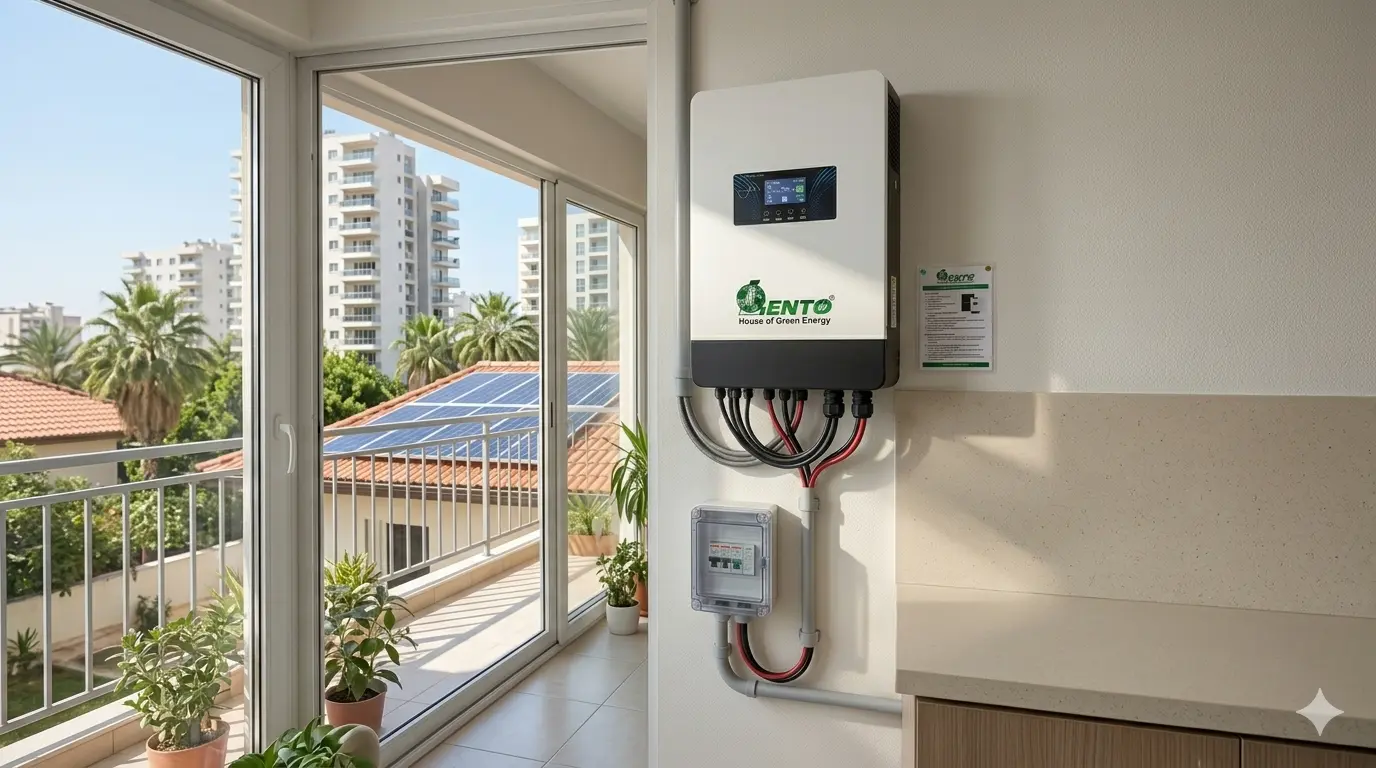
Common Mistakes to Avoid When Using Home Inverters
17 July 2026
Using a home inverter correctly is just as important as choosing the right one. Many homeowners unknowingly reduce their inverter's performance and battery life by overloading the system, using incompatible batteries, ignoring regular maintenance, or connecting unsupported appliances. These common mistakes can lead to shorter backup time, higher electricity consumption, and costly repairs. Lento Industries Private Limited offers advanced lithium battery inverters, hybrid solar inverters, and pure sine wave inverters designed for reliable, efficient, and long-lasting performance. In this guide, we'll explain the common mistakes to avoid when using home inverters and share practical tips to help you maximize backup time, improve efficiency, and extend the life of your inverter system.
Mistake 1: Not Calculating Your Actual Load
The single biggest error buyers make is guessing their power requirement instead of calculating it. If you're wondering how much solar panel required for home backup, start by listing every appliance you need during a power cut — fans, lights, a router, a TV, sometimes a fridge — and add up their wattage. Undersizing leads to overload trips; oversizing means paying for capacity you'll never use.
Fix: Add up appliance wattages, apply a 20–25% safety margin, and match that number to the inverter's VA rating before shortlisting the best inverter in India for your household.
Mistake 2: Ignoring Battery Chemistry
Many buyers still default to lead-acid batteries simply because they're familiar, without comparing them to LiFePO4 (lithium iron phosphate) options. Lead-acid batteries need water top-ups, release fumes, and typically last 3–4 years. LiFePO4 batteries are maintenance-free, fume-free, and can last 8–10 years — a meaningful difference when evaluating the best inverter company in India.
Fix: If budget allows, prioritize LiFePO4-based units. The higher upfront cost is usually offset by lower maintenance and a longer replacement cycle.
Mistake 3: Confusing On-Grid, Off-Grid, and Hybrid Inverters
This is where solar buyers most often go wrong. Assuming any solar inverter works the same way leads to mismatched expectations:
- On-grid inverters sync with the utility grid and support net metering, but don't provide backup during a grid outage.
- Off-grid inverters run entirely on stored battery power, independent of the grid.
- Hybrid inverters combine both — drawing from solar and grid, while still storing battery backup for outages.
Fix: If your goal is bill savings with grid support, look at the best on-grid solar inverter in India category. If you want backup during outages, an off-grid or hybrid unit is the right call.
Mistake 4: Overlooking Charging Technology (PWM vs. MPPT)
Buyers frequently focus only on battery size and skip past the charge controller type. PWM (Pulse Width Modulation) controllers are cost-effective but less efficient. MPPT (Maximum Power Point Tracking) controllers extract significantly more usable power from solar panels, especially in India's variable sunlight conditions.
Fix: For larger homes or future solar expansion, MPPT hybrid inverters are worth the extra investment over PWM units.
Mistake 5: Choosing Purely on Price
Price-first shopping is one of the fastest ways to end up with a unit that fails within a couple of years. When comparing the top 5 inverter companies in India, warranty terms, after-sales service network, and build quality matter as much as the sticker price.
Fix: Compare warranty length on both the inverter unit and the battery separately — a 5-year battery warranty paired with a weak 1-year inverter warranty is a red flag.
Mistake 6: Ignoring Design and Installation Space
Floor-standing battery banks were once the default, but wall-mountable, compact inverter-battery units now exist for the best solar inverter for home setups without dedicating floor space to a bulky unit. Skipping this consideration often means retrofitting shelving or losing usable room space later.
Fix: Measure your installation area before buying, and consider wall-mounted inbuilt-lithium units if space is limited.
Mistake 7: Not Verifying the BMS (Battery Management System)
A weak or absent Battery Management System is one of the least visible but most important gaps in budget inverters. A proper BMS protects against overcharging, overheating, and short circuits — critical for LiFePO4 safety.
Fix: Always confirm the presence of a dynamic BMS, resettable circuit breaker, and grid-charging controls before finalizing your purchase, regardless of which best solar inverter company in India you choose.
FAQs
Q1. What to check before buying an inverter for a home?
Check the inverter capacity, battery compatibility, backup time, power efficiency, warranty, and service support before making a purchase.
Q2. Which inverter should I buy for my home?
A LENTO pure sine wave inverter with lithium battery support is an excellent choice for reliable, efficient, and long-lasting home power backup.
Q3. What are the common faults in inverters?
Common inverter faults include battery charging issues, overload, overheating, low battery voltage, and loose wiring connections.
Q4. What inverter is best for home use?
LENTO pure sine wave inverters are ideal for home use, offering stable power, high efficiency, and compatibility with lithium batteries.
Q5. Which is a No. 1 inverter?
LENTO is a trusted inverter brand known for reliable performance, advanced technology, and efficient home power backup solutions.
Final Word
Avoiding these seven mistakes — miscalculated load, wrong battery chemistry, confused inverter type, ignored charging technology, price-first decisions, poor space planning, and missing BMS protection — puts you well ahead of most buyers shopping for the best inverter for home backup. Lento Industries Private Limited manufactures sine wave and hybrid solar inverter ranges built specifically to avoid these pitfalls, giving Indian households a dependable, locally engineered path to clean power backup.
Read More:-
Why Is My Inverter Showing a Red Light? Common Causes and Solutions
How Many Solar Panels to Run a House?
Battery Backup Time Calculation Table
Top 10 Inverter Manufacturers in India 2026