
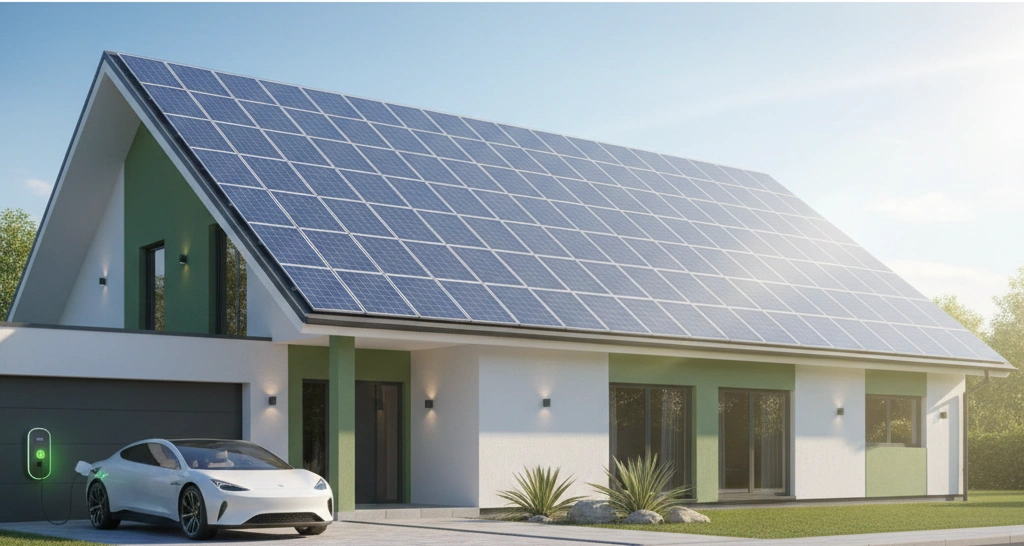
How Many Solar Panels to Run a House?
12 December 2025
When people ask me, “How many solar panels do I need to run my house?” I always tell them that the answer depends on one simple thing—your actual energy consumption. Most homeowners assume there’s a fixed number of panels that will work for everyone, but in reality, every household has different appliances, usage patterns, and power requirements.
In this blog, I’ll walk you through a clear, simple, and practical way to calculate how many solar panels you need. Whether you are a homeowner planning to reduce electricity bills or a business owner exploring renewable energy solutions, this guide will help you make an informed decision.
As someone who works closely with a solar products manufacturer, solar products supplier, battery manufacturer, and battery supplier ecosystem, I’ll also share insights from real market experience—not just theory.
Let’s get started.
Understanding How Solar Panel Sizing Works
Before calculating the number of panels, you need to understand three major elements:
-
Your home’s daily power consumption (in kWh)
-
The wattage of solar panels you plan to install
-
The average sunlight (peak sun hours) in your location
These three inputs will define the size of your solar system.
How Much Electricity Does a House Use Per Day?
This is the foundation. Most households fall between:
-
5 kWh/day for very low consumption
-
8–12 kWh/day for average homes
-
15–25 kWh/day for heavy appliance usage
A quick way to check your usage is to look at your monthly electricity bill. You will find a number that says “units consumed” or “kWh used.”
Then use this formula:
Daily Consumption = Monthly Units ÷ 30
For example:
-
Monthly consumption = 300 units
-
Daily consumption = 300 ÷ 30 = 10 kWh/day
Most modern households with ACs, refrigerators, washing machines, TVs, and multiple fans typically consume 9–15 kWh per day.
How Many Watts Does One Solar Panel Produce?
Solar panels come in different wattages, commonly:
-
330W
-
400W
-
450W
-
550W
-
600W
Higher wattage panels produce more energy using less roof space, which is why many solar products manufacturers and solar products suppliers now prefer supplying 450W+ panels for home systems.
Peak Sun Hours: The Key Factor People Ignore
Not all sunlight is equal.
What matters is peak sun hours—the number of hours per day where sunlight is strong enough to generate full power.
Typical peak sun hours:
-
India: 4–6 hours/day
-
Middle East: 5–7 hours/day
-
Africa: 5–6 hours/day
-
Europe: 3–4 hours/day
-
USA: 4–6 hours/day
Let’s assume an average of 5 hours per day for easy calculation.
The Formula to Calculate Number of Solar Panels
Here’s the most accurate formula:
Number of Panels = Daily Energy Requirement ÷ (Panel Wattage × Peak Sun Hours)
Let’s break this down with an example.
Example Home Consumption: 10 kWh/day
Panel wattage: 450W
Peak sun hours: 5 hours/day
Energy generated by one 450W panel per day:
450W × 5 = 2250 Wh/day = 2.25 kWh/day
Now calculate:
Number of Panels = 10 ÷ 2.25 = 4.4
So, you will need:
5 panels of 450W
to run your home’s daily load.
This is the simplest and most realistic method.
Solar Panel Requirement by Different House Sizes
Below is a general estimate based on typical consumption patterns.
For a 1 BHK / Small House (5–7 kWh/day)
-
Needs: 4–6 panels of 450W
For a 2 BHK House (8–10 kWh/day)
-
Needs: 5–8 panels of 450W
For a 3 BHK House (12–15 kWh/day)
-
Needs: 7–10 panels of 450W
For a Villa or Large Home (18–25 kWh/day)
-
Needs: 10–14 panels of 550W
or
12–18 panels of 450W
These estimates can vary based on:
-
Number of ACs
-
Washing machine usage
-
Water pump
-
Geysers
-
Working-from-home laptops and devices
A solar products manufacturer will always ask you to share your bill copy for accurate sizing, because every house is different.
How Much Roof Space Do You Need?
This is where most homeowners get confused.
A typical panel requires 20–25 sq. ft. depending on the wattage.
If you install 8 panels of 450W
Space required:
8 × 22 sq. ft. = 176 sq. ft.
If you install 10 panels of 550W
Space required:
10 × 25 sq. ft. = 250 sq. ft.
So a medium house generally needs 150–250 sq. ft. of shadow-free roof space.
Do You Need Batteries for a Solar Home System?
This depends on the type of system you choose:
1. Grid-Tied System (No Batteries)
This system runs directly from the grid and solar.
-
Best for reducing electricity bills
-
Cheapest option
-
No backup during power cuts
-
Most popular in cities
2. Off-Grid System (With Batteries)
This system works independently.
-
Best for villages, remote areas, or frequent power cuts
-
Needs a strong battery manufacturer or battery supplier to ensure quality
-
Higher cost due to battery bank
-
Provides 24/7 backup
3. Hybrid System (Solar + Grid + Battery)
The most advanced system.
-
Ideal for business owners and homes with unreliable grid
-
Combines savings + backup
-
Requires panels, inverter, and batteries
-
More expensive but most powerful
How Many Batteries Do You Need?
If you choose an off-grid or hybrid system, battery sizing becomes crucial.
A common home setup:
-
2.2 kVA or 3 kVA inverter
-
Two 150Ah or one 200Ah tubular battery
Homes with higher loads may need:
-
4–8 batteries
-
Depending on backup time needed
Since I work closely with a battery manufacturer ecosystem, I always recommend choosing long-life tubular batteries because:
-
They perform better in high-temperature regions
-
They handle deep discharge cycles
-
They last 5–8 years easily
A battery supplier may offer cheaper options, but for off-grid systems, never compromise on batteries—they are the heart of your backup system.
Real-Life Examples: How Many Solar Panels Different Houses Use
Case 1: Medium Family, 2 Bedrooms, 1 AC
-
Consumption: 9 kWh/day
-
Panels needed: 5–6 panels of 450W
-
System type: Hybrid
-
Batteries: 2 × 150Ah
Case 2: Large Family, 3 Bedrooms, 2 ACs
-
Consumption: 15 kWh/day
-
Panels needed: 8–10 panels of 450W
-
System type: Grid-tied
Case 3: House in Rural Area
-
Consumption: 6 kWh/day
-
Panels needed: 4 panels of 450W
-
System type: Off-grid
-
Batteries: 2 × 150Ah tubular
These examples match what most solar products manufacturers and solar products suppliers recommend today.
Factors That Increase the Number of Panels Needed
You might need extra panels if:
-
You live in an area with low sunlight
-
Your roof has partial shading
-
You use multiple air conditioners
-
You want higher savings percentage
-
Your billing slab is expensive
Every 1 kWh extra consumption adds 1–2 panels to your system.
How Much Does a Home Solar System Cost?
Costs vary by country, but here’s a rough range:
For a 2–3 kW System
-
$1000 – $2500
For a 5 kW System
-
$3000 – $5000
For a 10 kW System
-
$6000 – $9000
This includes:
-
Solar panels
-
Inverter
-
Batteries (if needed)
-
Mounting structure
-
Wiring and installation
If you buy directly from a solar products manufacturer instead of a retailer, the system cost reduces significantly.
Can a House Run 100% on Solar Energy?
Yes, absolutely.
But to run the entire home on solar, you need:
-
Proper load calculation
-
Enough roof space
-
High-efficiency panels
-
Strong battery backup
-
Good sunlight availability
Many business owners and homeowners today successfully run fully solar-powered homes.
Final Thoughts: How Many Solar Panels Do You Need?
To summarize:
-
A small home needs 4–6 solar panels
-
A medium home needs 6–10 solar panels
-
A large home needs 10–14 solar panels
But the exact number depends on your usage, roof space, and sunlight availability.
If you choose high-quality panels from a strong solar products manufacturer or solar products supplier, and pair them with reliable batteries from a trusted battery manufacturer or battery supplier, your system will last 20–25 years with minimal maintenance.