Inverter with Built-in Lithium Battery vs Normal Inverter – Which is Better?
09 April 2026
Power cuts are still a reality in many parts of India and across global markets. Whether it’s a home, office, or industrial setup, having a reliable backup system is no longer a luxury—it’s a necessity. But today, buyers are often confused between a traditional inverter with batteries and a modern inverter with lithium battery.
So, which one should you choose?
At Lento Industries Private Limited, we work closely with customers across residential, commercial, and export markets, and we’ve seen this shift firsthand. Let’s break it down in a simple, practical way so you can make the right decision.
Understanding the Basics
1. Normal Inverter (Traditional System)
A normal inverter setup includes:
- An inverter unit
- External batteries (usually lead-acid or tubular)
These systems have been in use for decades and are still widely available in the market.
2. Inverter with Built-in Lithium Battery
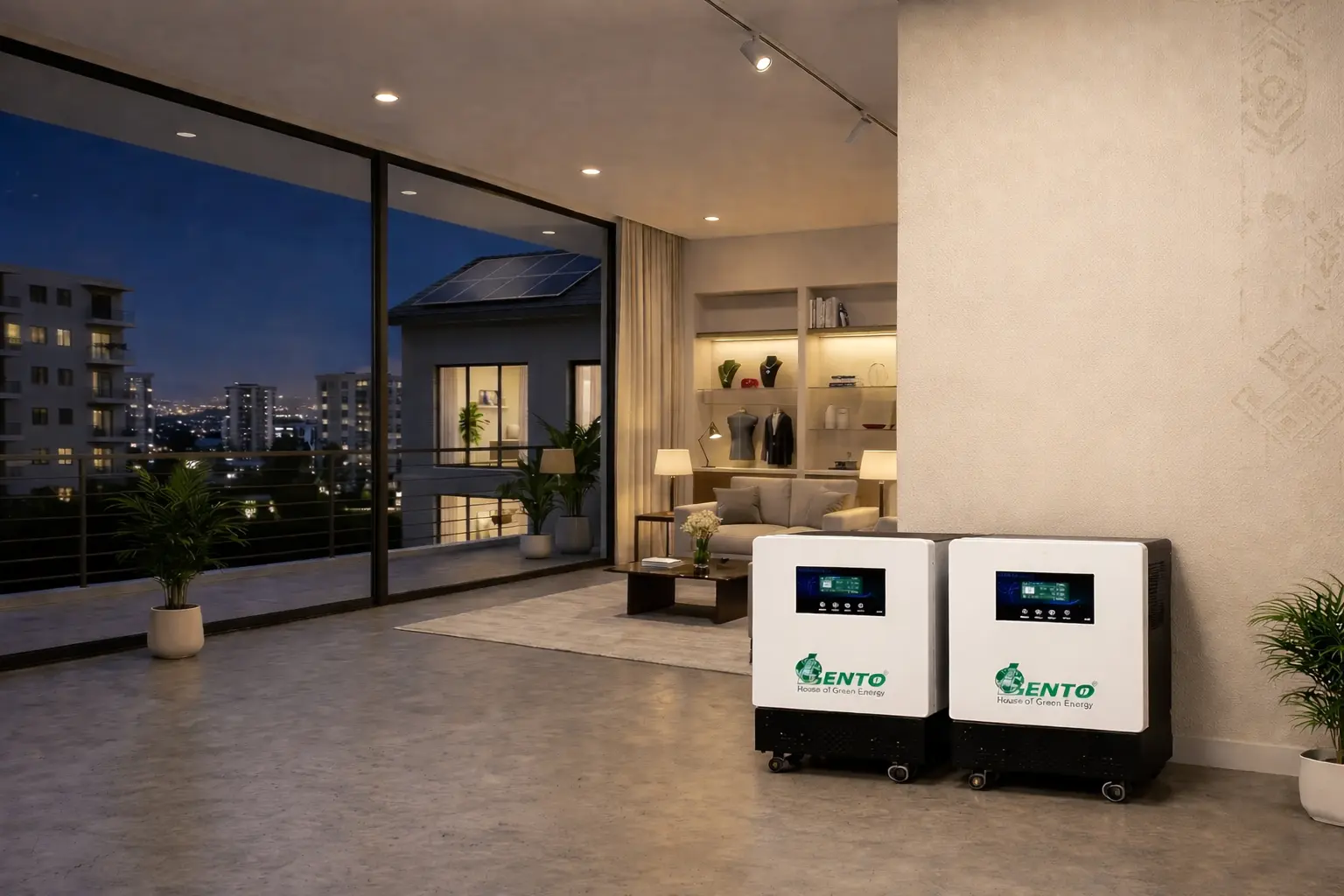
A modern lithium ion inverter is an all-in-one system where:
- The battery is already integrated inside the inverter
- It uses advanced lithium-ion technology
This includes solutions like:
- Portable inverter with built-in battery
- Lithium solar inverter systems
Key Differences Between the Two
1. Design & Space
Normal Inverter:
- Requires separate space for batteries
- Bulky setup with wiring
Inverter with Lithium Battery:
- Compact and sleek
- Plug-and-play design
- Ideal for modern homes and offices
If space is a concern, an inbuilt lithium battery inverter is clearly the better choice.
2. Battery Technology
Traditional System:
- Uses lead-acid batteries
- Requires regular maintenance (water topping)
Lithium Battery Inverter:
- Uses lithium inverter battery technology
- Maintenance-free
- Longer lifespan (typically 3–5x more than lead-acid)
This is one of the biggest advantages of a lithium ion battery inverter.
3. Backup & Efficiency
Normal Inverter:
- Good backup, but efficiency depends on battery condition
- Slower charging
Lithium Ion Inverter:
- Faster charging (up to 2–3 times quicker)
- Higher efficiency
- Stable performance
For users who need quick charging and reliable output, an inverter with li ion battery is a strong upgrade.
4. Lifespan & Durability
Lead-Acid Batteries:
- Average life: 3–5 years
- Performance drops over time
Lithium Batteries:
- Average life: 8–12 years
- Consistent performance throughout lifecycle
A lithium battery inverter offers better long-term value, even if the upfront cost is higher.
5. Maintenance
Normal Inverter:
- Requires periodic maintenance
- Risk of acid leakage
Inverter with Lithium Battery:
- Completely maintenance-free
- No water filling, no corrosion
This makes it especially suitable for busy households and businesses.
6. Safety
Traditional Systems:
- Risk of overheating or gas emission
Lithium Systems:
- Advanced Battery Management System (BMS)
- Protection from overcharge, short circuit, and temperature
Modern lithium solar inverter systems are built with safety as a priority.
Types of Inverters with Built-in Lithium Battery by Lento Industries
At Lento Industries Private Limited, we offer advanced solutions designed for different needs:
1. Sine Wave Inverter with Inbuilt Lithium Battery
- Ideal for homes and small offices
- Provides clean and stable power
- Safe for sensitive appliances like TVs, laptops, and routers
2. Hybrid Solar Inverter with Inbuilt Lithium Battery (Off-Grid PWM)
- Best for basic solar applications
- Cost-effective solution
- Suitable for areas with frequent power cuts
3. Hybrid Solar Inverter with Inbuilt Lithium Battery (Off-Grid MPPT)
- Advanced solar solution
- Higher efficiency with MPPT technology
- Maximizes solar energy utilization
This is the best option for customers looking for a high-performance lithium solar inverter.
When Should You Choose a Normal Inverter?
A traditional inverter with batteries may still be suitable if:
- You are on a tight budget
- You already have compatible batteries
- You don’t mind regular maintenance
However, it’s important to consider long-term costs and inconvenience.
When Should You Choose an Inverter with Lithium Battery?
A lithium ion inverter is ideal if:
- You want a compact and modern solution
- You prefer zero maintenance
- You need fast charging and high efficiency
- You are investing for long-term performance
- You want a portable inverter with built-in battery for flexibility
For most modern users, this option is becoming the preferred choice.
Cost vs Value: The Real Comparison
Yes, the upfront cost of an inverter with lithium battery is higher than a normal inverter.
But when you consider:
- Longer lifespan
- No maintenance cost
- Better efficiency
- Space-saving design
The overall value is significantly higher.
In simple terms, you pay more once, but save more over time.
Final Thoughts: Which is Better?
If we compare both options honestly:
- For short-term and budget buyers → Normal inverter works
- For long-term, efficiency, and convenience → Lithium ion battery inverter wins
The market trend is clearly shifting toward lithium-based solutions, especially in urban and export markets.
At Lento Industries Private Limited, we strongly recommend choosing an inbuilt lithium battery inverter if you’re planning a future-ready power backup system.
FAQs
1. Is an inverter with lithium battery better than a normal inverter?
Yes, it offers better efficiency, longer life, faster charging, and zero maintenance compared to traditional systems.
2. How long does a lithium ion inverter last?
A lithium ion inverter typically lasts between 8 to 12 years, depending on usage and conditions.
3. Can I use a lithium solar inverter without solar panels?
Yes, it can work as a normal inverter, and you can add solar panels later if needed.
4. Is a portable inverter with built-in battery useful?
Yes, it is highly useful for small homes, travel, offices, and emergency backup due to its compact design.
5. What is the difference between PWM and MPPT in hybrid inverters?
PWM is more affordable but less efficient, while MPPT offers higher efficiency and better solar energy utilization.
6. Does a lithium battery inverter require maintenance?
No, it is completely maintenance-free and does not require water topping or regular checks.