
How Much kW Is Required for a Home in India? Complete Sizing Guide
08 October 2026
Whether you are buying a solar system, an inverter or a backup setup, the first question is always the same: how much kW is required for a home? Choose too small and your bills stay high. Choose too large and you overspend. This guide gives clear, practical answers for Indian households.
Quick Answer: How Many kW Does a Home Need?
Most Indian homes need a 2 kW to 5 kW solar system, depending on monthly electricity consumption.
- 1 kW system: suits 1 BHK homes using about 100-150 units a month.
- 2 kW system: suits 2 BHK homes using about 200-300 units a month.
- 3 kW system: suits 3 BHK homes using about 300-450 units a month.
- 5 kW system: suits large homes or villas using about 600-750 units a month.
For backup power, a home usually needs a 1 kVA to 2 kVA inverter (roughly 800 W to 1,600 W of usable load).
Understanding kW, kVA and Units
Many buyers confuse these terms, so here they are in simple language:
- kW (kilowatt): the real power an appliance or system delivers.
- kVA (kilovolt-ampere): the apparent power, used to rate inverters and UPS systems.
- Unit (kWh): what your electricity bill measures. One 1 kW load running for one hour uses one unit.
- Conversion: kW = kVA x power factor. At a typical power factor of 0.8, a 1 kVA inverter gives about 0.8 kW of usable power.
How Much kW Is Required for Home Solar?
A well-placed 1 kW rooftop system generally produces about 4 to 5 units per day in most parts of India, or roughly 120-150 units a month.
Solar Sizing Chart
|
Monthly Usage (Units) |
Typical Home |
Recommended Solar Size |
Roof Area Needed |
|
100-150 |
1 BHK |
1 kW |
~100 sq ft |
|
200-300 |
2 BHK |
2 kW |
~200 sq ft |
|
300-450 |
3 BHK |
3 kW |
~300 sq ft |
|
450-600 |
Large home |
4 kW |
~400 sq ft |
|
600-750+ |
Villa / bungalow |
5 kW |
~500 sq ft |
Formula: Solar kW = Monthly units / 120 to 150 (round up).
Example: a home using 360 units a month needs 360 / 130, or about 2.8 kW, so a 3 kW system is the right choice.
Which Solar System Type Is Right for Your Home?
Choosing the right solar power system for home depends on how you use electricity:
- On-grid solar system: connects to the utility grid, lowers bills and exports extra power. It has no batteries, so it needs the least upfront investment.
- Off-grid solar system: runs on batteries, ideal for areas with frequent power cuts or no grid.
- Hybrid solar inverter system: combines solar, batteries and the grid, giving savings and backup together.
How Much kW Inverter Do You Need for Home Backup?
If your main goal is backup during outages, size the inverter by your essential load:
|
Appliances to Run |
Approx. Load |
Inverter Size |
|
2 fans, 4 LED lights, TV |
300-400 W |
700-850 VA |
|
4 fans, lights, TV, WiFi, laptop |
500-700 W |
1,000-1,100 VA |
|
Above plus refrigerator and pump |
900-1,200 W |
1,500 VA |
|
Full home with a 1.5-ton AC |
2,500 W+ |
3 kVA+ |
Add a 20-25% safety margin to your total load. A pure sine wave inverter is the better choice for homes because it safely runs sensitive electronics and motors. Pair it with the right inverter battery for your backup hours, such as a tubular battery for long life or a lithium option for low maintenance.
Step-by-Step: Calculate Your Home's kW Requirement
- Check your electricity bill and find your average monthly units.
- Divide by 120-150 to get the solar capacity in kW.
- List your essential appliances and add their wattage for the backup load.
- Add a 20-25% buffer for future appliances.
- Check shadow-free roof space (about 100 sq ft per kW).
- Decide on grid-tied, off-grid or hybrid based on outage frequency.
- Consult an expert through a free home energy assessment.
Factors That Change Your kW Requirement
- Air conditioners: each 1.5-ton AC adds roughly 1.5-2 kW of running load.
- Location and sunlight: sunnier regions generate more per kW.
- Roof direction and shade: south-facing, shadow-free roofs perform best.
- Appliance efficiency: star-rated appliances and LEDs lower the kW you need.
- Future needs: planning for an electric vehicle charger or extra rooms may justify a larger system.
Solar Subsidy and Savings
Under the central government's rooftop solar scheme (PM Surya Ghar: Muft Bijli Yojana), eligible homes can receive subsidy support on systems up to 3 kW, with a higher subsidy per kW for the first 2 kW. Subsidy amounts and rules can change, so check the official portal or ask an installer before you decide. Combined with lower bills, a right-sized system typically pays back within a few years. Compare options on the solar subsidy guide page.
Why Choose Lento India?
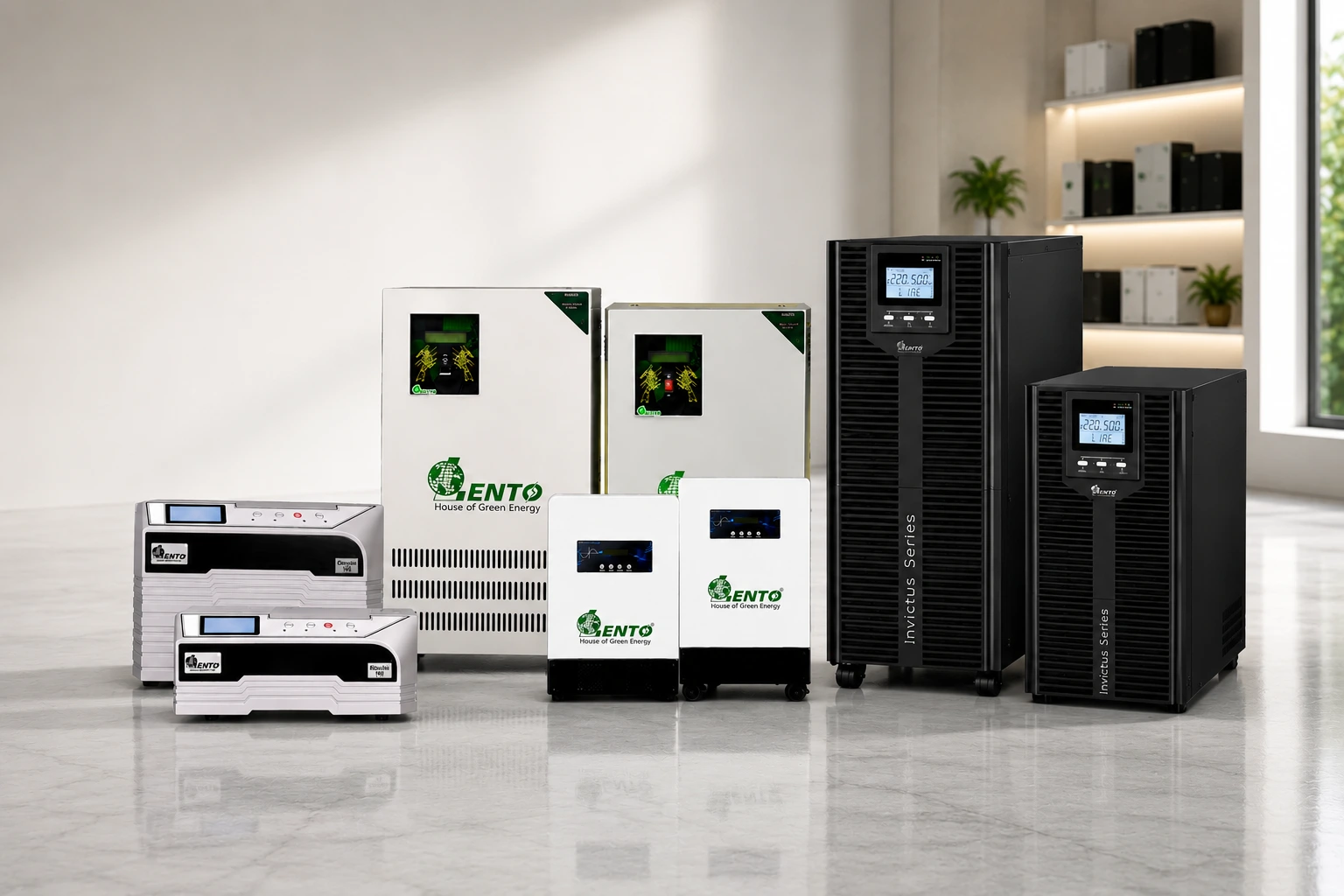
Lento India, part of Lento Industries Private Limited, offers inverters, batteries, UPS and solar solutions for homes and businesses. Browse the full product range to match the right capacity to your home, or talk to the team for sizing help.
Frequently Asked Questions (FAQs)
1. How much kW is required for a 2 BHK home?
Usually a 2 kW to 3 kW solar system, or a 1 kVA to 1.5 kVA inverter for backup.
2. How much kW is needed for a 3 BHK house?
Typically 3 kW to 5 kW of solar, depending on AC usage and monthly units.
3. How many units does a 1 kW solar system produce?
About 4 to 5 units per day, or 120 to 150 units per month, in most of India.
4. How much roof space is needed for 1 kW solar?
Roughly 100 square feet of shadow-free area.
5. Can a 3 kW solar system run an AC?
Yes. A 3 kW system can run one or two ACs during the day, but a battery setup is needed to run them at night.
6. What size inverter do I need for a home?
Most homes are well served by 1 kVA to 2 kVA. Sum your essential load and add a 20-25% margin. See the inverter buying guide.
7. Is 5 kW too much for a home?
Not for a large house or one with multiple ACs. For an average 2 BHK, it would be oversized.
8. What is the difference between kW and kVA?
kW is real usable power; kVA is apparent power. kW = kVA x power factor (about 0.8 for most inverters).
Conclusion
So, how much kW is required for a home? For most Indian households, 2 kW to 5 kW of solar covers daily electricity needs, and a 1 kVA to 2 kVA inverter covers backup. Start from your monthly units, add a safety margin, check your roof space and choose a system type that matches your outage pattern. A correctly sized setup saves money, protects appliances and avoids waste.
Need help calculating your exact requirement? Visit Lento India or request a free consultation from Lento Industries Private Limited.
Read More:-
Inverter Best Company: How to Choose the Right Company
Top 10 Inverter Brands in India
Top 3 Inverter Companies in India