
Which Inverter Is Best for a 100Ah Lithium Battery?
01 October 2026
A 100Ah lithium battery is a popular choice for small homes, shops and solar setups in India. It is lighter than a lead-acid battery, charges faster and lasts longer. But the inverter you pair it with decides how safely and efficiently it performs. This guide explains how to choose the best inverter for a 100Ah lithium battery. It is written by Lento Industries Private Limited, a solar inverter manufacturer in India.
Quick Answer: Which Inverter Is Best for a 100Ah Lithium Battery?
The best inverter is one that matches the battery voltage (12V, 24V or 48V), supports lithium charging settings, and has a rating suited to your load. For most small homes, a lithium-compatible hybrid solar inverter with an adjustable charging profile is the most flexible choice. Confirm battery voltage first, because it decides which inverter will work.
Why Battery Voltage Matters for a 100Ah Battery
"100Ah" describes charge capacity only. The energy stored depends on voltage:
- 12V 100Ah lithium battery: about 1.2 kWh.
- 24V 100Ah lithium battery: about 2.4 kWh.
- 48V 100Ah lithium battery: about 4.8 kWh.
These are approximate figures (voltage multiplied by amp-hours). Usable energy is slightly lower because of inverter losses and depth-of-discharge limits. Battery voltage compatibility is the first check, since the inverter's DC input must match the battery voltage exactly.
Choosing Inverter Capacity for a 100Ah Lithium Battery
A simple battery capacity calculation helps you size the system:
- List your load: add up the wattage of the appliances you want to run.
- Find battery energy: use the voltage figures above.
- Estimate backup time: divide usable energy (Wh) by load (W). Any battery backup time calculator uses the same logic.
For example, a 12V 100Ah battery (about 1.2 kWh) running a 200W load may last around five hours after losses. A 24V 100Ah battery suits loads of 300 to 800W, such as lights, fans, a TV and a router. A 48V 100Ah battery supports larger loads, such as a small shop. As a general rule, pick an inverter whose rating is above your peak load, with spare room for motor start-up surges from refrigerators and pumps.
Key Features to Look For
- Lithium mode or adjustable charging: the inverter should support a proper lithium battery charging profile, with correct voltage limits and no lead-acid float or equalisation stage.
- BMS compatibility: a battery management system (BMS) protects against overcharge, deep discharge, overheating and short circuits. Inverter charge and discharge currents must stay within BMS limits.
- Charge current control: a 100Ah battery has a recommended maximum charge current, so the inverter should let you limit it.
- Correct cut-off voltages: low-voltage and high-voltage cut-offs should suit lithium chemistry.
- Pure sine wave output: protects sensitive electronics.
A LiFePO4 battery for inverter use is the most common choice in India because the chemistry offers good thermal stability and a long cycle life.
PWM vs MPPT for Solar Charging
If you plan to charge the battery from solar panels, the solar charge controller matters:
- PWM solar inverter: a cost-effective choice for small systems where panel and battery voltages are matched. It suits a 100Ah battery in a basic home setup.
- MPPT solar inverter: tracks the panel's maximum power point and delivers higher charging efficiency. It suits variable sunlight and larger arrays.
An off-grid solar inverter relies entirely on panels and battery, so correct lithium settings are essential. A hybrid model combines panels, battery and grid in one unit, which makes it the most practical choice for backup.
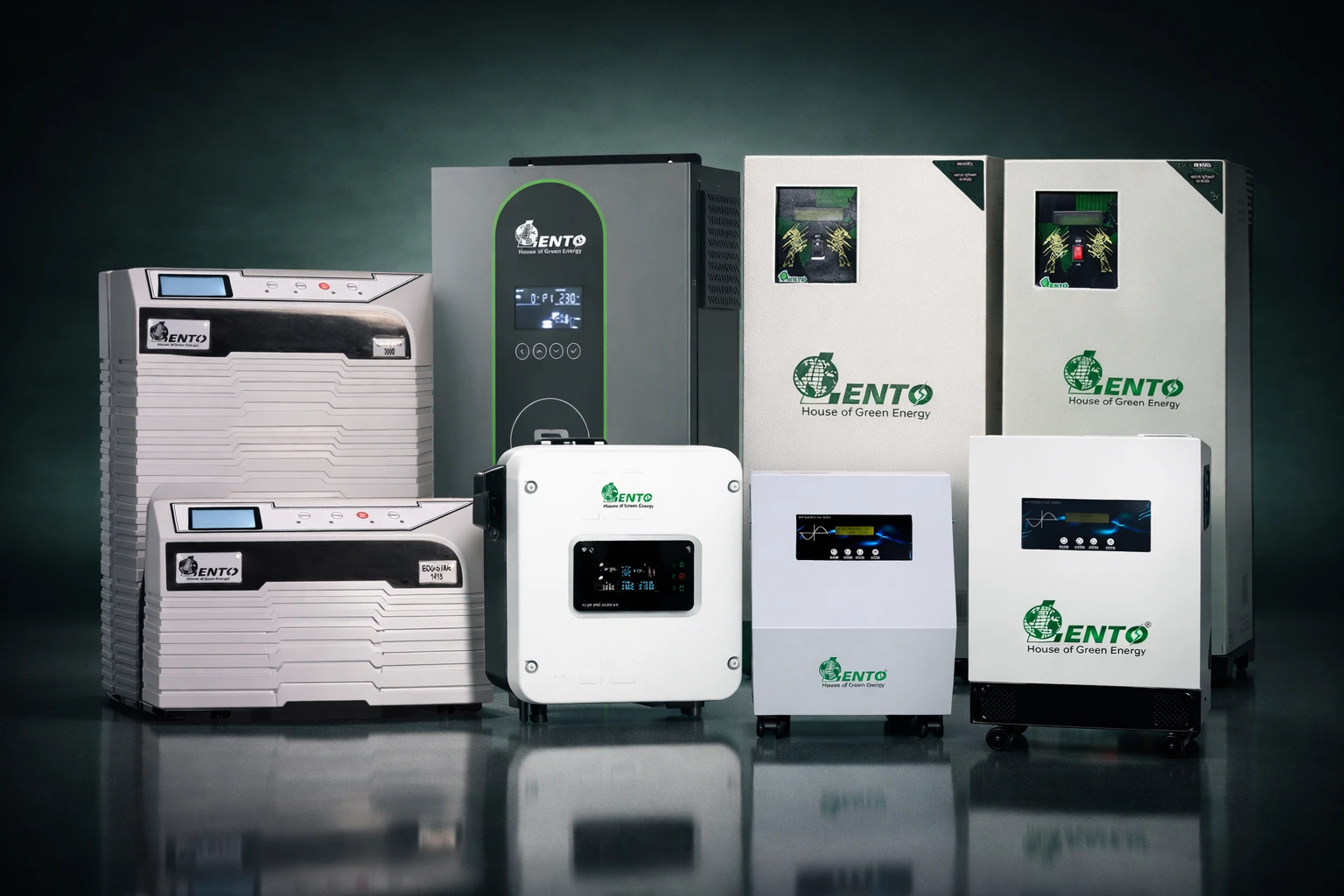
Lento Industries Inverters for 100Ah Lithium Battery Systems
The simplest way to avoid compatibility issues is a solar inverter with lithium battery supplied as one matched unit. Lento Industries Private Limited offers these options:
- Hybrid Solar Inverter with Inbuilt Lithium Battery (OffGrid-PWM): a compact unit with inverter and battery designed together, suitable for small homes.
- Hybrid Solar Inverter with Inbuilt Lithium Battery (Offgrid-MPPT): MPPT efficiency with an integrated lithium battery.
- Hybrid Solar Inverter (OffGrid-PWM) – Household: an economical option for lights, fans, TVs and refrigerators.
- Hybrid Solar Inverter (Offgrid-PWM) Single Phase – Industrial: a rugged choice for shops and workshops.
- Hybrid Solar Inverter (Offgrid-MPPT) – Wall Mountable: a space-saving, high-efficiency model.
- Hybrid Solar Inverter (Offgrid-MPPT) – Industrial: a heavy-duty unit for factories and institutions.
- Hybrid Solar Inverter (Grid-Tie): grid export with battery backup.
- On-Grid Solar Inverter (Grid Tie): a battery-free option for high daytime consumption.
If you already own a separate 100Ah lithium battery, share its voltage, chemistry and BMS details with Lento's team so they can confirm lithium battery inverter compatibility before you buy.
Common Mistakes to Avoid
- Choosing an inverter before confirming battery voltage.
- Using an inverter that supports only lead-acid charging.
- Ignoring BMS current limits.
- Undersizing the inverter for start-up surges.
- Mixing batteries of different type, age or capacity.
Frequently Asked Questions
Which inverter is best for a 100Ah lithium battery?
A lithium-compatible inverter that matches the battery voltage and your load. A hybrid solar inverter is usually the most flexible option.
How long will a 12V 100Ah lithium battery run a 200W load?
Roughly five hours after losses. This is an estimate and varies with efficiency and battery condition.
Can I use a normal inverter with a 100Ah lithium battery?
Only if the voltage matches and charging can be set safely for lithium. Confirm with the manufacturer first.
Is MPPT better than PWM for a lithium battery?
MPPT is generally more efficient for larger or variable systems. PWM works well for smaller, budget setups.
Is LiFePO4 safe for home use?
LiFePO4 is known for good thermal stability, and a built-in BMS adds protection.
Conclusion
The best inverter for a 100Ah lithium battery matches the battery's voltage, supports a proper lithium charging profile, works with the BMS, and has enough capacity for your load. Whether you choose PWM or MPPT, confirm compatibility with the manufacturer before connecting. For a simple, matched setup, Lento Industries Private Limited offers hybrid solar inverters with inbuilt lithium batteries, plus off-grid, on-grid and grid-tie models for homes and businesses. Contact Lento's team for a recommendation based on your load and battery.
Contact Lento Industries Private Limited
Lithium Battery Inverter Manufacturer & Exporter to 24+ Countries
Domestic – +91 9311811396
Toll-Free: 1800 313 0746
Sales & General Enquiries: info@lentoindia.com
Read More:-
Buy Best Hybrid Solar Inverters for Home & Business in India
What Is a Hybrid Solar Inverter?
Best Hybrid Solar Inverter for Home & Industry in India
What is the best brand for hybrid solar inverters?
What Is the Cost of a Hybrid Solar Inverter?
Which Inverter Is Best for Solar in India?
Solar Hybrid Inverter with Battery
Do I Need a Special Inverter for a Lithium Battery?
What is the best brand for hybrid solar inverters?