What Is Inbuilt Lithium Battery Inverter?
23 July 2026
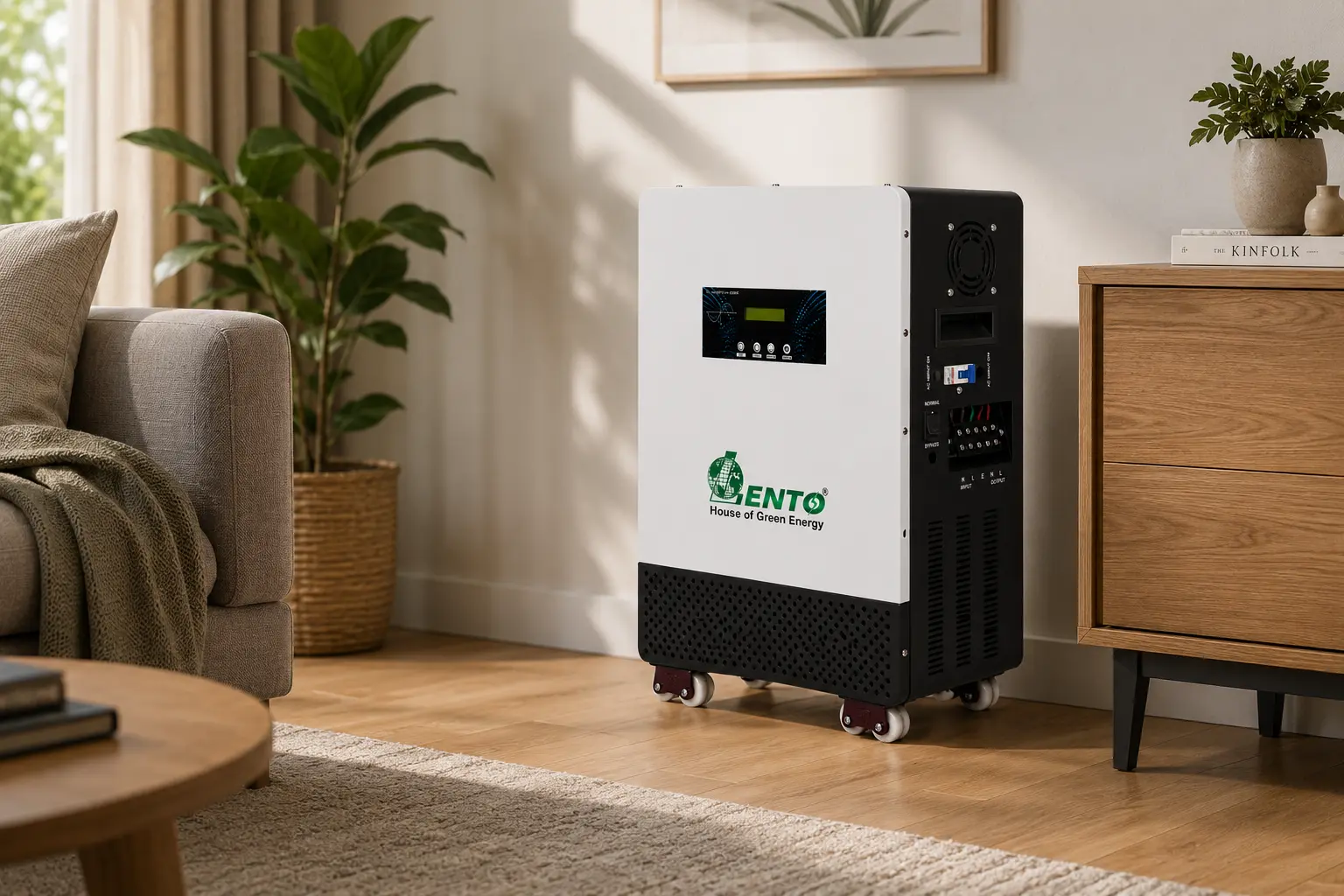
An inbuilt lithium battery inverter is a single unit that combines a pure sine wave inverter and a lifepo4 battery into one compact housing — no separate battery box, no external cabling, no water top-ups. It's becoming the go-to choice for Indian homes and small businesses that want reliable backup power without the upkeep of a traditional tubular battery setup.
How an Inbuilt Lithium Battery Inverter Works
In a standard setup, a home inverter connects to an external battery through separate wiring and a battery box. An inverter inbuilt lithium battery design instead houses the battery directly inside the inverter cabinet. This gives you:
- One compact unit instead of two separate components
- Faster charging than lead-acid tubular systems
- Zero maintenance — no water top-ups or acid checks
- A built-in Battery Management System (BMS) protecting against overcharge, over-discharge, and short circuits
- Longer lifespan — typically 3,000–6,000+ charge cycles versus 300–500 for tubular batteries
This integration is what separates a modern lithium ion battery inverter from a conventional inverter-plus-battery arrangement.
Why Choose a Lithium Inverter Over a Standard Setup?
A lithium inverter offers several advantages that matter most for daily use:
- Space savings — Ideal for small homes, apartments, offices, or shops where a separate battery box isn't practical.
- Faster recharge — Lithium batteries recharge significantly faster than tubular batteries, useful during short power-cut windows.
- Lower long-term cost — Despite a higher upfront price, the long cycle life of a lifepo4 battery inverter reduces replacement frequency over its lifetime.
- Lightweight design — Easier to install and relocate compared to heavy tubular battery units.
- Solar compatibility — Many inbuilt lithium battery inverters double as hybrid solar inverters, supporting both PWM and MPPT inverter charging.
Pure Sine Wave Inverter: The Foundation of a Good Backup System
Nearly every inbuilt lithium battery inverter on the market today uses pure sine wave inverter technology, which produces smooth, stable AC output similar to grid power. This is important for protecting sensitive electronics, refrigerators, and motor-based appliances — unlike older square-wave or modified sine wave inverters, which can cause humming, overheating, or reduced appliance lifespan over time.
Inbuilt Lithium Battery Inverter vs Standard Inverter Setup
|
Factor |
Inbuilt Lithium Battery Inverter |
Standard Inverter + External Battery |
|
Space required |
Compact, single unit |
Larger, separate battery box |
|
Maintenance |
None |
Water top-up (if tubular) |
|
Cycle life |
3,000–6,000+ cycles |
300–500 cycles (tubular) |
|
Charging speed |
Faster |
Slower |
|
Upfront cost |
Higher |
Lower |
|
Best for |
Frequent cuts, compact spaces, solar use |
Budget backup, occasional outages |
Choosing the Best Inverter for Home Use
The best inverter for home use depends on your total appliance load and how often you experience power cuts:
- Small homes/offices (lights, fans, TV, router): A compact 1100VA-class inbuilt lithium battery inverter is usually sufficient.
- Full home backup: A 2000VA+ unit supports higher loads, including refrigerators and water pumps.
- Solar-integrated homes: Choose a hybrid inverter with MPPT inverter charging for better efficiency, or PWM for a simpler, more affordable setup.
When comparing the best inverter price with battery across brands, check the battery chemistry (LiFePO4 is currently the safest and most widely used lithium type), BMS quality, and warranty coverage — these affect long-term reliability more than KVA rating alone.
Sine Wave Inverter with Inbuilt Lithium Battery — Buy Online
The Lento lithium battery inverter series is a true pure sine wave inverter range, ready to order for home and commercial use.
|
Model |
Battery Voltage |
Rated Capacity |
Compatible Battery |
Typical Use |
|
Li-ion 1100VA/12V |
12.8V |
1100 VA |
Lithium Battery (100AH) |
Household & commercial |
|
Li-ion 2100VA/24V |
25.6V |
2100 VA |
Lithium Battery (100AH) |
Commercial, hybrid solar |
|
Li-ion 2100VA/24V |
25.6V |
2500 VA |
Lithium Battery (100AH) |
Commercial & household |
Buy now on Amazon:-
Lento 1.1kVA Inverter with Inbuilt Lithium Battery (12.8V)
Lento 2.1kVA Inverter with Inbuilt Lithium Battery (25.6V)
Lento 2.5kVA Inverter with Inbuilt Lithium Battery (25.6V)
Hybrid Solar Inverter with Inbuilt Lithium Battery — Off-Grid PWM & MPPT
If you're planning a 1kw off grid solar system or a full 2 kw hybrid solar inverter setup, choose between PWM and inverter solar MPPT variants below.
Off-Grid PWM
|
Model |
Battery Voltage |
Rated Capacity |
Compatible Battery |
Typical Use |
|
Li-ion 1100VA/12.8V |
12.8VDC |
1100 VA |
Lithium Battery (100AH) |
Household |
|
Li-ion 2100VA/25.6V |
25.6VDC |
2100 VA |
Lithium Battery (100AH) |
Household |
|
Li-ion 2500VA/25.6V |
25.6VDC |
2500 VA |
Lithium Battery (100AH) |
Household |
Buy now on Amazon:-
Lento 1.1kVA Solar Inverter with Inbuilt Lithium Battery (12.8V)
Lento 2.1kVA Solar Inverter with Inbuilt Lithium Battery (25.6V)
Lento 2.5kVA Solar Inverter with Inbuilt Lithium Battery (25.6V)
Off-Grid MPPT
|
Model |
Battery Voltage |
Rated Capacity |
Compatible Battery |
Typical Use |
|
Li-ion 1100VA/12V |
12.8V |
1100 VA |
Lithium Battery |
Household |
|
Li-ion 2100VA/24V |
25.6V |
2100 VA |
Lithium Battery |
Household & commercial |
|
Li-ion 2500VA/24V |
25.6V |
2500 VA |
Lithium Battery |
Household & commercial |
Buy now on Amazon:-
Lento 1100VA Hybrid Solar Inverter with Inbuilt 12.8V Lithium Battery | MPPT Solar Charger
Top Inverter With Battery: What to Look For
When shortlisting a top inverter with battery, prioritize:
- Pure sine wave output — non-negotiable for appliance safety.
- BMS protection — essential for any lithium ion battery inverter.
- AH and KVA match — ensure battery capacity aligns with your inverter's rated load.
- After-sales support — local manufacturing and service availability speed up warranty claims.
- Solar readiness — useful even if you don't have solar panels yet, for future upgrades.
FAQs
Q1. What is the difference between a lithium battery inverter and a normal inverter?
A lithium battery inverter system delivers faster charging (2–4 hours), zero maintenance, and lasts 8–10 years. In contrast, a normal (lead-acid/tubular) inverter requires 8–12 hours to charge, regular water topping, and needs replacement every 3–5 year
Q2. Can we run AC on a lithium battery?
Yes, you can absolutely run an AC unit on a lithium battery, but it requires a robust setup.
Q3. Which type of inverter battery is best?
The best inverter battery depends on your needs, but Tall Tubular Lead-Acid batteries are the top choice for long power outages and heavy loads. If you want zero maintenance and fast charging, Lithium-Ion batteries are the best premium option, though they cost roughly 2.5 times more.
Q4. Is a lithium-ion battery safe for a home inverter?
Yes, lithium-ion batteries—specifically Lithium Iron Phosphate (LiFePO4)—are highly safe and ideal for home inverters.
Conclusion
An inbuilt lithium battery inverter brings together a pure sine wave inverter and a long-lasting lifepo4 battery in one compact, maintenance-free unit — a practical upgrade over traditional inverter-and-tubular-battery setups, especially for homes with frequent power cuts or solar systems. When comparing the best inverter price with battery, weigh upfront cost against long-term savings from lower maintenance and longer battery life to find the top inverter that fits your home or business.
Read More:-
Top 10 Inverter Brands in India (2026)
Best inbuilt lithium ion battery inverter company in india price list
Inverter with Inbuilt Lithium Battery for home
What are the Top 5 Inverters? : Which One Gives the Best Power Backup?
Don’t Delay, Join Us Today!
Related Posts
- Best Lithium battery with inverter price in India — what you actually pay, and why
- What is the best inverter with an inbuilt lithium battery for home use?
- E-Rickshaw Charger Wholesale in India: Prices, Suppliers & Buying Guide
- E-Rickshaw Charger OEM Manufacturing in India: Custom & Private Label Solutions