
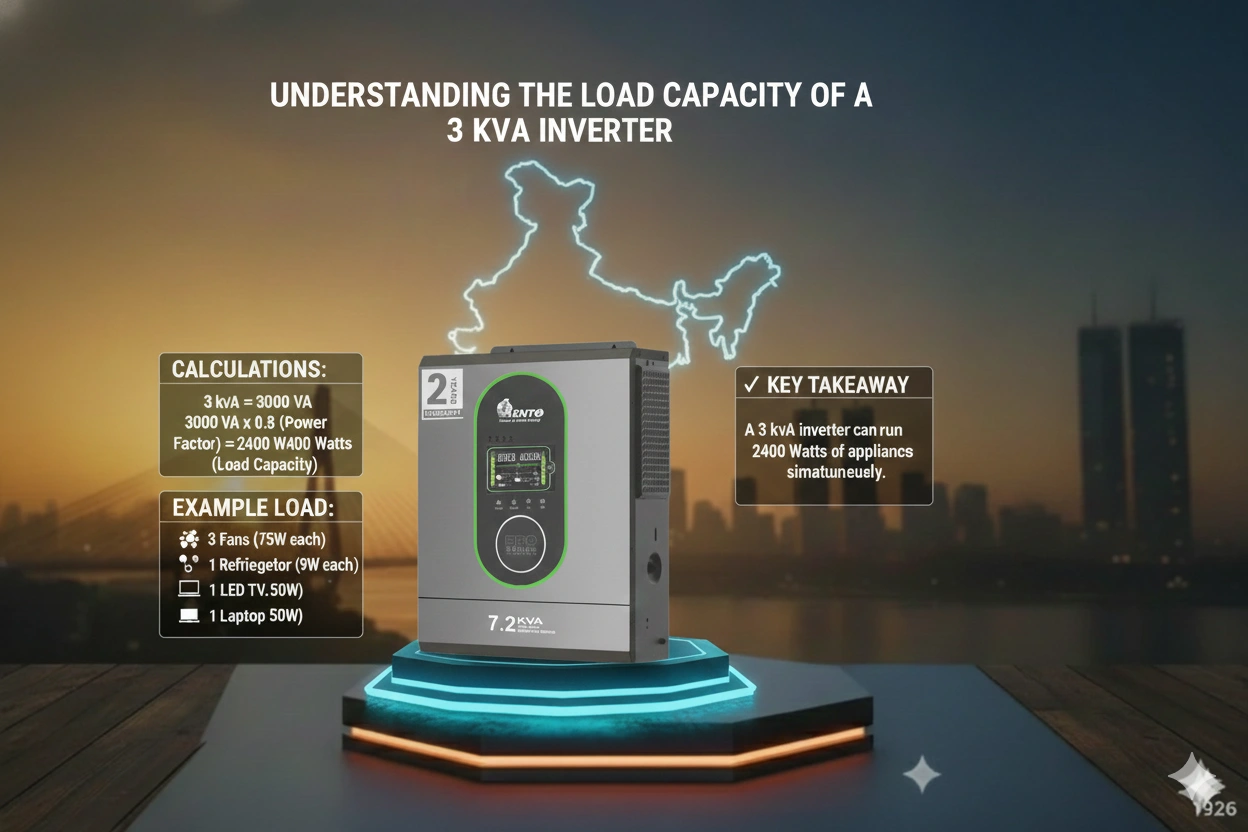
Understanding the Load Capacity of a 3 KVA Inverter
05 December 2025
Choosing the right inverter for your home or business is not just about picking a popular model—it’s about understanding its load capacity and how it matches your energy needs. Many people ask me, “What can a 3 KVA inverter handle?” or “How do I calculate the appliances it can support?” In this blog, I’ll explain everything in simple terms, helping you make an informed decision.
As a solar products manufacturer, exporter, and supplier, we work with tubular batteries, solar inverters, online UPS systems, EV chargers, and lithium-ion batteries, so you’ll also learn how these products relate to your inverter’s performance.
What Does 3 KVA Mean?
A 3 KVA inverter is rated to handle 3 kilovolt-amperes of load. Let’s break that down:
-
KVA (Kilovolt-Amperes) measures apparent power, which includes both real power (watts) and reactive power (VARs).
-
For home and office use, a 3 KVA inverter typically converts to about 2400–2700 watts of real power, depending on efficiency.
-
In simpler terms, this inverter can run multiple appliances simultaneously without overloading, as long as the total power consumption stays within this limit.
Understanding KVA is crucial because an inverter rated too low for your load can overheat, reduce backup time, and shorten battery life.
Calculating the Load Capacity
To understand what a 3 KVA inverter can handle, follow these steps:
Step 1: List Your Appliances
Start by noting down all the devices you want to power:
-
Fans
-
Lights
-
Refrigerators
-
Computers or laptops
-
Water pumps
-
Air conditioners
Step 2: Check Power Ratings
Each appliance has a power rating in watts, usually mentioned on the label or manual.
-
For example, a ceiling fan may use 80 watts, while a refrigerator could be 200–400 watts.
Step 3: Add Total Consumption
Add the wattage of all appliances you want to run simultaneously. For example:
-
4 fans × 80W = 320W
-
6 LED lights × 15W = 90W
-
Refrigerator = 300W
Total Load = 710W, which is well within a 3 KVA inverter’s real power limit.
Factors Affecting Load Capacity
Even if your total load is within limits, other factors influence performance:
1. Inverter Efficiency
Not all power drawn from the battery is converted into usable AC power. Most high-quality solar inverters or online UPS systems have around 90–95% efficiency.
2. Battery Type and Capacity
-
Tubular batteries handle deep discharge better, supporting heavy loads for longer durations.
-
Lithium-ion batteries offer higher efficiency and longer life but are costlier.
A 3 KVA inverter paired with a 150Ah tubular battery can power moderate loads for several hours, while larger batteries increase backup time.
3. Surge Load
Some appliances, like refrigerators and air conditioners, draw extra current during startup. Ensure your inverter can handle short-term surge loads without tripping.
Practical Load Examples
Here’s a rough idea of what a 3 KVA inverter can handle comfortably:
-
Fans: 8–10 ceiling fans simultaneously
-
Lights: 20–30 LED lights
-
Refrigerator: 1–2 standard models
-
Television and computer: 2–3 units
-
Water pump: 1 unit (depending on power rating)
You can mix and match, but always stay within the inverter’s continuous power rating to avoid damage.
Tips to Maximize Inverter Efficiency
-
Use energy-efficient appliances like LED lights and BLDC fans.
-
Avoid running high-power devices simultaneously if your battery capacity is limited.
-
Keep your tubular battery or lithium-ion battery properly maintained for optimal performance.
-
Pair your inverter with solar panels to recharge batteries during the day, reducing reliance on grid power.
-
Choose a solar inverter or online UPS with good surge handling capabilities for safety and reliability.
Real-World Scenario
One of our clients installed a 3 KVA inverter with a 200Ah tubular battery for a small office. They powered 6 fans, 10 LED lights, 2 computers, and a refrigerator. Even during a prolonged power outage, the system ran smoothly for about 6–7 hours. By adding solar panels, the battery recharged during the day, ensuring uninterrupted power without increasing electricity bills.
This example highlights how pairing a properly sized inverter with the right battery type and solar setup maximizes efficiency and backup time.
Choosing the Right 3 KVA Inverter
When selecting a 3 KVA inverter, consider:
-
Quality and Brand: A high-quality solar inverter manufacturer ensures better efficiency and longer life.
-
Battery Compatibility: Check if it pairs well with your tubular battery, lithium-ion battery, or online UPS.
-
Additional Features: Look for built-in protections like overload, short-circuit, and low battery alarms.
-
Support and Warranty: Reliable support ensures quick resolution if issues arise.
Conclusion
Understanding the load capacity of a 3 KVA inverter is essential to ensure your appliances run smoothly and your battery lasts longer. By calculating total power consumption, considering inverter efficiency, and pairing with the right tubular or lithium-ion battery, you can enjoy reliable backup for home or office.
Regular maintenance, energy-efficient appliances, and high-quality products from a trusted solar products manufacturer, exporter, and supplier will further enhance your inverter’s performance.