Solar Inverter With Battery Price in Nigeria in 2026
03 December 2025
Nigeria’s growing power challenges and rising electricity costs have pushed more homes and businesses to move toward solar energy. A solar inverter with battery is now one of the most demanded backup systems in the country, offering uninterrupted power, lower energy bills, and long-term reliability.
As we move into 2026, the market for solar inverters and batteries is growing fast, and prices vary depending on brand, technology, and backup needs. This blog explains the current price trends, what to expect in 2026, and how to choose the right solar inverter with battery system in Nigeria.
What Is a Solar Inverter With Battery?
A solar inverter with battery is a hybrid power system that converts solar energy into usable electricity while storing excess power in batteries for later use. It is ideal for areas with unstable grid supply or off-grid communities.
Key Components
-
Solar inverter (PWM or MPPT)
-
Solar panels
-
Battery (Tubular or Lithium-ion)
-
Charge controller (built-in in hybrid inverters)
-
Accessories: breakers, DC cables, fuses, MC4 connectors
This setup ensures 24/7 power, even during grid failure or cloudy conditions.
Solar Inverter With Battery Price in Nigeria (2026 Estimates)
Prices in Nigeria may differ based on brand, power rating, battery technology, and installation costs. Below is an estimated price range for 2026.
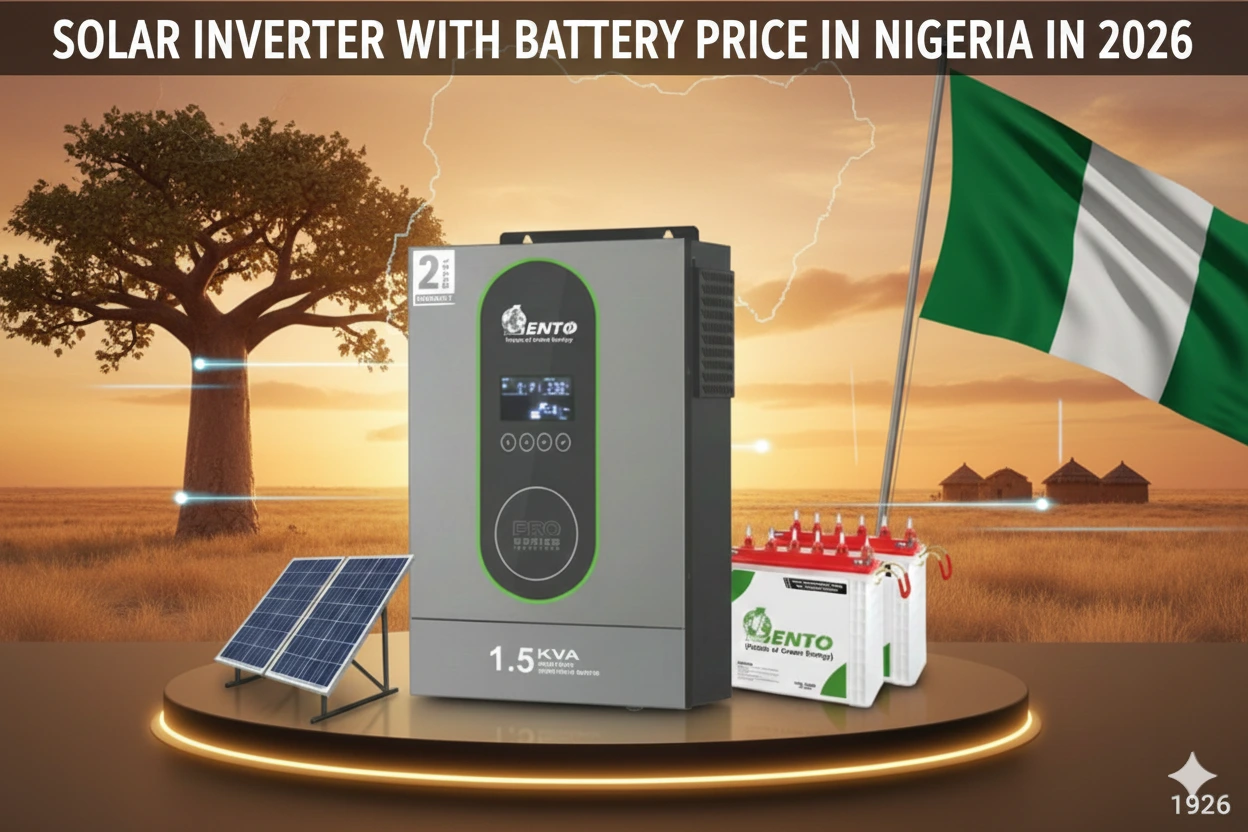
1.5kVA Solar Inverter With Battery (2026 Price)
Price Range: ₦220,000 – ₦480,000
Suitable For:
-
Lights
-
Fans
-
TV
-
Small electronics
Battery Options:
-
12V 150Ah Tubular Battery
-
12V 100Ah Lithium Battery
3.5kVA Solar Inverter With Battery (2026 Price)
Price Range: ₦380,000 – ₦850,000
Suitable For:
-
Mid-size homes
-
Refrigerators
-
Multiple appliances
Battery Options:
-
12V 200Ah Tubular Battery × 2
-
24V 100Ah Lithium Battery
5kVA Solar Inverter With Battery (2026 Price)
Price Range: ₦650,000 – ₦1,500,000
Suitable For:
-
Large homes
-
Shops & business setups
-
Pump, freezer, computers
Battery Options:
-
48V 200Ah Tubular Battery
-
48V 100Ah Lithium Battery
7.5kVA Solar Inverter With Battery (2026 Price)
Price Range: ₦1,200,000 – ₦2,500,000
Suitable For:
-
Offices
-
Small industries
-
Large homes
Battery Options:
-
48V 300Ah Tubular Battery
-
48V 200Ah Lithium Battery
Factors Affecting Solar Inverter + Battery Prices in Nigeria (2026)
1. Battery Type (Most Important Factor)
-
Tubular Battery: Cheaper, long life, heavy
-
Lithium-ion Battery: Lightweight, faster charging, expensive
2. Inverter Technology
-
PWM: Low-cost, basic
-
MPPT: More efficient, best for Nigeria’s hot climate
3. Capacity Requirement
Higher loads mean higher system cost.
4. Brand and Warranty
Reputable brands with long warranties cost more but offer better reliability.
5. Installation Cost
Location, wiring condition, and system size influence installation pricing.
Best Solar Inverter + Battery Brands in Nigeria (2026)
1. Lento
-
MPPT hybrid inverters
-
Heavy-duty tubular batteries
-
Long backup performance
-
Ideal for homes and businesses
2. Sukam / Luminous / Microtek
Popular home inverter brands from India.
3. Must / Felicity
Affordable Chinese hybrid inverter options.
4. Victron Energy
Premium high-end solar inverters.
5. Growatt / Huawei Solar
Advanced hybrid inverters for commercial users.
Why Nigerians Prefer Solar Inverter With Battery Systems
-
No more fuel expenses
-
Stable power during grid failure
-
Low maintenance
-
Clean and renewable energy
-
Long-term cost savings
How to Choose the Right Solar Inverter + Battery System
-
First, calculate your total load.
-
Decide whether you want tubular or lithium batteries.
-
Choose an MPPT inverter for higher efficiency.
-
Select a trusted brand with support in Nigeria.
-
Ensure proper installation by a solar technician.
Lento India – Global B2B Solar Exporter
Lento India proudly exports solar and power solutions to 24 countries including Mexico, Chile, Peru, Ecuador, Dominican Republic, Afghanistan, Nigeria, Iraq, Uganda, Yemen, Syria, Iran, Oman, Morocco, Egypt, and Kuwait.
We supply solar panels, tubular batteries, SMF batteries, inverters, and Online UPS systems to global distributors, OEMs, and large-scale installers.
If you are a business owner, project developer, or distributor, we welcome you to partner with us for bulk supply opportunities.
Simply share your requirements by our contact form, and our export team will connect with you within 24 hours to discuss pricing, customization, and logistics.
Lento India – Powering industries, homes, and communities across continents with trust and technology.
FAQ: Solar Inverter With Battery Price in Nigeria (2026)
1. How much is a solar inverter with battery in Nigeria in 2026?
Prices range from ₦220,000 to ₦2,500,000, depending on capacity and battery type.
2. Which battery is best for solar in Nigeria?
Lithium-ion batteries offer the longest lifespan, but tubular batteries are still the most affordable and widely used.
3. How long does a solar battery last?
-
Tubular batteries: 3–5 years
-
Lithium-ion: 7–12 years
4. Can a 5kVA inverter run a freezer and AC?
It can run a freezer easily. For AC, battery size must be increased.
5. How many batteries do I need for a 3.5kVA or 5kVA inverter?
It depends on voltage:
-
3.5kVA (24V) → 2 batteries
-
5kVA (48V) → 4 batteries
6. Is solar inverter better than generator in Nigeria?
Yes, because it saves fuel, requires minimal maintenance, and provides clean, silent energy.
7. How much is 20kva 48v inverter in Nigeria?
₦4,950,000.00.
8. What is the best battery brand in Nigeria?
Leading brands include Lento, Energos, Kan, Fabton . These companies are recognized for offering high-quality tubular batteries with strong backup performance, good customer support, and suitability for Nigerian power challenges.
9. How much is 15kva 48v inverter in Nigeria?
₦1,900,000.00.
10. How many solar panels for a 15kW inverter?
A 15kW Solar system is usually paired with 40 to 50 Solar panels (depending on the wattage of the Solar panels offered; you only need 40 of the 370w Solar panels to get 15kW) and either a 10kW or 15kW inverter.
Conclusion
As Nigeria continues to face unstable power supply, a solar inverter with battery system has become one of the smartest investments for homes, shops, and small businesses. Prices in 2026 vary based on inverter capacity, battery technology, and brand reputation, but the long-term savings make solar far more cost-effective than fuel-powered generators.
Whether you choose a 1.5kVA setup for basic needs or a 7.5kVA hybrid system for full home backup, solar power is increasingly the future of Nigeria’s energy independence.
If you need help choosing the right inverter-battery combination, feel free to ask—I can guide you based on your load and budget.