Is a Lithium Battery Inverter Actually Worth the Price in India?
23 June 2026
If you've been researching a solar inverter for home use, you've likely noticed that lithium battery inverters come with a steeper price tag than traditional lead-acid alternatives. But here's what most buyers overlook: the real question isn't about the upfront cost — it's about what you get for every rupee spent over 10+ years of daily use. This article breaks down everything you need to know before buying.
What Is a Lithium Battery Inverter?
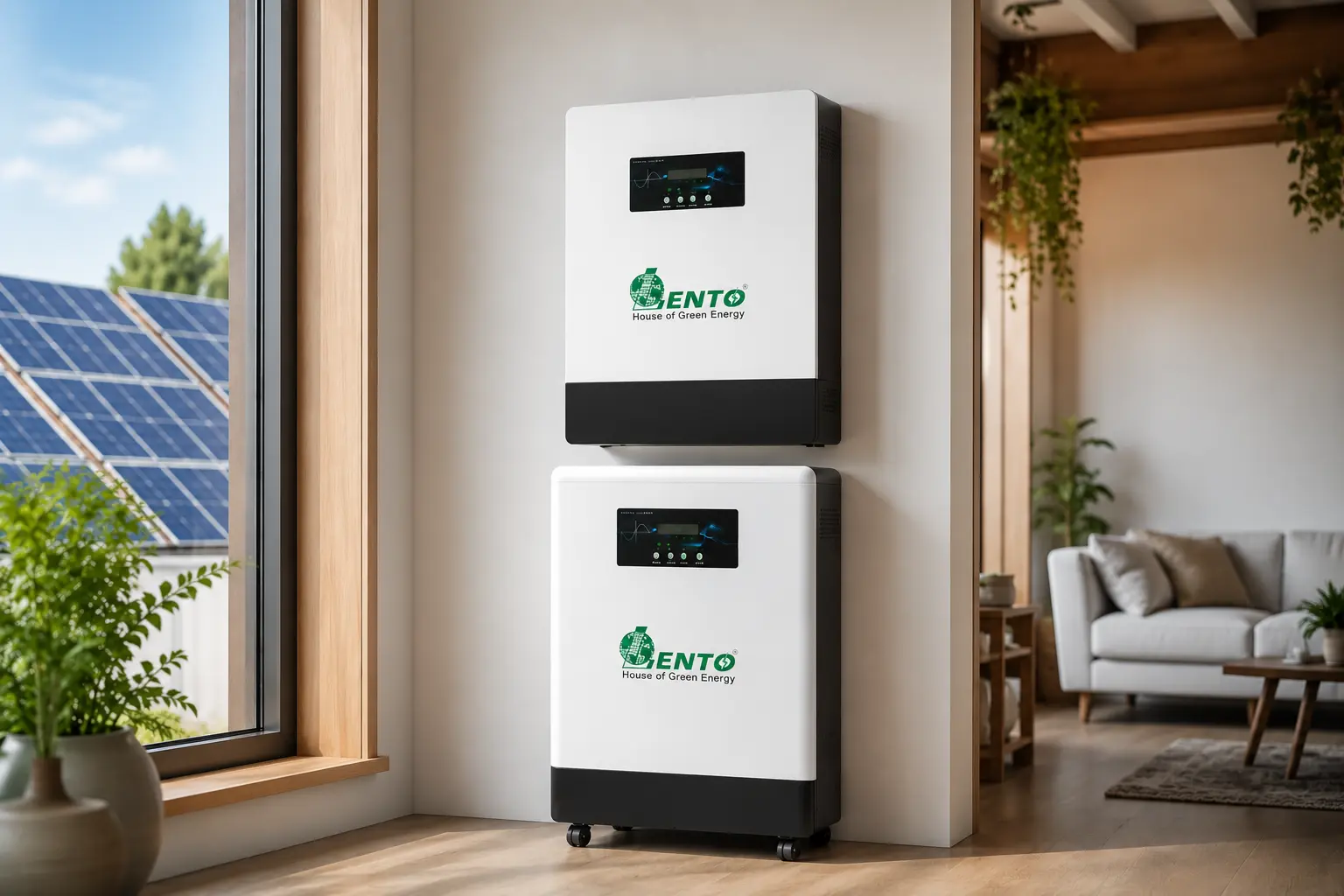
A lithium battery with inverter combines a Li-ion or LiFePO4 battery pack with an inverter unit — either in an integrated (inbuilt) format or as separate components. Unlike conventional setups, modern home power inverters from Lento Industries feature an inbuilt lithium battery that eliminates the hassle of separate battery management, reduces space requirements, and delivers superior performance.
The li ion battery for inverter technology works on a chemistry that allows deeper discharge (up to 80–90% DoD), charges faster, and holds energy more efficiently than lead-acid cells.
Lento Industries Product Range: Specifications at a Glance
Lento Industries offers three primary product lines, each suited for different household and commercial energy needs.
1. Sine Wave Inverter with Inbuilt Lithium Battery
A pure sine wave inverter is essential for sensitive electronics like computers, medical devices, and modern appliances. Lento's sine wave range delivers clean, stable output power.
|
Model |
Battery Voltage |
Rated Capacity |
Compatible Battery |
Typical Applications |
|
Li-ion 1100VA/12V |
12.8V DC |
1100 VA |
Lithium 100AH |
Household & commercial |
|
Li-ion 2100VA/24V |
25.6V DC |
2100 VA |
Lithium 100AH |
Commercial, hybrid solar |
|
Li-ion 2100VA/24V |
25.6V DC |
2500 VA |
Lithium 100AH |
Commercial & household |
By now on Amazon:-
Lento 1.1kVA Solar Inverter with Inbuilt Lithium Battery (12.8V)
Lento 2.1kVA Solar Inverter with Inbuilt Lithium Battery (25.6V)
Lento 2.5kVA Solar Inverter with Inbuilt Lithium Battery (25.6V)
2. Hybrid Solar Inverter with Inbuilt Lithium Battery (Off-Grid PWM)
For those beginning their solar journey, the PWM-based hybrid solar inverter is a cost-effective off-grid option that integrates solar charging directly into the unit.
|
Model |
Battery Voltage |
Rated Capacity |
Compatible Battery |
Typical Applications |
|
Li-ion 1100VA/12.8V |
12.8V DC |
1100 VA |
Lithium 100AH |
Household |
|
Li-ion 2100VA/25.6V |
25.6V DC |
2100 VA |
Lithium 100AH |
Household |
|
Li-ion 2100VA/25.6V |
25.6V DC |
2500 VA |
Lithium 100AH |
Household |
3. Hybrid Solar Inverter with Inbuilt Lithium Battery (Off-Grid MPPT)
The MPPT inverter is the gold standard for maximising solar energy harvest. Maximum Power Point Tracking technology extracts up to 30% more energy from your solar panels compared to PWM, making it the best solar inverter choice for homes with higher energy demands.
|
Model |
Battery Voltage |
Rated Capacity |
Compatible Battery |
Typical Applications |
|
Li-ion 1100VA/12V |
12.8V DC |
1100 VA |
Lithium Battery |
Household |
|
Li-ion 2100VA/24V |
25.6V DC |
2100 VA |
Lithium Battery |
Household & commercial |
|
Li-ion 2500VA/24V |
25.6V DC |
2500 VA |
Lithium Battery |
Household & commercial |
Cost of Inverter for Home: What Does a Complete Setup Cost?
The cost of inverter for home in India with lithium technology varies based on capacity and features. For a complete 1 KVA to 2.5 KVA setup from Lento Industries:
- Entry-level (1100VA): Starting from ₹30,000
- Mid-range (2100VA): ₹45,000 – ₹55,000
- Premium (2500VA): ₹60,000 – ₹70,000+
Compare this against a traditional lead-acid inverter setup that may cost ₹15,000–₹25,000 initially but requires battery replacement every 3–4 years, adding ₹10,000–₹18,000 per cycle. Over 10 years, total cost of ownership often favours lithium.
Why Lithium Wins: Key Advantages Over Lead-Acid
When evaluating the best solar inverter in India, these are the performance differences that matter:
Lifespan: Lithium batteries last 8 to 12 years, compared to 3–5 years for lead-acid. Lento's lithium inverters carry a standard 5 to 7-year warranty — a confidence indicator no lead-acid brand can match.
Depth of Discharge: Li-ion batteries can safely discharge to 80–90%, giving you nearly double the usable energy per cycle.
Zero Maintenance: No water top-ups, no terminal cleaning, no corrosion checks — lithium is genuinely maintenance-free.
Compact & Lightweight: Inbuilt lithium designs from Lento take up roughly 60% less space than a conventional inverter-battery combination.
Fast Charging: A lithium battery charges in 3–5 hours versus 8–10 hours for lead-acid, which matters significantly during short grid availability windows.
Efficiency: Li-ion cells operate at 95–98% round-trip efficiency, meaning very little energy is wasted during charge-discharge cycles.
Home Inverter Price vs. Long-Term Value: A 10-Year Comparison
|
Factor |
Lead-Acid Inverter |
Lento Lithium Inverter |
|
Initial Cost |
₹15,000–₹25,000 |
₹30,000–₹70,000+ |
|
Battery Lifespan |
3–4 years |
8–12 years |
|
Replacements (10 yr) |
2–3 times |
0 times |
|
Total Cost (10 yr) |
₹45,000–₹79,000 |
₹30,000–₹70,000+ |
|
Warranty |
1–2 years |
5–7 years |
|
Maintenance |
Regular |
Zero |
The home inverter price difference shrinks considerably — and often reverses — when viewed across a decade.
Amazon Availability (Single Unit Purchase)
Lento inverters are available on Amazon, allowing you to:
- Buy single units
- Compare features and pricing
- Check customer reviews
- Get home delivery
This makes Lento a convenient option for the best inverter with battery for home in India.
PWM vs. MPPT: Which Solar Inverter Is Right for You?
Both technologies are available in Lento's hybrid solar inverter lineup. Here's a quick comparison:
PWM (Pulse Width Modulation): Simpler, lower cost, suitable for smaller installations where the solar panel voltage closely matches battery voltage. Ideal for basic household loads.
MPPT (Maximum Power Point Tracking): The MPPT inverter continuously adjusts its operating point to extract the maximum possible power from solar panels under varying light conditions. It handles higher panel voltages and delivers up to 30% more energy — making it the smarter choice for maximising ROI on solar investment.
For most Indian households looking for the best solar inverter, the MPPT variant provides the best long-term energy yield.
Frequently Asked Questions (FAQs)
Q1. Is lithium battery good for inverter?
Yes, lithium batteries are excellent for inverters because they offer faster charging, longer lifespan, higher efficiency, and require minimal maintenance.
Q2. Do I need a special inverter for lithium batteries?
Yes, it is recommended to use an inverter that is compatible with lithium batteries to ensure proper charging and optimal performance.
Q3. What size inverter can I run off a 100Ah lithium battery?
A 100Ah lithium battery is commonly paired with a 900VA to 1500VA inverter, depending on the load and backup requirements.
Q4. What is the best inverter for lithium batteries?
A pure sine wave inverter with dedicated lithium battery support is considered the best option for lithium battery systems.
Q5. How many solar panels do I need to charge a 100Ah battery in 5 hours?
Typically, around 300W to 400W of solar panels are required to charge a 12V 100Ah battery within 5 hours under ideal sunlight conditions.
Q6. What is the biggest disadvantage of a lithium-ion battery?
The main disadvantage of lithium-ion batteries is their higher initial cost compared to traditional lead-acid batteries.
Final Verdict: Should You Invest in a Lithium Battery Inverter?
If you're looking for the best solar inverter that combines reliability, safety, low maintenance, and solar compatibility — yes, a lithium battery inverter is absolutely worth the price in India. The initial cost of inverter for home may be higher, but the long lifespan, warranty coverage, zero maintenance, and energy efficiency make it the most economical choice in the long run.
Lento Industries Private Limited manufactures a complete range of home power inverters — from pure sine wave models to advanced MPPT hybrid solar inverters — all with inbuilt lithium batteries engineered for Indian conditions.
For product inquiries, specifications, and dealer information, contact Lento Industries Private Limited.
Read more:-
Best inverter with Lithium ion battery for home
Which inverter company is best
Which Inverter Is Best for Long Time