
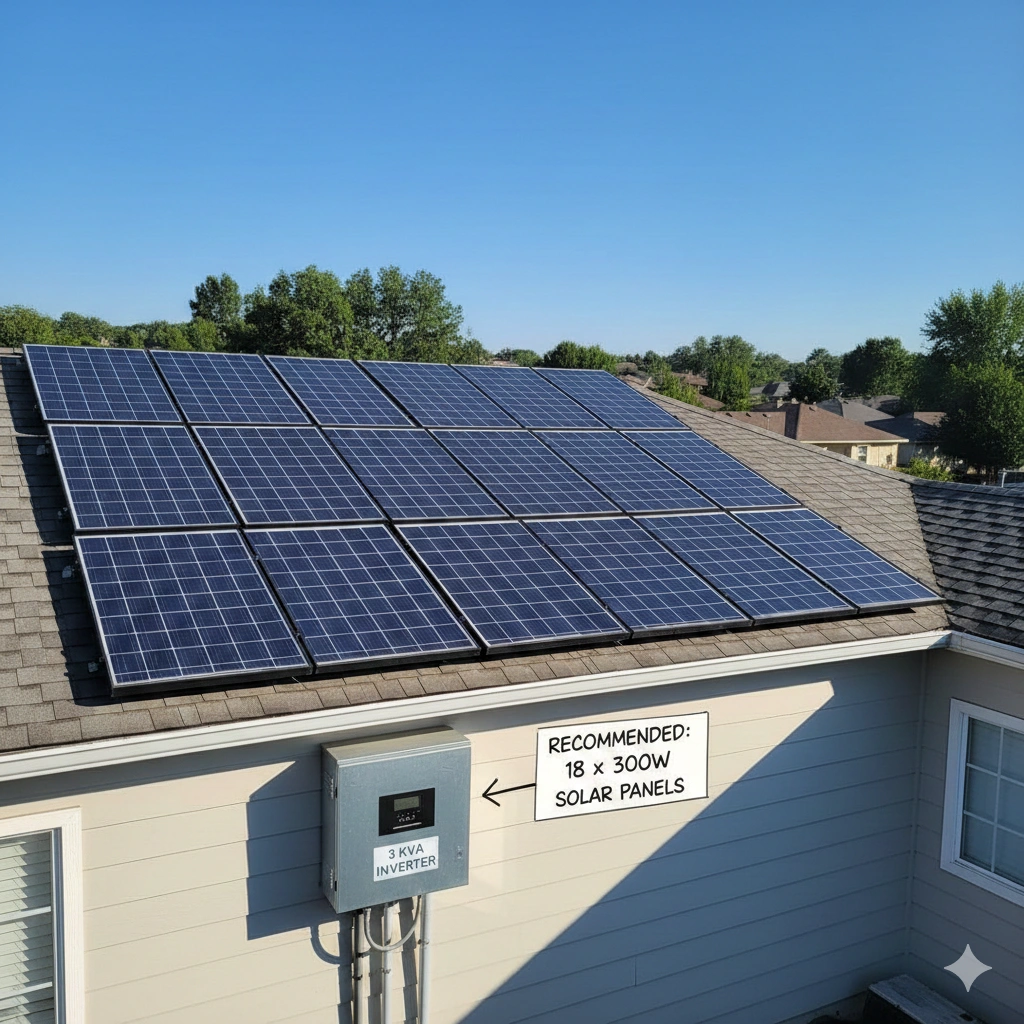
How Many Solar Panels for a 3kVA Inverter?
05 December 2025
When people think about installing a solar system, one question regularly pops up: “How many solar panels do I need for a 3kVA inverter?”
As someone who works closely with distributors, installers, and end customers, I understand how confusing this calculation can seem—especially if you’re setting up your solar system for the first time. In this blog, I’ll walk you through everything you need to know in a clear, friendly, and practical way.
Since we are a solar products manufacturer, exporter, and supplier, producing everything from tubular batteries and solar inverters to online UPS systems, EV chargers, and lithium-ion batteries, I’ll explain this based on real field experience. My goal is to help you understand exactly how many panels you need, why you need them, and how to choose the correct setup for your home or business.
Let’s begin your solar sizing journey.
Understanding What a 3kVA Inverter Really Means
Before calculating solar panels, we must first understand what a 3kVA inverter is capable of. A 3kVA inverter typically delivers around 2400W to 3000W of usable power depending on the power factor. This capacity is ideal for homes, small businesses, offices, and shops that want reliable backup and daytime solar power without overspending.
A 3kVA system can comfortably run appliances such as fans, LED lights, laptops, TVs, routers, and even refrigerators depending on your battery setup. This makes it one of the most popular inverter sizes across both urban and rural installations.
As a solar inverter manufacturer, I can assure you that the performance of a 3kVA system heavily depends on your panel sizing and battery choice. That’s exactly why this topic is so important.
Why Solar Panel Sizing Matters So Much
The number of solar panels you choose determines:
-
How fast your batteries charge
-
How much load you can run directly from solar
-
How much grid electricity you can save
-
How efficiently your system performs during cloudy or low-light days
Under-sizing your panel array leads to slow battery charging and inconsistent performance, while over-sizing boosts system efficiency and long-term savings.
This is why almost all installers and manufacturers—including us—recommend matching or slightly oversizing your panel capacity compared to your inverter rating.
So, How Many Solar Panels for a 3kVA Inverter?
If you want a fast, straightforward answer:
-
With 400W panels:
You need 7 to 8 panels. -
With 550W panels:
You need 5 to 6 panels.
This gives you a total solar capacity of around 2.8 kW to 3.3 kW, which is the sweet spot for a 3kVA inverter.
Now let’s break down how we reach these numbers.
The Simple Calculation Behind Panel Requirement
Solar capacity needed ≈ Inverter capacity
Most 3kVA inverters support around 3000W of solar input.
If you use 400W solar panels:
3000W ÷ 400W = 7.5 panels
So, you install 7 or 8 panels.
If you use 550W solar panels:
3000W ÷ 550W = 5.45 panels
So, you install 5 or 6 panels.
This calculation is the industry standard used by every solar products manufacturer and supplier globally.
Factors That Influence the Number of Panels
Your exact panel requirement also depends on several real-world conditions. As a company that installs and exports solar products, we observe these factors in almost every project:
1. Solar Input Range of the Inverter
Not all 3kVA inverters support the same number of solar panels. MPPT inverters accept higher solar input, while PWM-based models accept less.
2. Type of Solar Panel You Choose
Modern mono PERC and half-cut panels (400W–550W) deliver far better efficiency than older 250W or 300W poly panels.
3. Your Geographic Location
Regions like Rajasthan or Gujarat get stronger sunlight than hilly or coastal areas.
4. Whether Your System Is Off-Grid, On-Grid, or Hybrid
This significantly impacts your panel requirement (more details below).
5. Your Daily Energy Consumption
If you run heavier loads or use solar throughout the day, higher panel capacity is needed.
These factors ensure your solar system runs at its best for years.
Panel Requirement Based on System Type
Every 3kVA solar system is not designed the same way. The type of solar setup you choose affects how many panels you need.
1. Off-Grid System (With Battery Backup)
Off-grid systems rely heavily on solar for both running appliances and charging the batteries. That’s why panel sizing is slightly higher here.
Recommended:
-
7–8 panels of 400W
-
5–6 panels of 550W
Total: 2.8 kW – 3.3 kW
Since we are a tubular battery manufacturer and a lithium ion battery manufacturer, we always advise installing enough solar power to fully charge batteries even on cloudy days.
2. On-Grid System (No Battery)
On-grid systems are connected to the electricity grid, so they don't need to charge batteries.
Recommended:
-
6–7 panels of 400W
-
5–6 panels of 550W
The primary focus here is electricity savings rather than backup.
3. Hybrid Solar System (Solar + Grid + Battery)
Hybrid systems demand the most balanced sizing. They store power in the battery and also export surplus to the grid when possible.
Recommended:
-
8 × 400W panels
-
6 × 550W panels
Hybrids work exceptionally well with lithium-ion batteries because of their fast charging and long cycle life.
What Appliances Can a 3kVA Solar System Run?
A properly sized 3kVA system can run:
-
Ceiling fans
-
LED lights
-
Wi-Fi router
-
Desktop + Laptop
-
LED TV
-
Refrigerator
-
CCTV systems
-
Small water pumps (0.5 HP)
-
Phone chargers and small appliances
Backup time depends entirely on your battery size.
This is why selecting the right battery is crucial.
Ideal Battery Setup for a 3kVA Solar Inverter
Your battery acts as the backbone of your solar system.
Common battery setups include:
-
2 × 150Ah Tubular batteries (24V)
-
2 × 200Ah Tubular batteries (24V)
-
24V Lithium-ion battery pack
As both a tubular battery manufacturer and a lithium ion battery manufacturer, I usually recommend lithium batteries for users who want:
-
Faster charging
-
Higher efficiency
-
Longer lifespan
-
Zero maintenance
However, tubular batteries are still preferred for affordability and long backup.
Why Oversizing Your Solar Panels Is a Smart Choice
Installing slightly more solar capacity than the inverter rating offers a long list of advantages:
-
Better performance throughout the year
-
Faster charging even in winter and cloudy weather
-
Reduced load on the battery
-
Increased savings on electricity bills
-
Longer battery life
Most solar inverter manufacturers design MPPT inverters to handle 20–30% extra input safely.
What Happens If You Install Fewer Panels?
Under-sizing the solar panel array leads to:
-
Slow battery charging
-
Short backup time
-
Higher dependence on the grid
-
Poor system efficiency
-
Faster battery wear and tear
This is one of the biggest mistakes people make when trying to reduce upfront costs.
Real-World Examples of 3kVA Solar Panel Sizing
Example 1: Residential Home
-
3kVA off-grid inverter
-
3.2 kW solar panel array
-
200Ah × 2 tubular batteries
Perfect for a 2–3 BHK home needing consistent backup.
Example 2: Small Business or Shop
-
3kVA hybrid inverter
-
2.8 kW solar panels
-
Lithium-ion battery pack
Great for running POS machines, fans, lights, and a refrigerator.
Example 3: Office Setup
-
3kVA on-grid inverter
-
3 kW solar panel array
Ideal for daytime load reduction.
These examples come directly from the thousands of installations we support as a solar products manufacturer and exporter.
Final Recommendation: How Many Solar Panels for a 3kVA Inverter?
To sum it up clearly:
-
Use 7–8 × 400W panels
OR -
Use 5–6 × 550W panels
This ensures:
-
Stable performance
-
Faster charging
-
Longer battery life
-
Higher solar generation
-
Maximum ROI
Total required solar capacity:
2.8 kW – 3.3 kW
Conclusion
Choosing the right number of solar panels for a 3kVA inverter is crucial for achieving reliable power, long backup, and strong solar savings. Once you understand your load requirement, panel wattage, and battery type, the entire process becomes simple and predictable.