
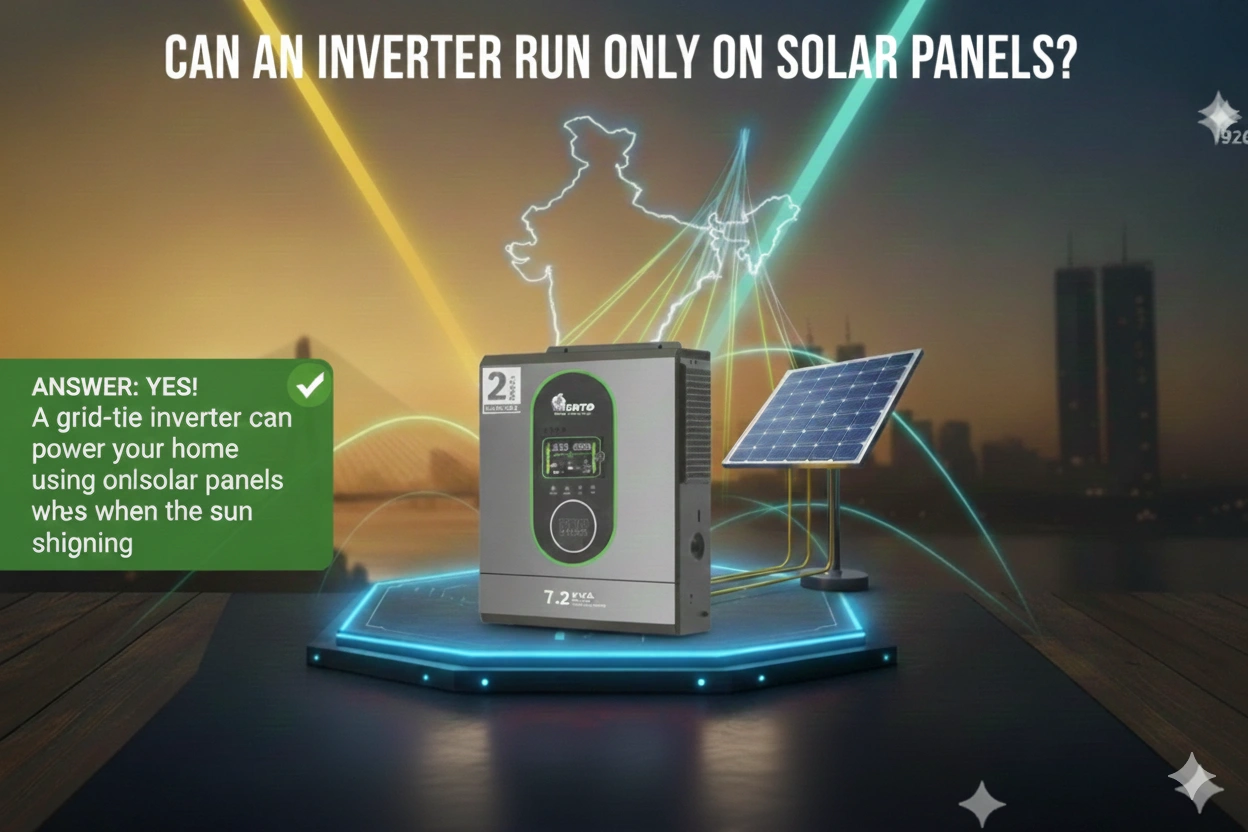
can an inverter run only on solar panels
05 December 2025
Power outages, rising electricity bills, and the push for sustainable energy have made solar power a popular choice for both homes and businesses. One question I hear often is: “Can an inverter run only on solar panels?” The answer is yes, but with some considerations. In this blog, I’ll guide you through everything you need to know in a practical, easy-to-understand way.
As a solar products manufacturer, exporter, and supplier, we specialize in tubular batteries, solar inverters, online UPS systems, EV chargers, and lithium-ion batteries, so I’ll also explain how these products fit into solar-only setups.
How Solar-Powered Inverters Work
At its core, an inverter converts DC (direct current) electricity from a battery or solar panel into AC (alternating current), which powers your home or business appliances.
When running purely on solar panels:
-
Solar panels generate DC electricity when exposed to sunlight.
-
Charge controllers regulate voltage to prevent overcharging or damage.
-
The inverter converts DC to AC, delivering usable electricity for your appliances.
Some modern solar inverters can operate directly on solar power, meaning your system can supply energy without relying on batteries during peak sunlight hours.
Types of Inverters Suitable for Solar-Only Operation
Not every inverter can run solely on solar energy. Choosing the right type is crucial.
Pure Sine Wave Inverters
These inverters provide clean, stable power suitable for all appliances, including sensitive electronics like computers and refrigerators. Many online UPS manufacturers offer solar-compatible models ideal for homes and businesses.
Modified Sine Wave Inverters
These are more affordable but best suited for simple appliances like fans, lights, and basic electronics. They may not be compatible with sensitive devices.
Hybrid Solar Inverters
Hybrid inverters combine solar and battery power. During sunny hours, they run on solar panels, and when sunlight is insufficient, they draw from batteries. This ensures uninterrupted power and maximizes solar usage.
Key Factors for Running an Inverter on Solar Panels
Several factors determine how efficiently your inverter can run solely on solar power.
-
Load Requirements: The total power of appliances you plan to run decides the number and capacity of solar panels needed.
-
Sunlight Availability: Regions with consistent sunlight are ideal. Cloudy or rainy days can reduce performance.
-
Panel Wattage and Quantity: Higher wattage or additional panels support larger loads.
-
Voltage Compatibility: Your inverter and solar panels must match in voltage for safe operation.
A reputable solar inverter manufacturer or supplier can help you plan an efficient solar-only system tailored to your needs.
Advantages of Solar-Only Inverter Operation
Running an inverter purely on solar panels offers several benefits:
-
Lower Electricity Bills: Solar energy is free once installed.
-
Eco-Friendly Energy: Reduces carbon footprint and promotes renewable energy use.
-
Reduced Battery Stress: Direct solar operation lowers deep discharge cycles, extending battery life.
-
Reliable Daytime Backup: Critical appliances can run even during grid failures.
Using tubular batteries, lithium-ion batteries, or hybrid solar inverters in combination can further enhance efficiency and reliability.
Limitations to Consider
While solar-only operation is possible, there are some limitations:
-
No Nighttime Power: Without batteries, your inverter cannot provide electricity after sunset.
-
Weather Dependence: Overcast or rainy days reduce power output.
-
Initial Investment: High-quality panels, inverters, and controllers require upfront costs.
Pairing solar panels with batteries from a tubular battery manufacturer or lithium-ion battery manufacturer can solve these limitations, ensuring round-the-clock power.
Tips for Optimizing a Solar-Only Inverter System
To make the most of a solar-only inverter setup, consider these practical tips:
-
Install high-efficiency solar panels from trusted suppliers.
-
Use an MPPT charge controller for maximum energy extraction.
-
Monitor your appliance load to avoid overloading the system.
-
Consider partial battery storage for cloudy days or early mornings.
-
Keep solar panels clean and dust-free for optimal performance.
Following these steps helps your system run efficiently, prolongs equipment life, and ensures reliable energy supply.
Real-World Examples
Many small businesses and households successfully run inverters solely on solar power during daylight hours. For instance:
-
A home using 150Ah tubular batteries and a hybrid solar inverter can power lights, fans, and refrigerators for 6–8 hours in the day without grid electricity.
-
A small office running on solar inverters and lithium-ion batteries can operate computers and essential devices even during frequent power cuts, saving significantly on electricity bills.
These examples show how solar products manufacturers and suppliers can help design systems tailored to your energy needs.
Conclusion
Can an inverter run only on solar panels? Absolutely, with proper planning. By using the right pure sine wave or hybrid solar inverter, paired with an adequately sized solar array, you can reduce reliance on the grid and save on electricity costs. Incorporating batteries from tubular battery manufacturers or lithium-ion battery manufacturers ensures uninterrupted power, even when sunlight is unavailable.
Investing in a system from a trusted solar products manufacturer, exporter, and supplier guarantees quality, reliability, and long-term efficiency. Whether you need solar inverters, online UPS systems, EV chargers, or batteries, a well-designed solar setup can meet your energy needs for both homes and businesses.