What Is the Common Cause of Inverter Failure?
05 December 2025
When I first started working closely with solar systems, inverters, and power backup products, one question I heard almost every week was: “Why did my inverter fail?”
It didn’t matter whether the user was a homeowner frustrated after a sudden power cut, a business owner losing uptime, or a technician trying to troubleshoot—they all faced the same situation.
Inverters are designed to be reliable, especially when you purchase them from a trusted online UPS manufacturer, online UPS supplier, or online UPS trader. But like any electrical device, they can fail when something goes wrong.
So today, I’m breaking down this topic in the most practical way possible. I’ll walk you through the most common causes of inverter failure, how to avoid them, and how you can extend the lifespan of your inverter dramatically.
Let’s dive in.
Why Understanding Inverter Failure Is So Important
I’ve seen people replace their inverters every 2–3 years simply because they didn’t understand what caused the failure in the first place.
When you know what typically leads to inverter failure, you can:
-
Reduce downtime
-
Save money
-
Protect your expensive batteries
-
Improve overall system performance
-
Trust your power backup system during outages
Whether you’re a homeowner, a small business, or someone working with an online UPS manufacturer, having the right knowledge empowers you to make better decisions.
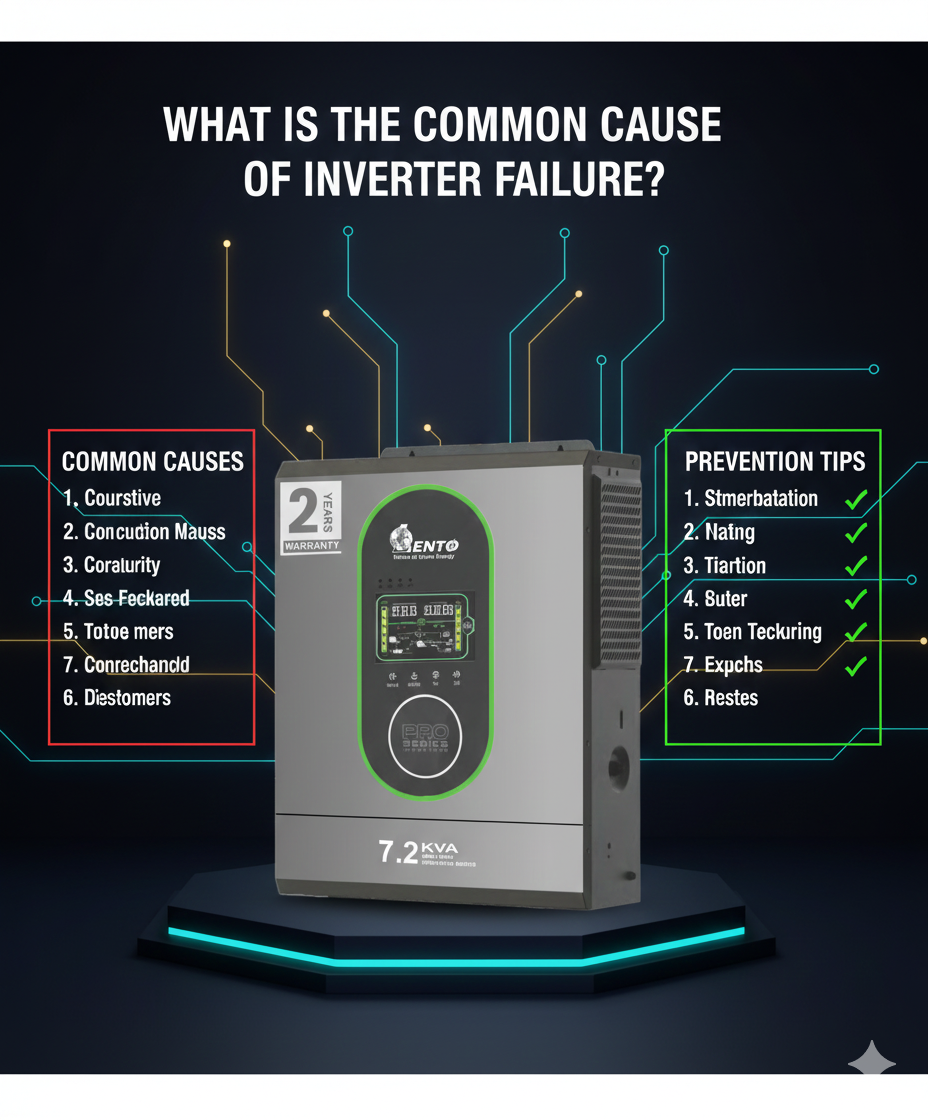
What Is the Common Cause of Inverter Failure?
Inverters generally fail because of overload, poor installation, battery issues, heat, low-quality components, or lack of maintenance.
But let’s go deeper—because each cause has layers.
1. Overloading the Inverter
This is by far the number one cause I’ve seen throughout my experience.
How overload happens
Most people plug in more appliances than the inverter is designed to handle. For example:
-
Running a refrigerator + water motor + lights + fans on a small inverter
-
Connecting high-surge appliances like mixers or heaters
-
Sudden spike loads from old appliances
Even if the inverter turns on, it operates under stress, and that stress eventually leads to failure.
How to prevent overload
-
Always calculate the total watt load before installation
-
Keep at least 30% safety margin
-
Don’t run high-surge appliances unless the inverter supports it
A good online UPS supplier always educates their customers about correct load planning—because overload not only damages the inverter but also weakens the battery.
2. Poor Ventilation and Excessive Heat
Heat is an inverter’s silent enemy.
I’ve noticed that inverters installed inside small cupboards or congested spaces fail 5× faster.
Why heat damages the system
-
Components inside the inverter get stressed
-
Cooling fans work harder and wear out
-
Internal circuitry becomes unstable
Where inverters FAIL most often
-
Kitchen cabinets
-
Closed storerooms
-
Under staircases
-
Places exposed to direct sunlight
What you should do instead
-
Install in a cool, dry, and well-ventilated location
-
Leave at least 6–8 inches of space around the inverter
-
Never cover the inverter or block airflow
Even the best unit from an online UPS manufacturer cannot survive in heat for long.
3. Battery-Related Problems
Believe it or not, a bad battery kills more inverters than any wiring issue ever could.
Common battery issues include:
-
Sulphated battery plates
-
Low electrolyte level
-
Loose battery terminals
-
Wrong battery type
-
Expired or weak battery
When the battery is weak, the inverter has to pull more current to supply the required power, putting extra pressure on internal circuits.
How to avoid battery-caused failure
-
Top up distilled water regularly
-
Clean terminals and apply petroleum jelly
-
Use batteries recommended by the inverter brand
-
Avoid mixing old and new batteries
-
Replace weak batteries on time
A high-quality battery paired with a reliable inverter ensures a long life for your entire backup system.
4. Faulty Wiring or Poor Installation
Installation quality plays a huge role in inverter health.
Even premium units from a trusted online UPS trader can fail prematurely due to wiring issues.
Common installation mistakes
-
Thin wiring that overheats
-
Wrong polarity connections
-
Loose connections
-
Under-rated MCBs and fuses
-
No earthing or poor grounding
Why this leads to inverter failure
Electrical resistance builds up over time, generating heat and damaging internal components.
Loose connections cause sparking, which is even more dangerous.
What you can do
-
Always hire a certified technician
-
Use proper gauge wires recommended by the manufacturer
-
Check all connections every 6 months
If you’re a business owner managing multiple inverter systems, make installation audits a routine task.
5. Poor Quality Inverters and Cheap Components
Let me be honest here—many inverter failures are simply because the product was low-quality from day one.
Why low-cost inverters fail quickly
-
Weak PCB design
-
Low-grade MOSFETs and capacitors
-
Inaccurate protections built-in
-
No quality control
-
Poor thermal management
If you're sourcing from a reliable online UPS manufacturer, the chances of such failures drop dramatically.
How to choose a quality inverter
-
Look for overload and short-circuit protections
-
Prefer brands with service centers
-
Choose models with a heavy-duty transformer
-
Check battery compatibility
-
Read warranty terms carefully
A cheap inverter might save you money today—only to cost you more tomorrow.
6. Environmental Factors (Humidity, Dust, Moisture)
Inverters don’t like moisture and dust.
I’ve seen inverters in humid regions fail much faster because the internal electronic components corrode over time.
What environmental conditions cause damage
-
High humidity (coastal regions)
-
Dusty environments
-
Water leakage near the installation area
-
Insects entering the circuit board
Prevention tips
-
Install in a dry, clean area
-
Use dust covers (but never during operation)
-
Keep the surrounding area clean
-
Install insect mesh if needed
If the inverter is used in factories, workshops, or outdoor areas, environmental protection becomes even more important.
7. Using the Wrong Type of Battery
Every inverter is designed to work with a specific battery type.
Common mistakes I’ve seen:
-
Using automotive batteries in household inverters
-
Mixing tubular and SMF batteries
-
Adding higher AH batteries without checking compatibility
This puts the inverter under pressure and shortens its life.
Always check battery compatibility for:
-
Voltage
-
AH rating
-
Technology (Tubular, SMF, Lithium)
If you're unsure, ask the manufacturer or supplier before buying.
8. Lack of Regular Maintenance
Inverters are not “install and forget” machines.
They need periodic care, especially if you rely on them during frequent power cuts.
Maintenance activities that prolong inverter life:
-
Cleaning dust from the inverter vents
-
Tightening battery connections
-
Checking for burnt smells or heating
-
Running the inverter on load every few weeks
-
Maintaining proper battery water levels
Regular maintenance is one of the easiest ways to avoid unexpected failures.
9. Power Surges and Voltage Fluctuations
Sudden grid fluctuations can fry the internal circuits of your inverter.
Most vulnerable components include:
-
MOSFETs
-
Transformers
-
Control boards
How to protect your inverter from surges
-
Install a proper MCB and surge protector
-
Use an inverter with in-built protection
-
Avoid turning the inverter on/off repeatedly during voltage fluctuations
If your region experiences heavy voltage swings, consider a model recommended by a professional online UPS supplier.
Final Thoughts: Why Inverter Failure Happens — and How You Can Stop It
Inverter failure is not random.
It’s usually caused by preventable issues like:
-
Overload
-
Heat and poor ventilation
-
Bad or weak batteries
-
Faulty wiring
-
Cheap hardware
-
Lack of maintenance
-
Voltage spikes
-
Environmental damage
By understanding these causes, you can take charge of your system’s health, reduce downtime, and increase the lifespan of your inverter significantly.
A reliable inverter, combined with proper installation and regular care, can easily last 8–10 years or more.