What Happens If Inverter Battery Water Is Low?
05 December 2025
Maintaining your inverter battery is crucial for ensuring uninterrupted power at home or in your business. One question I often hear from users is: “What happens if the inverter battery water is low?” This is a very common issue, especially for those using tubular batteries or other lead-acid types. In this blog, I’ll explain everything in simple terms, share practical tips, and help you understand how to take care of your battery for longer life and optimal performance.
As a solar products manufacturer, exporter, and supplier, we work with tubular batteries, solar inverters, online UPS systems, EV chargers, and lithium-ion batteries, so you’ll also learn how these products relate to proper battery maintenance.
Why Battery Water Matters
Battery water, also called electrolyte, is a mixture of sulfuric acid and distilled water inside a lead-acid battery. It plays a critical role in:
-
Conducting electricity between the battery plates
-
Facilitating the chemical reaction that stores and releases energy
-
Maintaining battery efficiency and longevity
When water levels drop, the battery plates can be exposed to air, causing damage, reduced efficiency, and even permanent failure.
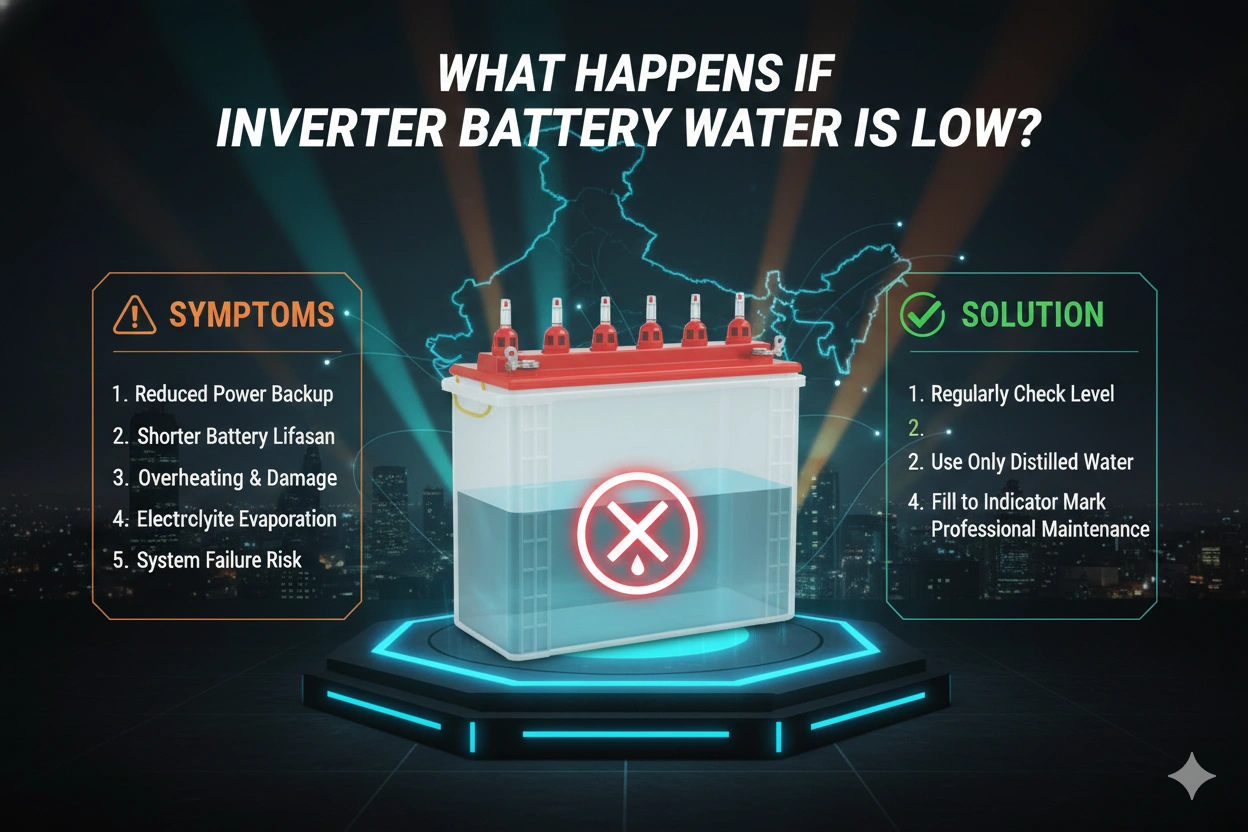
Signs Your Inverter Battery Water Is Low
It’s important to check your battery regularly to avoid problems. Some common signs of low battery water include:
-
Reduced backup time: Appliances run for shorter durations.
-
Slow charging: The inverter takes longer than usual to charge the battery fully.
-
Overheating: The battery feels unusually warm during operation.
-
Swelling or leakage: Plates can warp, and acid may leak from the battery.
Paying attention to these signs early can save your battery from irreversible damage.
Effects of Low Battery Water
Running an inverter battery with low water levels can cause several issues:
1. Reduced Performance
Low water means fewer electrolytes are available for chemical reactions. This directly reduces the battery’s capacity, leading to shorter backup times and inconsistent performance.
2. Plate Damage
Battery plates may become exposed to air, causing sulfation. Sulfation reduces the battery’s ability to hold a charge and can eventually make it unusable.
3. Overheating and Swelling
When water levels are low, the battery works harder to generate power. This extra stress can lead to overheating, swelling, and sometimes leakage, posing safety risks.
4. Shortened Lifespan
Consistently running your battery with low water drastically reduces its lifespan. Even a high-quality tubular battery from a trusted manufacturer can fail prematurely if not properly maintained.
How to Check Battery Water Levels
Regular inspection is key. Here’s how you can safely check your battery water:
-
Open the battery caps carefully.
-
Look at the electrolyte level—it should cover the plates inside.
-
Use a battery hydrometer to measure specific gravity if you want precise readings.
Remember: Always wear gloves and protective eyewear, as battery acid is corrosive.
How to Top Up Battery Water
Maintaining the correct water level is simple if done correctly:
-
Use only distilled water: Tap water contains minerals that can harm the battery.
-
Fill to the recommended level: Typically, just covering the plates is enough. Avoid overfilling.
-
Check regularly: Depending on usage, check every 1–2 months.
Practical tip: During hot weather or heavy usage, batteries may lose water faster. Frequent checks prevent low water-related issues.
Best Practices for Battery Maintenance
To maximize battery life and efficiency, follow these tips:
-
Keep the battery clean and dry; avoid corrosion on terminals.
-
Ensure proper ventilation around the battery to prevent overheating.
-
Avoid deep discharges frequently, as it stresses the battery.
-
Use quality solar inverters or online UPS systems that manage charging intelligently.
-
Consider pairing with lithium-ion batteries for hybrid setups that reduce water maintenance requirements.
By combining proper care with high-quality products from a solar products manufacturer, exporter, and supplier, you can ensure long-lasting and efficient performance.
Real-World Example
For instance, one of our clients using a 150Ah tubular battery with a solar inverter noticed reduced backup after a few months. A quick check revealed the battery water was low due to evaporation in hot weather. After topping it up with distilled water, their system ran efficiently for months without issues. This shows how simple maintenance can prevent costly replacements.
Conclusion
Low inverter battery water is a common but preventable problem. Ignoring it can lead to reduced performance, overheating, plate damage, and shortened lifespan. Regular checks, using distilled water, and following best maintenance practices will keep your tubular batteries, solar inverters, online UPS systems, and lithium-ion batteries in top condition.
Investing time in proper maintenance not only protects your appliances but also ensures uninterrupted power supply for your home or business.