Lithium Battery vs Tubular Battery for Inverter: Which Should You Choose in 2026?
22 July 2026
Choosing between a lithium battery for inverter and a traditional tubular battery is one of the biggest decisions Indian homeowners and businesses face when setting up power backup. Both technologies are manufactured at scale in India — and Lento Industries Private Limited is one of the few lithium ion battery manufacturers that produces both under one roof. This guide compares them head-to-head with full specifications.
Quick Answer: Lithium vs Tubular Battery
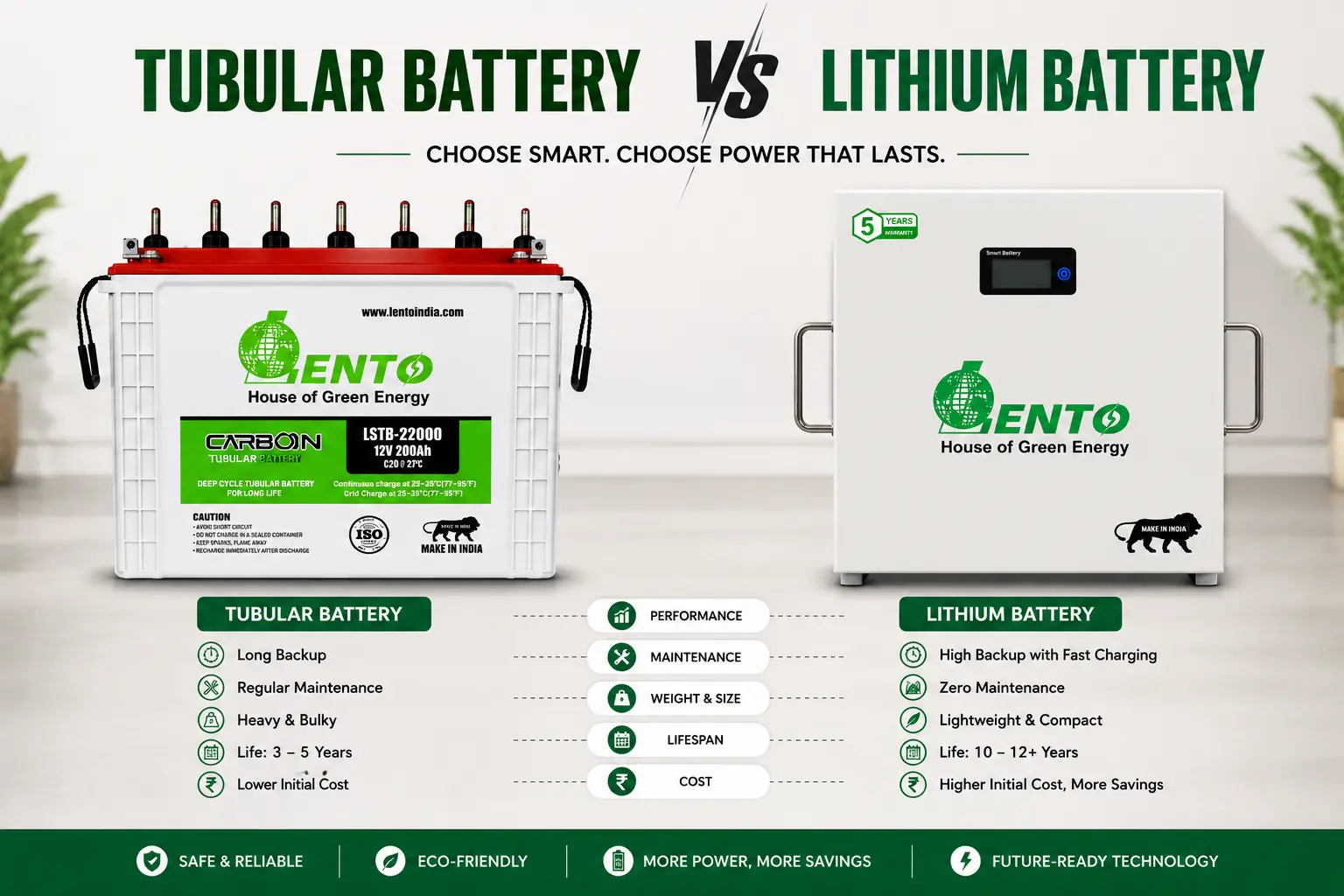
A tubular battery is a lead-acid battery with tubular positive plates — low upfront cost, but it needs water top-ups and lasts around 300–500 charge cycles. A lithium-ion (LiFePO4) battery costs more initially but is maintenance-free, lighter, and lasts 3,000–6,000+ cycles, making it cheaper per year of use for frequent power cuts or solar setups.
Lento Industries Manufactures Both: Available Variants
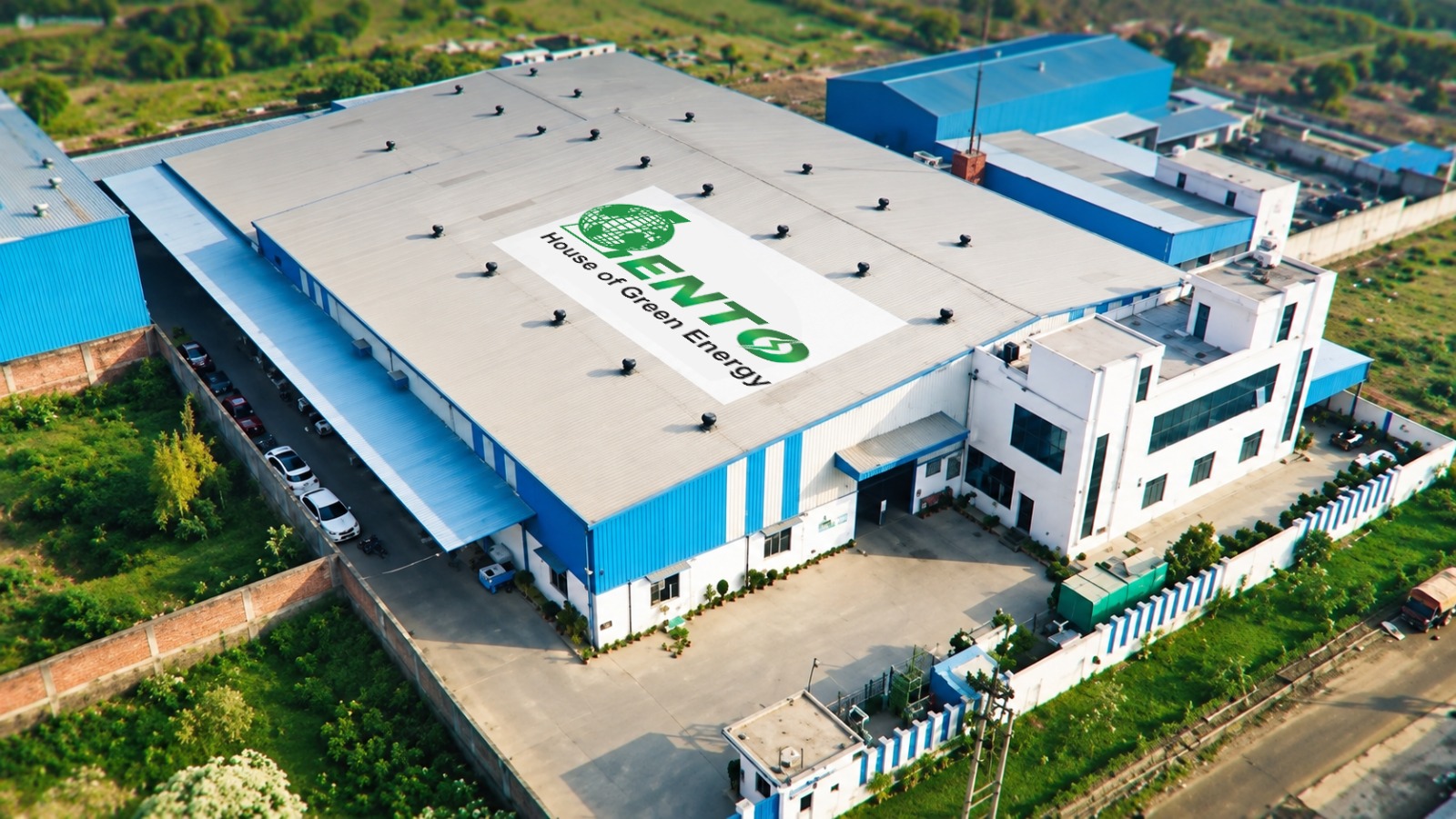
Lento Industries Private Limited is a lithium battery manufacturer in Noida that produces both Lead Acid Tubular Batteries and Lithium-Ion (LiFePO4) Batteries, giving customers a single, India-based source to compare and choose from.
|
Battery Type |
Series |
Available Variants |
|
C-10 |
50 AH, 70 AH, 100 AH, 150 AH battery, 200 AH, 220 AH, 240 AH, 250 AH, 260 AH, 280 AH, 300 AH — all 12V |
|
|
C-20 |
50 AH, 70 AH, 100 AH, 150 AH, inverter battery 200ah, 220 AH, 240 AH, 250 AH, 260 AH, 280 AH, 300 AH, 320 AH — all 12V |
|
|
— |
100AH/12.8V, 200AH/12.8V, 100AH/25.6V, 200AH/25.6V, 100AH/51.2V, 200AH/51.2V, 300AH/51.2V |
C-10 batteries suit higher-load appliances that draw power quickly, while C-20 batteries discharge more slowly, making them better for longer, steady backup during extended outages. The lithium range covers everything from small home inverters (12.8V) to solar and commercial-scale backup (51.2V, up to 300AH).
How Tubular Batteries Work
Tubular batteries use lead-acid chemistry with tube-shaped positive plates, which reduces plate shedding and improves durability over flat-plate batteries. They remain popular in India for their affordability, wide service network, and familiarity among electricians.
How Lithium-Ion (LiFePO4) Batteries Work
LiFePO4 batteries use a chemically stable lithium format that resists thermal runaway, making them one of the safest lithium types for home and industrial use. Each pack includes a Battery Management System (BMS) that protects against overcharge, over-discharge, and short circuits.
Lithium Battery vs Tubular Battery: Side-by-Side Comparison
|
Factor |
Tubular Battery |
Lithium (LiFePO4) Battery |
|
Upfront cost |
Lower |
Higher |
|
Cycle life |
300–500 cycles |
3,000–6,000+ cycles |
|
Maintenance |
Water top-up needed |
Maintenance-free |
|
Weight |
Heavy |
Lightweight (up to 60% less) |
|
Charging speed |
Slower |
Faster |
|
Space required |
More |
Compact |
|
Best for |
Budget backup, occasional outages |
Frequent power cuts, solar, commercial use |
Batteries Manufacturers in Noida
As one of the battery manufacturers in india based out of Noida, Lento Industries operates from a Delhi NCR facility, supporting fast delivery and after-sales service across North India — a key advantage in india lithium ion battery manufacturing and tubular battery, where local presence often determines warranty response time.
Top & Best Lithium Ion Battery Manufacturers in India
Besides Lento Industries, other notable tubular battery manufacturers in India and lithium producers include:
- Exide Industries — Established lead-acid brand expanding into lithium technology.
- Amara Raja Energy & Mobility — Investing in large-scale lithium-ion manufacturing.
- Luminous Power Technologies — Offers both tubular and lithium inverter batteries.
- Okaya Power — Known for lithium batteries in e-mobility and backup power.
- Livguard — Provides tubular and lithium options for residential inverters.
When ranking the top lithium ion battery manufacturers in India, consider cycle life, BMS quality, warranty terms, and whether the manufacturer produces locally — which affects service speed and spare parts availability. Lento Industries stands out by offering both chemistries from a single Noida-based facility.
Which One Should You Choose?
- Tight budget, occasional power cuts: A tubular battery — a 150 AH battery or inverter battery 200ah — covers most homes affordably.
- Frequent, long power cuts: Lithium's longer cycle life pays off within 2–3 years despite higher upfront cost.
- Solar power storage: Lithium (25.6V or 51.2V) is strongly preferred for daily charge-discharge cycles.
- Commercial or industrial backup: Lithium 51.2V (200AH–300AH) or high-capacity tubular batteries (280–320 AH) both work, depending on load and budget.
FAQs
Q1. How many tubular batteries are equivalent to a 5kWh lithium battery?
A 5kWh lithium battery provides usable energy roughly equivalent to two 200Ah tubular batteries, while offering higher efficiency, faster charging, and deeper usable capacity.
Q2. What is the difference between a 100Ah lithium battery and a 200Ah tubular battery?
A 100Ah lithium battery delivers more usable energy, faster charging, and longer life than a 200Ah tubular battery, despite its lower Ah rating.
Q3. Is lithium better than tubular?
Yes, lithium batteries are generally better because they charge faster, last longer, require no maintenance, and provide higher usable capacity than tubular batteries.
Q4. Can we run AC on a lithium battery?
Yes, you can run an AC on a lithium battery if the inverter and battery are properly sized for the AC's power requirement.
Q5. Which inverter battery is best, tubular or lithium?
Lithium batteries are the better choice for most homes due to their longer lifespan, faster charging, compact size, and maintenance-free operation.
Q6. What is the biggest problem with lithium batteries?
The main drawback of lithium batteries is their higher initial purchase cost, although they often have a lower lifetime cost because of their long service life and high efficiency.
Conclusion
Both tubular and lithium batteries have a place in India's power backup market — the right choice depends on budget, usage pattern, and how often you experience power cuts. Lento Industries Private Limited manufactures both technologies side by side, from 150 AH battery and inverter battery 200ah tubular options to LiFePO4 lithium batteries from 12.8V to 51.2V. Alongside major brands like Exide, Amara Raja, Luminous, Okaya, and Livguard, Lento's Noida-based dual manufacturing makes it a practical, India-first choice among lithium ion battery manufacturers in India for households, solar users, and commercial buyers alike.
Read More:-
Batteries Manufacturers in India
Best Lithium Battery Inverter in India
Best Inbuilt Lithium Ion Battery Inverter Company in India Price List
Lithium Battery Manufacturers in India: Complete Guide