
Difference Between Tubular Battery and Normal Battery
05 December 2025
When I first stepped into the world of solar products and power backup solutions, one question I heard repeatedly was: “Tubular battery aur normal battery mein actual difference kya hota hai?”
Whether you are a homeowner planning to buy an inverter battery or a business owner dealing in power backup systems, choosing the right battery type is crucial. And with the way the market is shifting—especially after 2026—understanding the differences has become even more important.
So today, I’m breaking it down in the simplest way possible, based on both industry knowledge and years of working closely with manufacturers, solar installers, and even online UPS suppliers, traders, and distributors. My goal is to help you make a confident, informed choice.
What Are Normal Batteries?
Normal batteries, also known as flat plate batteries, are among the most commonly used inverter batteries in India. If you have ever purchased a standard inverter for your home, chances are high that you have used a flat plate battery.
How Normal Batteries Work
Flat plate batteries use:
-
Flat positive plates
-
Flat negative plates
-
Electrolyte (acid-water mixture)
They are designed mainly for short backup duration, moderate usage, and areas with low to medium power cuts.
Where Normal Batteries Work Best
-
Homes with 1–2 hours of power cuts
-
Areas where summers are not too extreme
-
Customers looking for a budget-friendly option
While these batteries work decently, they are not built for long or frequent power cuts.
What Are Tubular Batteries?
Tubular batteries are an advanced version of flat plate batteries. Today, they are the most preferred choice for solar systems, online UPS manufacturers, and customers living in areas with long outages.
How Tubular Batteries Work
Unlike flat plate batteries, tubular batteries use:
-
A tube-shaped positive plate
-
Deep-cycle technology
-
Thicker, more robust grids
-
High-density paste formula
This design helps them store and deliver more power for longer durations.
Where Tubular Batteries Work Best
-
Homes with 3–10 hour power cuts
-
Solar power systems
-
Offices, shops, and commercial spaces
-
Heavy load appliances
Tubular batteries are known to survive in tough conditions and deliver consistent performance even during long outages.
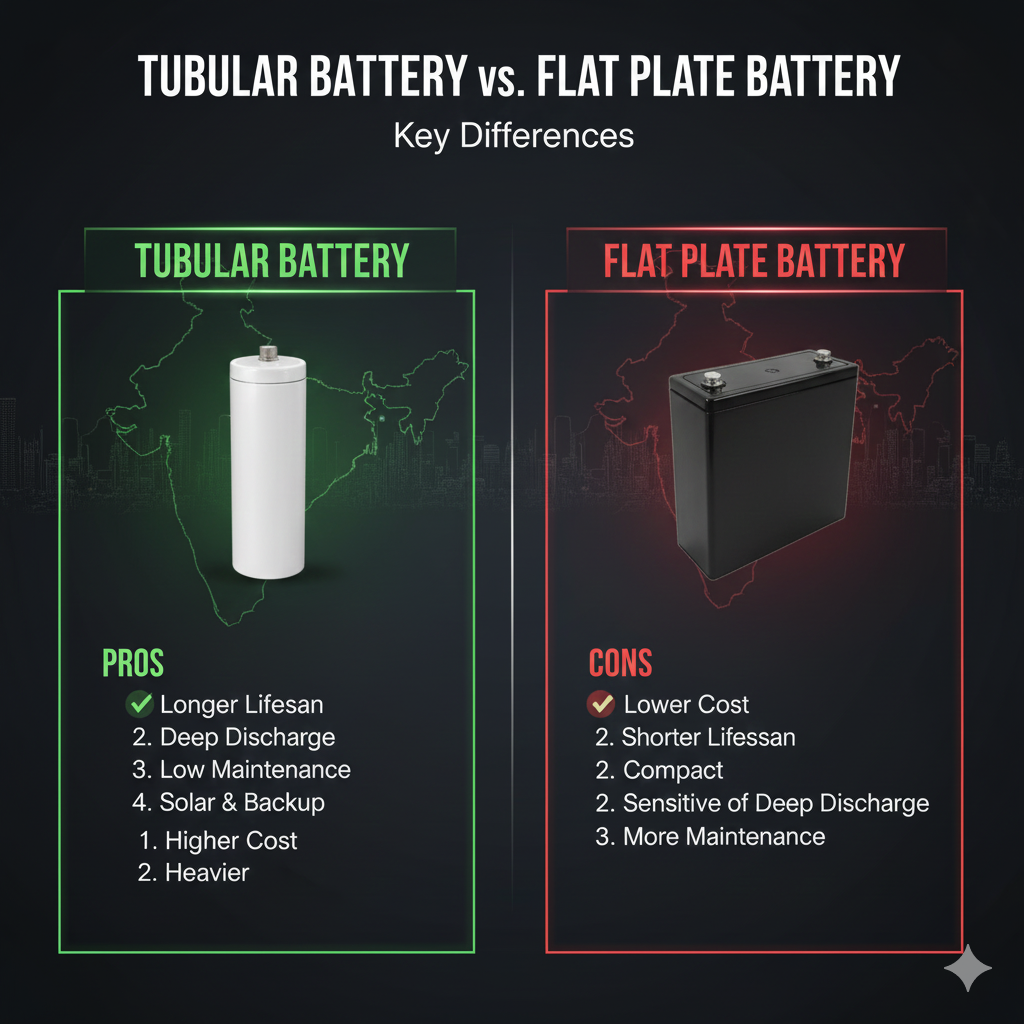
Key Differences Between Tubular and Normal Batteries (2026 Update)
Let’s get into the real comparison. I’m breaking it down point by point, but in an easy-flow, conversational manner—so you can clearly understand which battery type suits you better.
1. Design & Structure
If I pick up a flat plate battery and a tubular battery side-by-side, the difference in design is instantly noticeable.
-
Normal Battery: Uses flat plates that look like thin sheets.
-
Tubular Battery: Uses cylindrical tube-like structures (hence the name “tubular”).
This structural difference alone dramatically affects efficiency, longevity, and performance.
2. Capacity to Handle Power Cuts
One of the biggest differences is how both batteries behave during repeated discharging and charging cycles.
-
Normal battery struggles when power cuts are long or frequent.
-
Tubular battery is built to handle deep discharges and can give much longer backup.
In 2023 and beyond, with power quality fluctuating in many regions, this factor has become crucial for both home users and businesses.
3. Backup Duration
This is what most customers care about the most.
-
Normal Battery: Short backup — suitable for low usage.
-
Tubular Battery: Long backup — ideal for homes with longer outages or for heavy loads.
From my hands-on experience with online UPS suppliers and traders, tubular batteries perform significantly better in office environments where uptime is critical.
4. Lifespan
If you’re the kind of person who doesn’t like replacing batteries every 2–3 years, you’ll love tubular batteries.
-
Normal Batteries: 2–3 years average life
-
Tubular Batteries: 5–7 years, sometimes even more with proper maintenance
Their long lifespan makes them more cost-effective in the long run—even if the initial investment is higher.
5. Maintenance Requirements
Here’s a simple way to understand this:
-
Normal Battery: Requires frequent distilled water top-ups
-
Tubular Battery: Requires less maintenance because of better plate design
In areas with high temperatures, tubular batteries remain stable and require much less fuss.
6. Performance in Solar Systems
If you are planning to install a solar inverter system, this part is important.
Solar systems require deep cycle batteries for consistent energy output.
-
Normal Battery: Not ideal for solar
-
Tubular Battery: Perfect for solar because they handle deep discharge cycles efficiently
This is why most solar EPC companies and even online UPS manufacturers trust tubular batteries for renewable energy systems.
7. Cost Difference
This is where people usually get confused.
-
Normal batteries are cheaper, which is why they are popular.
-
Tubular batteries cost more, but give:
-
Longer life
-
Longer backup
-
Better durability
-
Better ROI
-
If your area faces frequent power cuts, tubular batteries are worth every rupee.
Tubular Battery vs Normal Battery: A Quick Comparison Table
Here’s an easy reference summary:
| Feature | Tubular Battery | Normal Battery |
|---|---|---|
| Plate Design | Tubular (cylindrical) | Flat plates |
| Backup Duration | Long | Short |
| Lifespan | 5–7 years | 2–3 years |
| Maintenance | Low | High |
| Performance in Solar | Excellent | Poor |
| Cost | Higher | Lower |
| Best For | Long power cuts, heavy usage, solar | Short power cuts, budget users |
Why Tubular Batteries Became More Popular After 2026
As someone who constantly tracks industry trends, I can confidently say 2026 was a turning point for the power backup industry.
Here’s why tubular batteries took the lead:
Longer Power Cuts
Climate-driven outages increased in many regions, increasing the demand for stable long-term backup.
Growth of Solar Installations
Large solar adoption meant customers needed reliable deep-cycle batteries.
Online UPS suppliers and traders also shifted towards tubular technology for better load handling.
Better ROI Awareness
Customers now understand that a battery is an investment—not a cost.
Tubular batteries deliver better value over time.
Which One Should You Buy? My Honest Recommendation
Over the years, after working closely with online UPS traders, battery distributors, solar installers, and thousands of end users, here’s my simple advice:
Choose a Normal Battery if:
-
Your budget is low
-
Power cuts in your area are short and rare
-
You need backup for only 1–2 hours
Choose a Tubular Battery if:
-
You face long or frequent power cuts
-
Your inverter needs to support a heavy load
-
You have a solar power system
-
You want long life and strong performance
In most cases today, tubular batteries are the smarter choice—especially after 2026.
How to Maintain Your Battery for Long Life
Whether you choose tubular or normal, proper maintenance can significantly extend its life. Here are some essential tips:
-
Keep the battery installed in a ventilated area
-
Check water levels periodically (for non-maintenance-free models)
-
Avoid overloading your inverter
-
Keep terminals clean and rust-free
-
Ensure proper charging (very important!)
From online UPS manufacturers to solar EPC companies, everyone stresses on proper maintenance because it directly affects lifespan.
Why Our Batteries Stand Out in the Market
We’re committed to providing reliable power backup solutions for homes and businesses. Our batteries—whether tubular or flat plate—are built using advanced technology, strict quality control, and premium-grade materials.
As a trusted online UPS manufacturer, online UPS supplier, and online UPS trader, we ensure that every product meets high-performance expectations in both domestic and international markets.
Our focus is simple:
-
Longer life
-
Higher backup
-
Strong build quality
-
Reliable performance
This is why customers across India and abroad trust our power solutions.
Final Thoughts
Choosing between a tubular and a normal battery doesn’t have to be confusing. Once you understand your usage, power conditions, and long-term goals, the right choice becomes clear.
Tubular batteries offer better performance, durability, and long-term value—especially in areas with heavy power cuts or when used with solar systems.
Normal batteries are fine for light usage but not ideal for places that need strong, reliable backup.
If you’re planning to grow your business or expand your product range with high-quality batteries, now is the perfect time.