Best Inverter Battery in Nepal 2026
23 April 2026
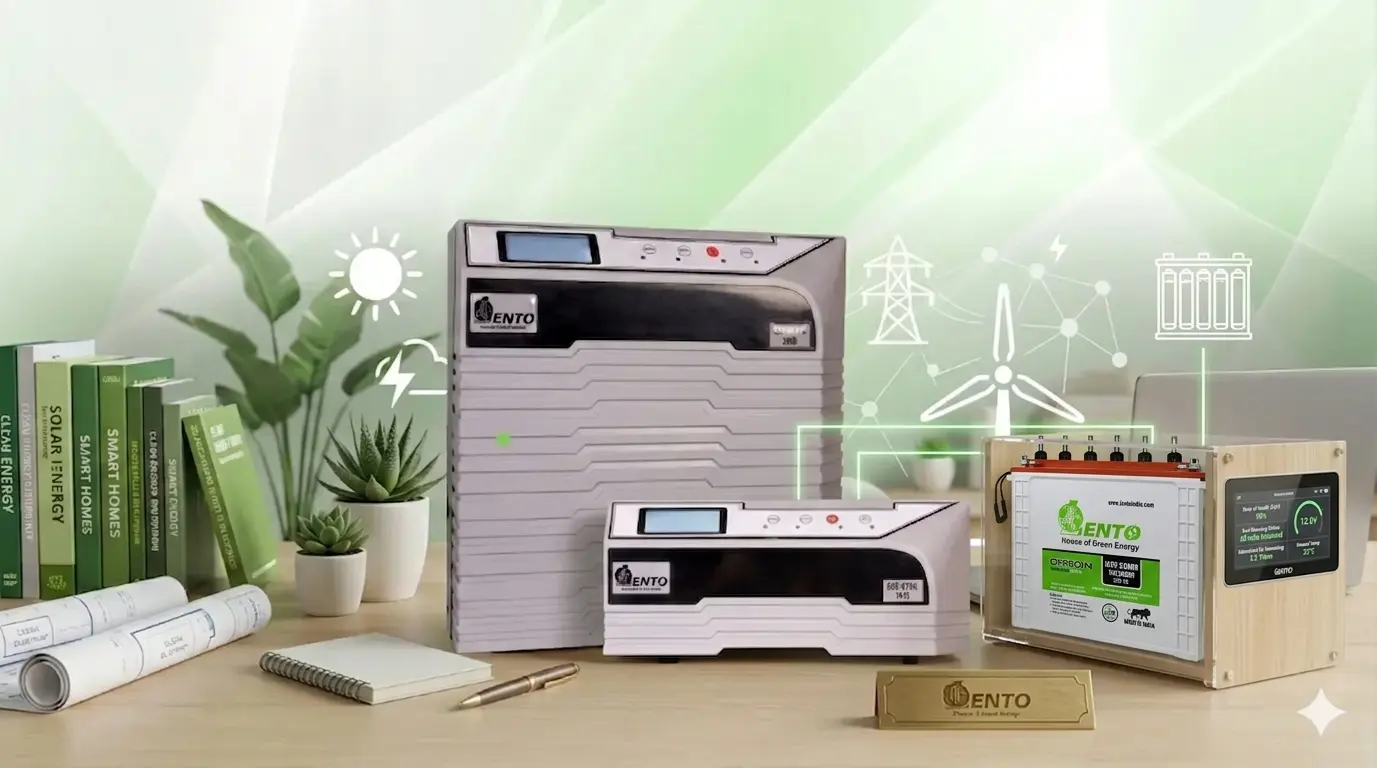
The best inverter battery in Nepal in 2026 is a 150Ah tall tubular lead-acid battery paired with a Lento Industries pure sine wave inverter — delivering 6–8 hours of reliable backup for an average Nepali household. Lento Industries Pvt. Ltd., Nepal's only homegrown inverter manufacturer, recommends pairing their 1600 VA / 24 VDC or 2100 VA / 24 VDC inverter models with two 150Ah–200Ah 12V tubular batteries in series for the best inverter and battery for home performance. Whether you need backup for basic loads or a full 3 KVA inverter level commercial setup, choosing the right battery chemistry, capacity, and brand pairing is what separates a 2-year system from a 6-year one.
Why the Right Inverter Battery Matters in Nepal
Nepal's power landscape has improved significantly, but voltage fluctuations, seasonal outages, and load variation remain real challenges — especially in Terai regions and hilly districts. Choosing the wrong inverter battery means frequent replacements, reduced backup time, and damage to your power inverter for home.
The battery is the heart of any home inverter system. While the inverter converts DC to AC, the battery stores the energy that powers your home during outages. A mismatch between inverter capacity and battery Ah rating is the most common and costly mistake Nepali consumers make.
Types of Inverter Batteries Available in Nepal
1. Tall Tubular Lead-Acid Battery — Best Overall for Nepal
Tall tubular batteries are the gold standard for home inverter use across Nepal. They are built for deep discharge and frequent charge cycles — exactly the conditions Nepal's grid creates.
Why tubular batteries win in Nepal:
- Lifespan of 4–6 years with proper maintenance
- Handles 70–80% depth of discharge reliably
- Superior performance in high-temperature Terai climate
- Best value for the home inverter price point
- Available in 100Ah, 120Ah, 150Ah, and 200Ah capacities
Best pairing: Lento 1600 VA / 24 VDC + 2 × 150Ah tubular batteries = 6–8 hours backup for average home load.
2. Flat Plate Lead-Acid Battery — Budget Choice
Flat plate batteries are cheaper upfront but have a shorter lifespan (2–3 years) and lower deep-discharge tolerance. They are suitable for areas with very infrequent power cuts where deep cycling is rare. For most Nepali homes experiencing daily load-shedding or seasonal outages, tubular batteries are strongly preferred.
3. Gel VRLA (Sealed Maintenance-Free) Battery — Best for Apartments
Gel batteries are completely sealed, require zero maintenance, and can be installed in any orientation — ideal for apartment living where ventilation is limited. They cost more than tubular batteries but eliminate the need for regular water top-ups.
Best pairing: Lento 1100 VA / 24 VDC or 1450 VA / 24 VDC + 2 × 100Ah gel VRLA batteries for apartment setups.
4. Lithium-Ion (LiFePO4) Battery — Premium Future-Ready Option
Lithium iron phosphate batteries are the emerging premium choice for home energy storage. They offer a 10-year+ lifespan, 95%+ efficiency, and zero maintenance. While the upfront cost is significantly higher, the total cost of ownership over a decade is competitive. Lento's inverter 24V lineup is compatible with LiFePO4 battery banks.
How to Choose the Best Inverter Battery for Your Home in Nepal
Step 1 — Calculate Your Load Requirement
Before buying any battery, calculate your total connected load:
|
Appliance |
Watts |
Qty |
Total |
|
LED Light |
10W |
6 |
60W |
|
Ceiling Fan |
75W |
3 |
225W |
|
LED TV (40") |
80W |
1 |
80W |
|
WiFi Router |
15W |
1 |
15W |
|
Mobile Charger |
10W |
2 |
20W |
|
Total |
400W |
For 400W load with 6 hours of backup, you need approximately 200Ah at 12V, or 2 × 100Ah at 24V — pointing to a Lento 1100 VA / 24 VDC inverter as the minimum recommendation.
Step 2 — Match Battery Ah to Backup Hours
Use this simple formula:
Battery Ah Required = (Load in Watts × Backup Hours) ÷ (Battery Voltage × Efficiency)
Example: 500W load, 8 hours backup, 24V system, 80% efficiency: = (500 × 8) ÷ (24 × 0.80) = 4000 ÷ 19.2 = 208 Ah
This means you need two 12V / 100Ah batteries in series (totalling 200Ah at 24V), suitable for Lento's 1450 VA / 24 VDC inverter.
Step 3 — Match Battery to the Right Lento Inverter
|
Lento Inverter |
Capacity |
Recommended Battery |
Backup Time (Avg Load) |
|
Lento 400 VA |
400 VA / 12V |
1 × 100Ah tubular |
2–3 hours |
|
Lento 700 VA |
700 VA / 12V |
1 × 120Ah tubular |
3–4 hours |
|
Lento 900 VA |
900 VA / 12V |
1 × 150Ah tubular |
4–5 hours |
|
Lento 1100 VA |
1100 VA / 24V |
2 × 100Ah tubular |
4–6 hours |
|
Lento 1450 VA |
1450 VA / 24V |
2 × 120Ah tubular |
5–7 hours |
|
Lento 1600 VA |
1600 VA / 24V |
2 × 150Ah tubular |
6–8 hours |
|
Lento 2100 VA |
2100 VA / 24V |
2 × 200Ah tubular |
6–8 hours |
|
Lento 2500 VA |
2500 VA / 24V |
2 × 200Ah tubular |
5–7 hours (heavy load) |
Step 4 — Battery Maintenance Tips for Long Life
Extending your best inverter battery's life in Nepal requires simple but consistent care:
- Check water levels monthly — top up with distilled water only (tubular batteries)
- Keep battery terminals clean — apply petroleum jelly to prevent corrosion
- Avoid complete discharge — Lento inverters have low-voltage cutoff protection built in
- Ensure proper ventilation — batteries emit hydrogen gas during charging; never install in sealed rooms
- Equalization charging — run a monthly full charge cycle to balance cells
Competitor Overview: Luminous Inverter Batteries in Nepal
Luminous Power Technologies is one of the most recognized inverter battery brands from India, available in Nepal through select importers. Their Red Charge and Hkva Zelio series of tall tubular batteries have gained visibility in Kathmandu's market, with capacities ranging from 80Ah to 220Ah. Luminous batteries are known for decent build quality and the brand's widespread recognition across South Asia. However, in Nepal, Luminous batteries carry a premium price due to import duties and distributor margins, making the overall inverter and battery system cost significantly higher than equivalent setups using locally serviced batteries paired with Lento Industries inverters. Additionally, warranty claims and after-sales service for Luminous batteries outside Kathmandu can be slow and complicated — a critical disadvantage in Nepal's geographically diverse terrain where most consumers need fast, local support.
Best Inverter and Battery Combos for Every Budget in Nepal
Budget Combo — NPR 25,000–35,000
Lento 700 VA / 12 VDC + 1 × 120Ah Tubular Battery
- Powers: 4 LED lights, 2 fans, 1 TV
- Backup: 4–5 hours
- Best for: Small homes, rented flats, single-room setups
Mid-Range Combo — NPR 45,000–60,000
Lento 1600 VA / 24 VDC + 2 × 150Ah Tubular Batteries
- Powers: Full average Nepali home
- Backup: 6–8 hours
- Best for: 2–3 BHK homes, small offices
- ⭐ Most Popular Choice
Premium Combo — NPR 80,000–1,10,000
Lento 2500 VA / 24 VDC + 2 × 200Ah Gel VRLA Batteries
- Powers: Large home or small commercial setup
- Backup: 5–8 hours at heavy load
- Best for: Restaurants, clinics, hardware stores, large homes
- Equivalent performance to a 3 KVA inverter system
Frequently Asked Questions (FAQs)
1. Which is the best inverter battery for home in Nepal?
The best inverter battery for home in Nepal is a 150Ah tall tubular lead-acid battery paired with a Lento 1600 VA / 24 VDC pure sine wave inverter. This combination delivers 6–8 hours of backup for an average household at the most competitive home inverter price available in the Nepali market.
2. What is the price of an inverter battery in Nepal?
Inverter battery prices in Nepal range from NPR 8,000 for a basic 100Ah flat plate battery to NPR 25,000+ for a 200Ah tall tubular battery. A complete inverter and battery combo (Lento 1600 VA + 2 × 150Ah batteries) typically costs between NPR 50,000 and NPR 65,000 from authorized Lento dealers.
3. How long does an inverter battery last in Nepal?
A quality tall tubular battery paired with a pure sine wave inverter like Lento's models lasts 4–6 years in Nepal with proper maintenance. Modified sine wave inverters cause battery cells to heat unevenly, reducing battery life to 2–3 years — which is why Lento's pure sine wave output is critical for best inverter battery longevity.
4. Can I use a 2 KVA inverter with a single battery?
A 2 KVA inverter like the Lento 2100 VA / 24 VDC requires a 24V DC input, which means it must use two 12V batteries connected in series — not one single battery. Using a single 12V battery with a 24V inverter will damage both the battery and the inverter.
5. What is the 1 KW inverter price with battery in Nepal?
A complete 1 KW inverter system (Lento 1100 VA / 24 VDC) bundled with two 100Ah tubular batteries costs approximately NPR 32,000 to NPR 42,000 in Nepal from authorized Lento dealers. This is the most affordable pure sine wave inverter and battery system for essential home backup needs.
Conclusion
Choosing the best inverter battery in Nepal is not just about the battery — it is about the complete system. The right battery capacity, the correct battery type for your environment, and pairing it with a pure sine wave inverter from Lento Industries Pvt. Ltd. is what ensures years of reliable, cost-effective power backup. From the compact 400 VA / 12 VDC for small loads to the powerful 2500 VA / 24 VDC for near 3 KVA inverter performance, Lento's complete lineup is designed and manufactured in Nepal for Nepal's unique power conditions.