
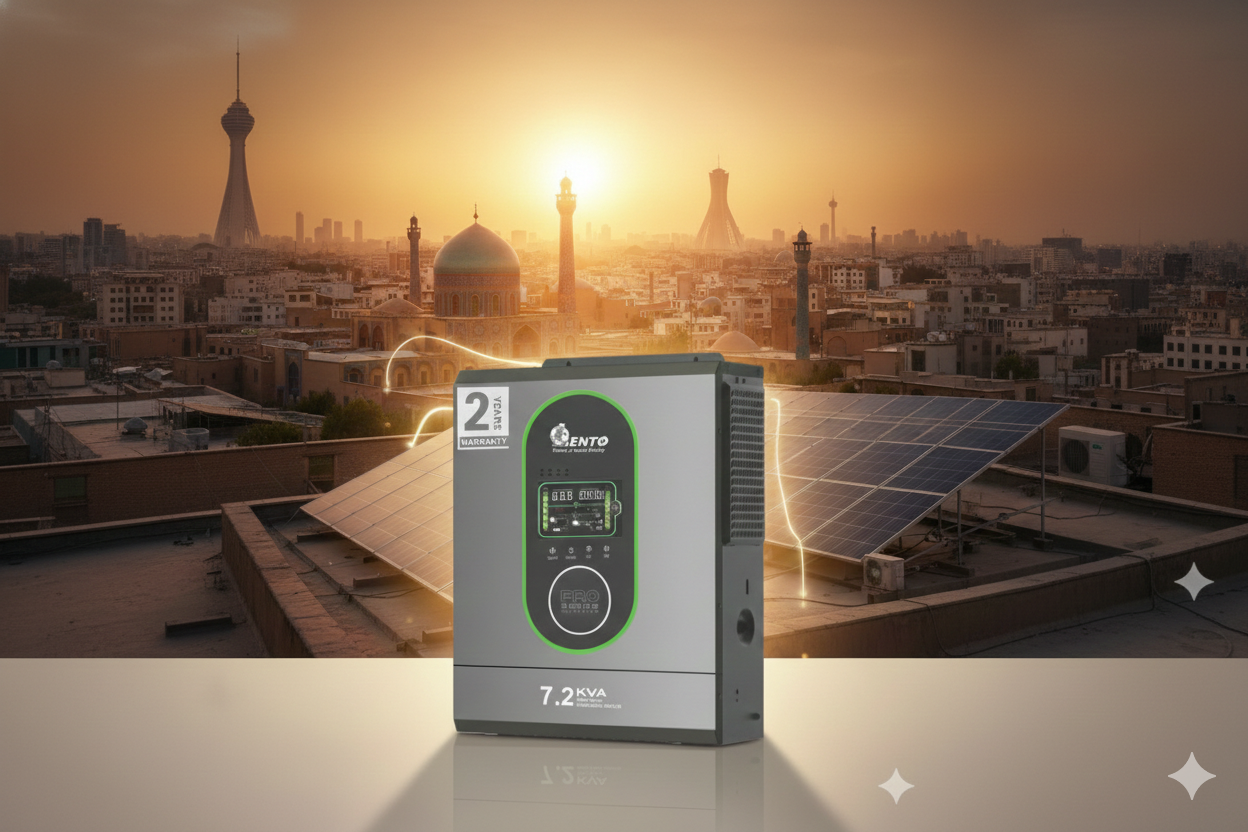
10 kVA UPS Backup Time Calculator
04 December 2025
When it comes to uninterrupted power, a 10 kVA UPS can be a lifesaver for homes, offices, and small industries. But one of the most common questions I hear as a solar products manufacturer is: “How long will my 10 kVA UPS run during a power outage?” Understanding UPS backup time is crucial for designing a reliable system that meets your energy needs.
As an online UPS manufacturer, online UPS supplier, and online UPS trader, I have helped numerous customers and business owners calculate their UPS backup requirements efficiently. In this guide, I’ll walk you through how to estimate backup time, choose the right batteries, and optimize your system for performance and longevity.
Understanding UPS Backup Time
Before diving into calculations, it’s important to understand what affects UPS backup time.
1. Load on the UPS
The backup time depends directly on the total load connected to your UPS. For a 10 kVA UPS, the maximum load in kW can be estimated using the power factor (typically 0.8 for most systems):
Calculation:
10 kVA × 0.8 = 8 kW
This means your UPS can theoretically support up to 8 kW of load at full capacity. However, in practice, most users connect only a portion of this capacity to ensure longer backup times.
2. Battery Capacity
The type, number, and capacity of batteries connected to your UPS largely determine how long the system can supply power. Commonly used batteries include tubular batteries and lithium-ion batteries, which we manufacture as a solar products manufacturer.
3. Depth of Discharge and Efficiency
Batteries cannot be fully discharged without reducing their lifespan. For tubular batteries, the safe Depth of Discharge (DoD) is about 80%. Inverter/UPS efficiency also affects runtime, typically around 90%.
Step-by-Step: Calculating 10 kVA UPS Backup Time
Let’s go through the calculation in a structured way.
Step 1: Determine Total Energy Requirement
Estimate the total load connected to the UPS. For example, if your office equipment uses 5 kW continuously:
Energy needed (kWh) = Load × Backup duration
For a 4-hour backup:
5 kW × 4 h = 20 kWh
Step 2: Adjust for Battery Efficiency
We need to account for battery discharge limits and inverter efficiency:
Adjusted energy = Required energy ÷ DoD ÷ Efficiency
For a tubular battery system with 80% DoD and 90% inverter efficiency:
20 ÷ 0.8 ÷ 0.9 ≈ 27.8 kWh
Step 3: Determine Number of Batteries
Assume you are using 12V 150Ah tubular batteries. Each battery stores:
Energy per battery = Voltage × Ah = 12 × 150 = 1800 Wh ≈ 1.8 kWh
Number of batteries required = 27.8 ÷ 1.8 ≈ 15.4 → 16 batteries
So, you would need 16 batteries of 12V 150Ah for a 4-hour backup of a 5 kW load using a 10 kVA UPS.
Battery Configuration
Correct configuration ensures efficiency and safety. Batteries are arranged in series and parallel:
-
Series Connection: Increases system voltage to match UPS requirements. For a 48V UPS, connect four 12V batteries in series (12V × 4 = 48V).
-
Parallel Connection: Increases total capacity (Ah) to achieve desired backup time.
For our example:
-
Series strings: 4 batteries per string → 48V
-
Parallel strings: 16 ÷ 4 = 4 strings
This configuration provides 48V at adequate capacity for 4 hours.
Choosing the Right Battery Type
Selecting the right type of battery impacts backup time and lifespan.
1. Tubular Batteries
-
Durable and reliable for long backup hours
-
Ideal for high-load UPS systems
-
Cost-effective and widely used
2. Lithium-Ion Batteries
-
Higher upfront cost but longer lifespan
-
Handles higher charging and discharging currents
-
Requires less maintenance
As a tubular battery manufacturer, supplier, and exporter, I often recommend tubular batteries for residential and commercial UPS systems, while lithium-ion batteries are better suited for space-constrained setups or high-performance demands.
Factors Affecting UPS Backup Time
Several real-world factors can influence your UPS runtime:
-
Load Variation: Higher loads reduce backup time.
-
Battery Age: Older batteries have lower capacity.
-
Temperature: High temperatures reduce battery efficiency.
-
Maintenance: Regular checking of electrolyte levels and connections is essential for tubular batteries.
Optimizing these factors ensures your 10 kVA UPS delivers reliable backup consistently.
Practical Example: Small Office Setup
Consider a small office with:
-
Connected load: 5 kW (lights, computers, AC)
-
Desired backup: 4 hours
-
Battery: 12V 150Ah tubular
Calculation:
-
Energy required = 5 × 4 = 20 kWh
-
Adjusted for DoD and efficiency = 20 ÷ 0.8 ÷ 0.9 ≈ 27.8 kWh
-
Energy per battery = 1.8 kWh
-
Number of batteries = 27.8 ÷ 1.8 ≈ 16 batteries
Configuration: 4 batteries in series per string, 4 parallel strings → total 16 batteries.
This setup ensures uninterrupted power for 4 hours while maintaining battery health.
Integrating UPS with Solar Systems
If you are also using a solar inverter or EV charger, integration with your UPS can optimize energy use:
-
Hybrid systems: Use solar during the day to reduce battery drain.
-
Smart charging: Modern UPS systems manage charging efficiently.
-
Load prioritization: Connect critical loads to UPS and non-critical loads to solar inverter.
As an online UPS manufacturer, online UPS supplier, and online UPS trader, I always advise clients to consider hybrid solutions for longer backup and energy savings.
Maintenance Tips for Extended Backup
To ensure maximum backup time and battery life:
-
Check battery water levels regularly for tubular batteries
-
Avoid deep discharges beyond recommended DoD
-
Keep batteries in a well-ventilated area
-
Tighten all connections to avoid energy loss
-
Monitor inverter and UPS efficiency
Proper maintenance can increase backup time by 10–20% and prolong battery lifespan.
Conclusion
Calculating 10 kVA UPS backup time involves understanding your load, backup duration, battery type, and system efficiency. For a typical 5 kW load with a 4-hour backup, 16 tubular batteries of 12V 150Ah configured in 4 series × 4 parallel strings is an ideal solution.
As a solar products manufacturer, we provide complete solutions including tubular batteries, solar inverters, online UPS systems, EV chargers, lithium-ion batteries, and more. We are trusted suppliers, exporters, and traders for residential, commercial, and industrial clients.
Become our distributor in your country
If you are a retailer, installer, or business owner, joining our distribution network
Expand your business and help provide uninterrupted power solutions by partnering with us today.