How Much kW Solar Panel Is Required for a Home?
22 December 2025
As electricity prices continue to rise and power cuts remain unpredictable in many regions, homeowners are increasingly turning to solar energy as a smart, long-term solution. One of the very first questions that comes to mind when planning a home solar system is:
How much kW solar panel capacity is required for my home?
This is a crucial question—because installing a system that’s too small leads to power shortages, while oversizing increases costs unnecessarily. In this detailed guide, we’ll break down everything you need to know in simple terms, so you can confidently choose the right solar system size for your home.
What Does “kW” Mean in a Home Solar System?
Before calculating requirements, it’s important to understand what kW (kilowatt) actually represents.
-
kW refers to the capacity of your solar system
-
It shows how much power the panels can produce under ideal sunlight conditions
-
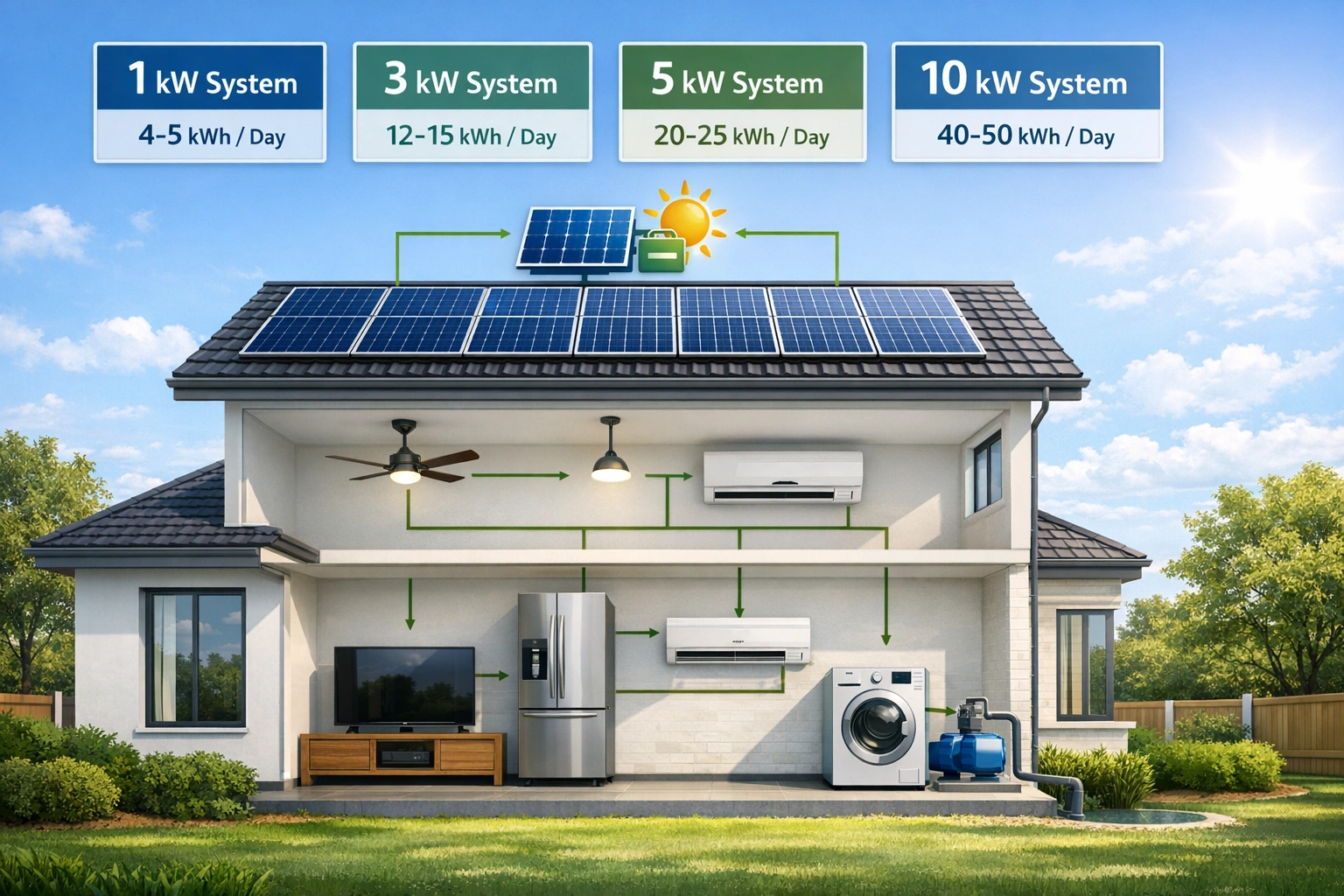
A 1 kW solar system typically generates 4–5 units (kWh) of electricity per day
So, when someone says they have a 5 kW solar system, it means their panels can produce around 20–25 units per day, depending on sunlight and system efficiency.
Step 1: Calculate Your Home’s Electricity Consumption
The most accurate way to determine how much solar power your home needs is by checking your monthly electricity bill.
Simple Rule of Thumb
1 kW solar system ≈ 120–150 units per month
Solar Capacity vs Electricity Usage
| Monthly Consumption (Units) | Daily Usage | Recommended Solar Size |
|---|---|---|
| 90–120 units | 3–4 units/day | 1 kW |
| 180–240 units | 6–8 units/day | 2 kW |
| 300–360 units | 10–12 units/day | 3 kW |
| 450–600 units | 15–20 units/day | 5 kW |
| 900+ units | 30+ units/day | 10 kW |
If you don’t have a bill handy, you can estimate usage based on appliances.
Step 2: Solar Requirement Based on Home Size & Usage
Small Homes / 1 BHK
Typical appliances:
-
LED lights
-
Fans
-
TV
-
Wi-Fi router
-
Phone & laptop charging
Monthly usage: 100–150 units
Recommended solar capacity: 1–1.5 kW
Medium Homes / 2 BHK
Typical appliances:
-
Lights and fans
-
Refrigerator
-
Washing machine
-
TV, laptop
-
Occasional water pump
Monthly usage: 250–350 units
Recommended solar capacity: 2–3 kW
Large Homes / 3 BHK
Typical appliances:
-
Multiple fans and lights
-
Refrigerator
-
Washing machine
-
Microwave
-
One or two ACs
Monthly usage: 400–600 units
Recommended solar capacity: 4–5 kW
Villas & Luxury Homes
Typical appliances:
-
Multiple ACs
-
Geysers
-
Kitchen appliances
-
Water pumps
-
Home office or EV charging
Monthly usage: 800+ units
Recommended solar capacity: 8–10 kW or more
Step 3: Appliances Matter More Than House Size
Many people assume solar sizing depends only on how big the house is—but appliance usage matters more.
High-power appliances significantly increase solar requirements:
-
Air conditioners
-
Electric geysers
-
Induction cooktops
-
Water pumps
-
Ovens and microwaves
For example, a small home with two ACs may need a larger system than a bigger home without ACs.
Step 4: Sunlight Availability & Location
Solar output depends heavily on peak sun hours, which vary by region.
-
Most parts of India receive 4–6 peak sun hours per day
-
Areas with strong sunlight require less panel capacity
-
Shade, dust, pollution, and roof direction affect performance
This is why professional solar sizing always includes a location-based analysis.
Step 5: Roof Space Required for Home Solar
Roof space is another critical factor.
Average Roof Area Requirement
| Solar System Size | Roof Space Needed |
|---|---|
| 1 kW | 80–100 sq. ft. |
| 3 kW | 240–300 sq. ft. |
| 5 kW | 400–500 sq. ft. |
| 10 kW | 800–1,000 sq. ft. |
If roof space is limited, high-wattage panels (540W–600W) can reduce the number of panels needed.
Grid-Tied, Off-Grid, or Hybrid: Does It Change kW Requirement?
Grid-Tied Solar System
-
Connected to electricity grid
-
No batteries required
-
Lowest cost
-
Ideal for reducing electricity bills
Solar size is based on average daily usage
Off-Grid Solar System
-
Works without grid
-
Uses batteries
-
Suitable for frequent power cuts
Usually needs slightly higher kW capacity due to battery losses
Hybrid Solar System
-
Grid + battery backup
-
Power even during outages
-
Flexible and future-proof
Best choice for homes needing both savings and backup
How Much Money Can Home Solar Save?
Solar is not just an eco-friendly choice—it’s a financial one.
-
3 kW system: saves ₹30,000–₹40,000 per year
-
5 kW system: saves ₹60,000–₹70,000 per year
-
Payback period: 4–6 years
-
System lifespan: 25+ years
After payback, the electricity you generate is almost free.
Common Mistakes to Avoid While Choosing Solar Size
-
Installing a smaller system to cut upfront cost
-
Ignoring future appliance additions
-
Not accounting for battery and inverter losses
-
Poor panel placement causing shading
-
Choosing low-quality panels or inverters
Solar is a long-term investment—planning correctly at the start saves money later.
Final Verdict: How Much kW Solar Panel Is Required for a Home?
There is no universal answer—but for most homes:
-
1–2 kW: Small households
-
3–5 kW: Average family homes
-
8–10 kW: Large homes or high consumption users
The right solar size depends on usage, appliances, roof space, sunlight, and backup needs. A proper assessment ensures maximum savings and reliable performance.
FAQs –
1. How many kW solar system is required for a normal house?
Most average homes need 3–5 kW.
2. Is 3 kW solar enough for a home?
Yes, for small to medium homes without heavy AC usage.
3. How many solar panels are needed for 1 kW?
Typically 2–3 panels, depending on wattage.
4. Can solar panels run AC in a home?
Yes, but ACs require higher kW capacity and often battery support.
5. Does solar work at night?
Solar panels don’t generate power at night; batteries or grid supply are required.
6. How long do solar panels last?
25–30 years with minimal performance loss.
7. Is battery compulsory for home solar?
No, only for off-grid or backup systems.
8. Can I expand my solar system later?
Yes, most systems are scalable if planned properly.
9. How much does a home solar system cost?
Cost depends on size, type, and component quality.
10. Is home solar worth it in 2026?
Absolutely—solar offers savings, energy security, and sustainability.