
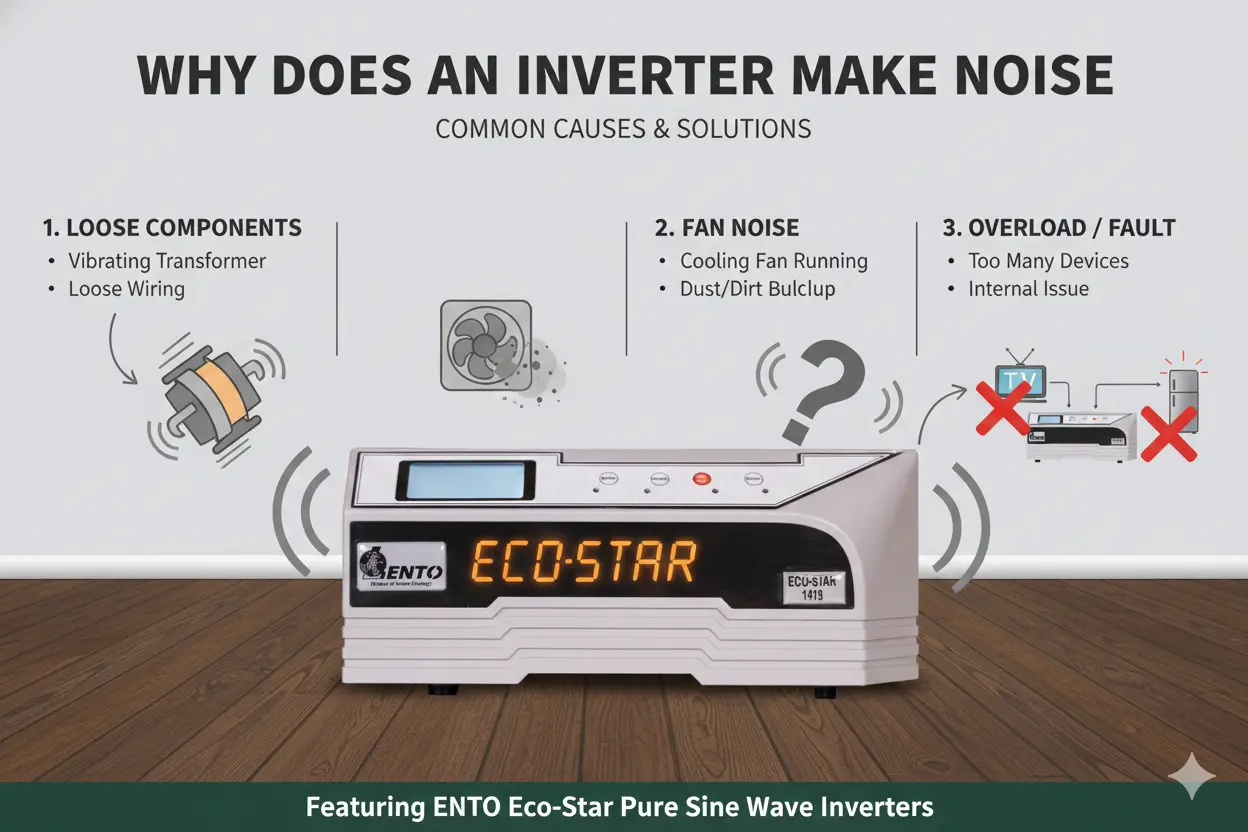
Why Does an Inverter Make Noise
03 January 2026
When customers call me and ask, why does an inverter make noise?, the concern is usually the same. They are worried something is wrong, or worse, that the inverter may fail suddenly. I’ve heard this question from homeowners using a small inverter for daily backup and from business owners running larger UPS and inverter systems. The truth is, inverter noise is not always a problem—but it should never be ignored.
In this blog, I’ll explain why inverter noise happens, what different types of sounds indicate, and when the noise is normal versus when it signals a serious issue. I’ll keep the explanation simple, practical, and based on real field experience.
Is It Normal for an Inverter to Make Noise
The first thing I always clarify is this: some inverter noise is normal. Inverters are electrical devices with internal components like transformers, cooling fans, and power circuits. These parts naturally produce sound during operation.
However, not all noises are equal. A soft humming sound is very different from loud buzzing, clicking, or rattling. Knowing the difference helps users respond correctly instead of panicking or ignoring a real warning sign.
Common Types of Inverter Noise You May Hear
Before diving into causes, it’s helpful to recognize the type of noise coming from your inverter. Each sound usually points to a specific reason.
Some sounds are continuous, while others occur only during charging or power cuts. Observing when the noise happens often tells half the story.
Transformer Humming Sound
One of the most common reasons why an inverter makes noise is transformer vibration. This usually sounds like a low humming or buzzing noise.
Transformers operate using electromagnetic fields. When electricity flows through them, the internal metal core vibrates slightly. This vibration produces a humming sound, especially when the inverter is under load or charging the battery.
In most cases, this type of noise is harmless and normal, particularly in older or heavy-duty inverter models.
Cooling Fan Noise During Operation
Many modern inverters are equipped with cooling fans. These fans turn on automatically when the inverter heats up during charging or backup mode.
Fan noise is usually noticeable during:
-
Heavy load usage
-
Battery charging
-
High ambient temperature
If the fan sound is smooth and steady, it is doing its job. However, if the fan becomes unusually loud or rough, it may indicate dust buildup or wear.
Buzzing Noise Due to Loose Components
Another common answer to why does an inverter make noise is loose internal or external components. Over time, screws, mounts, or internal parts may loosen due to vibration and heat cycles.
This often results in a rattling or vibrating noise that increases when load changes. Loose battery terminals can also cause buzzing sounds and should be checked immediately.
Ignoring this type of noise can lead to electrical damage or poor performance.
Noise Caused by Overloading
When an inverter is overloaded, it works harder than designed. This extra strain can cause louder humming, clicking, or even warning beeps.
Overloading forces internal components to draw higher current, increasing vibration and heat. This not only causes noise but also reduces inverter lifespan.
If the inverter becomes noisy only when multiple appliances are running, load imbalance is likely the cause.
Battery-Related Noise Issues
Sometimes the noise does not come from the inverter itself but from the battery. During charging, especially in lead-acid batteries, you may hear bubbling or gurgling sounds.
This happens due to gas formation inside the battery during charging. Mild bubbling is normal, but loud or continuous noise may indicate overcharging or low electrolyte levels.
Battery noise should never be ignored, as it can be a safety concern if left unchecked.
Clicking Sound During Power Changeover
Many users notice a clicking sound when the power goes off or comes back. This is the inverter relay switching between mains power and battery mode.
This clicking sound is normal and expected. It indicates that the inverter is responding correctly to a change in power supply. However, frequent or rapid clicking may suggest unstable input voltage.
Noise Due to Poor Installation Location
Where the inverter is installed plays a major role in how noticeable the noise feels. An inverter placed in a closed cabinet, against a wall, or on an uneven surface can amplify sound.
Hard surfaces reflect vibration, making normal operational noise seem louder. Poor ventilation also increases fan activity, leading to more noise.
A stable, well-ventilated installation area significantly reduces perceived inverter noise.
Dust and Environmental Factors
Dust accumulation inside the inverter is another overlooked reason why an inverter makes noise. Dust affects cooling fans and internal airflow, forcing the system to work harder.
Moisture and humidity can also cause corrosion, leading to unusual sounds over time. Regular cleaning and proper placement help avoid these issues.
When Inverter Noise Indicates a Problem
While many noises are normal, certain sounds should raise concern. These include:
-
Loud buzzing that suddenly appears
-
Grinding or scraping fan noise
-
Continuous clicking without power change
-
Sharp electrical crackling sounds
These noises often point to internal faults, component failure, or unsafe electrical conditions. Immediate inspection is recommended in such cases.
Impact of Inverter Quality on Noise Levels
Not all inverters are built the same. Design quality, component selection, and internal insulation all affect noise output.
High-quality inverter systems are designed to minimize vibration and manage heat efficiently. At lento, inverter designs focus on stable operation, reduced noise, and long-term reliability for both residential and commercial users.
Choosing a reliable brand reduces unexpected noise issues over the system’s life.
How to Reduce Inverter Noise at Home or Business
Noise reduction starts with correct usage and maintenance. Simple steps often make a noticeable difference.
Ensure proper ventilation, avoid overloading, keep the inverter clean, and tighten external connections periodically. Placing the inverter on a stable surface with vibration dampening also helps.
For businesses, professional installation and regular inspection are especially important to maintain quiet and stable operation.
Why Business Users Should Take Inverter Noise Seriously
In commercial environments, inverter noise is more than an inconvenience. It can indicate inefficiency, increased wear, or potential downtime.
Data centers, offices, clinics, and retail spaces rely on uninterrupted power. Abnormal noise may be the first sign of a developing fault. Early action prevents costly interruptions.
Lento India – Global B2B Solar Exporter
Lento India proudly exports solar and power solutions to 24 countries including Mexico, Chile, Peru, Ecuador, Dominican Republic, Afghanistan, Nigeria, Iraq, Uganda, Yemen, Syria, Iran, Oman, Morocco, Egypt, and Kuwait.
We supply solar panels, tubular batteries, SMF batteries, inverters, and Online UPS systems to global distributors, OEMs, and large-scale installers.
Lento India – Powering industries, homes, and communities across continents with trust and technology.
Conclusion: Listen to Your Inverter, It Tells a Story
So, why does an inverter make noise? Sometimes it’s completely normal, and sometimes it’s a warning sign. The key is knowing the difference. A calm humming or brief clicking is usually harmless, while loud, sudden, or unusual sounds deserve attention.
By understanding inverter noise causes, users can act early, protect their investment, and ensure reliable power backup. With well-designed systems from lento and proper care, inverter noise stays controlled, predictable, and safe.
👉 Become our distributor in your state.
FAQs
1. Why does an inverter make a humming noise?
Humming is usually caused by transformer vibration and is often normal.
2. Is fan noise in an inverter a problem?
No, fan noise during charging or heavy load is expected.
3. Why does my inverter click during power cuts?
The clicking sound comes from the relay switching power sources.
4. Can overloading cause inverter noise?
Yes, overloading increases internal stress and noise levels.
5. Is battery bubbling noise dangerous?
Mild bubbling is normal, but loud noise may indicate overcharging.
6. Why did my inverter suddenly become noisy?
Loose components, dust buildup, or internal faults may be the reason.
7. Does inverter placement affect noise?
Yes, poor placement can amplify normal operational sounds.
8. Can inverter noise reduce battery life?
Noise itself does not, but the underlying cause might affect performance.
9. Should businesses worry about inverter noise?
Yes, abnormal noise can signal potential system failure.
10. How can inverter noise be reduced?
Proper installation, load management, and regular maintenance help reduce noise.