Lithium Ion Battery for Inverter 200Ah: Capacity, Life Cycle, Safety and Maintenance Explained
16 May 2026
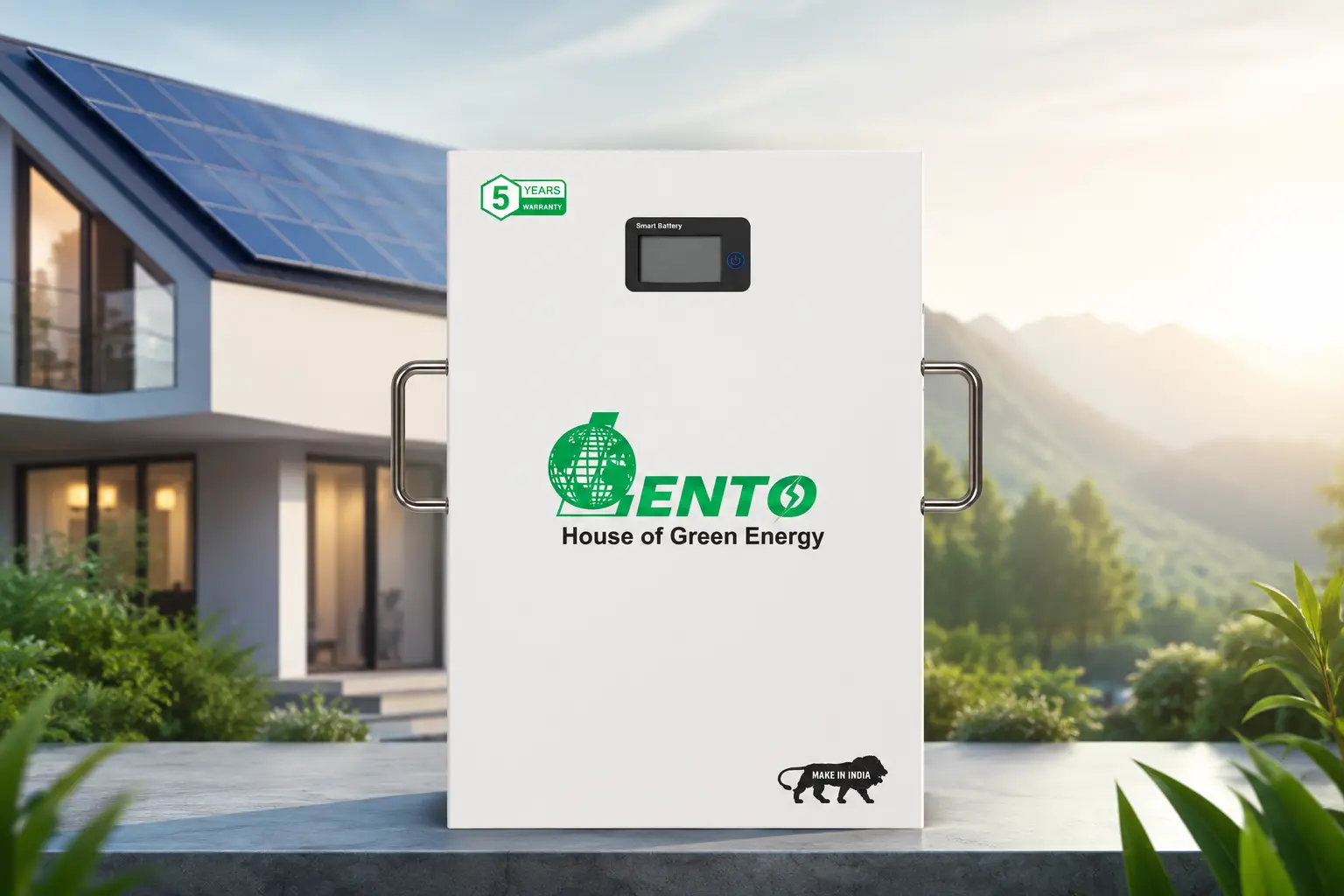
A lithium ion battery for inverter 200Ah is a rechargeable battery that stores 200 ampere-hours of charge and releases it as direct current (DC) when the mains supply is unavailable. Compared with conventional lead-acid options, a 200Ah lithium-ion battery is lighter, usually needs no routine upkeep and can be discharged more deeply. This guide explains how it works, what its numbers mean and what to check before choosing one.
What Is a Lithium Ion Battery for Inverter 200Ah?
The “200Ah” rating describes charge capacity: in theory, the battery can deliver 200 amps for one hour, or 20 amps for ten hours. Most 200Ah lithium batteries for inverter use are built on lithium iron phosphate (LiFePO₄) chemistry, a lithium-ion type known for thermal stability and long service life. You can read more about this chemistry on Lento’s Lithium Ion Batteries (LiFePO4) page.
Which battery types are commonly used with inverters?
Home and office backup systems typically use one of three battery families: lead-acid tubular batteries, sealed maintenance-free (SMF/VRLA) batteries and lithium-ion batteries. The right choice depends on the backup duration, available space, maintenance preference and the charging profile the system supports. Lento lists its SMF VRLA batteries and its lithium-ion battery range separately, which makes side-by-side comparison easier.
How Does a 200Ah Lithium Battery Work?
Inside the battery, lithium ions move between two electrodes through an electrolyte. During charging, ions travel to the anode and energy is stored. During discharging, they move back to the cathode and release electrical energy to the connected load. A Battery Management System (BMS) monitors the cells throughout this process.
Quick answer: A 200Ah lithium battery stores energy by moving lithium ions between its electrodes. The BMS keeps voltage, current and temperature within safe limits during charging and discharging.
Read More:- Best Inverter with Lithium Ion Battery for Home in India
Lithium-Ion Battery Capacity and Voltage
Lithium-ion battery capacity is shown in ampere-hours (Ah), but the energy it holds depends on voltage as well. Energy in watt-hours (Wh) is voltage multiplied by amp-hours.
|
Configuration |
Nominal voltage |
Nominal energy |
|
12.8 V, 200Ah LiFePO₄ |
12.8 V |
200 × 12.8 = 2,560 Wh |
|
25.6 V, 200Ah LiFePO₄ |
25.6 V |
200 × 25.6 = 5,120 Wh |
A single LiFePO₄ cell has a nominal voltage of about 3.2 V, so four cells in series give roughly 12.8 V and eight cells give roughly 25.6 V. Usable energy is lower than the nominal figure because manufacturers set a recommended depth of discharge, and conversion losses in the connected equipment also reduce the energy delivered. Check the datasheet for the exact usable capacity of the model you are considering.
Read more:- Benefits of Lithium Battery Inverter
How long will a 200Ah lithium battery run a load?
Quick answer: Divide the usable energy in watt-hours by the load in watts. For example, 2,000 Wh of usable energy supplying a 500 W load would last about 4 hours before losses are considered. Actual runtime varies with load, temperature, battery condition and the efficiency of the connected equipment.
Lithium Battery Charging and Discharging
Lithium battery charging and discharging follow a defined pattern. Most chargers use a constant-current stage first, then switch to constant-voltage as the battery approaches full charge. LiFePO₄ batteries need a charger or charging profile set for their chemistry, because settings meant for lead-acid or other lithium types may not suit them. Always follow the manufacturer’s recommended charge voltage and current limits.
Discharging works within limits set by the BMS, including a low-voltage cut-off and a maximum discharge current. Lithium batteries commonly allow deeper discharge than lead-acid batteries, but the permitted depth of discharge differs between manufacturers, so the datasheet is the reliable reference. Lead-acid batteries are generally advised to be discharged less deeply to protect their life; details are covered on Lento’s lead-acid tubular battery (C-10) page.
Lithium Battery Life Cycle
A lithium battery life cycle is counted in charge-discharge cycles: one full charge followed by one full discharge. A LiFePO₄ lithium battery can offer approximately 3,500 to 4,000 charge-discharge cycles, depending on battery chemistry, depth of discharge, charging current, operating temperature, and BMS quality. Actual cycle life may vary by manufacturer and usage conditions. Shallower discharges, moderate temperatures, and correct charging generally help a battery last longer.
Quick answer: A lithium battery with a cycle life of 3,500–4,000 cycles can undergo thousands of charge-discharge cycles before its capacity declines to the manufacturer's specified end-of-life level. Proper charging, suitable operating temperatures, and regular monitoring help maintain battery performance over time.
Lithium Battery Safety Features
Lithium battery safety features work at the cell level and the pack level. LiFePO₄ cells have a stable crystal structure that tolerates heat better than some other lithium-ion chemistries. At the pack level, a good BMS typically provides:
- Overcharge and over-discharge protection
- Short-circuit and over-current protection
- Temperature monitoring and cut-off
- Cell balancing, so individual cells stay at similar voltages
Protection features and certifications differ by manufacturer, so confirm them on the product datasheet rather than assuming they are identical across brands. Sealed lithium and SMF batteries also avoid the acid spills associated with flooded types, as described on Lento’s SMF VRLA Monoblock page.
Lithium-Ion Battery Maintenance
Lithium-ion battery maintenance is much lighter than for flooded lead-acid batteries: there is no water top-up and no acid-related terminal corrosion. A few habits still help:
- Keep the battery in a dry, ventilated place within the manufacturer’s temperature range.
- Check that terminals and cables are tight and clean.
- Avoid charging at very low temperatures unless the manufacturer states the battery supports it.
- Use only a compatible charger setting.
- Do not leave the battery deeply discharged for long periods.
For comparison, tubular batteries need periodic checks, which are outlined on Lento’s lead-acid tubular battery (C-20) page.
200Ah Lithium Battery vs 100Ah: Which Capacity Fits?
A 200Ah battery stores twice the charge of a 100Ah battery of the same voltage, so it can supply a given load for roughly twice as long. It is also larger and heavier, and it needs a system rated for its voltage. Two 100Ah batteries can sometimes be connected to reach 200Ah, but only when the manufacturer approves that arrangement. Lento’s guide on which lithium inverter battery is best explains how voltage, capacity and compatibility fit together.
Other Battery Brands Offering Lithium-Ion Batteries in India
1. Lento
Lento offers lithium battery solutions designed for reliable energy storage across different applications.
Its lithium battery range includes different voltage and capacity options, depending on the model.
2. Luminous
Luminous offers battery and power-backup solutions, with product availability varying across its range.
Check the specifications of individual lithium battery models for chemistry, capacity, and safety features.
3. Livguard
Livguard provides energy storage solutions, including battery technologies for different power requirements.
Its battery specifications, cycle life, and BMS features depend on the particular model.
4. Okaya
Okaya offers battery solutions across various applications, with product ranges differing by category.
Refer to the official product datasheet to verify lithium chemistry, rated capacity, and charging requirements.
5. Microtek
Microtek is known for its power-backup products and battery-related solutions for different applications.
Check the specific battery model to confirm lithium-ion availability, technical specifications, and compatibility.
6. Exide
Exide offers battery solutions across multiple applications and has a presence in energy storage technologies.
Its lithium battery specifications and features vary by product, so consult official documentation for accurate details.
Lithium vs Lead-Acid and SMF: A Quick Comparison
Lithium batteries are generally lighter, support deeper discharge and need less upkeep, while lead-acid and SMF batteries are a long-established technology that many existing systems are designed around. SMF batteries are sealed, which removes water top-ups, and Lento’s SMF VRLA Solar Hybrid Battery page shows one example of that design. For more battery questions, Lento also maintains a solar battery FAQ section.
Frequently Asked Questions
How many watt-hours does a 12.8 V 200Ah lithium battery hold?
It holds about 2,560 Wh of nominal energy (12.8 V × 200Ah). Usable energy depends on the depth of discharge the manufacturer specifies.
Is a 200Ah lithium-ion battery safe?
A lithium battery with a quality BMS and a stable chemistry such as LiFePO₄ is designed with multiple protections. Safety still depends on correct charging, proper installation and the manufacturer’s specifications.
Does a lithium battery need maintenance?
It needs very little: no water top-up, but occasional checks of terminals, temperature conditions and charging settings are still advisable.
How long does a lithium battery last?
Life is rated in cycles and varies by manufacturer, depth of discharge and operating conditions. Refer to the datasheet for the rated cycle life and the capacity retained at the end of that life.
Conclusion
The lithium ion battery for inverter 200Ah is defined by a few key numbers: voltage, capacity, depth of discharge, cycle life and BMS protections. Understanding these makes it easier to compare any 200Ah lithium battery fairly and to match it with a compatible charging setup. Always rely on the manufacturer’s datasheet for exact specifications.
Read More
- 5kW Inverter with Lithium Battery
- What Is a Lithium Battery Inverter?
- Top 5 Inverter Battery for Home: Best Tubular, Lithium & SMF Batteries
- 10 Best Inverter Batteries – Benefits, Features and How to Choose
- Solar Inverter with Lithium Battery