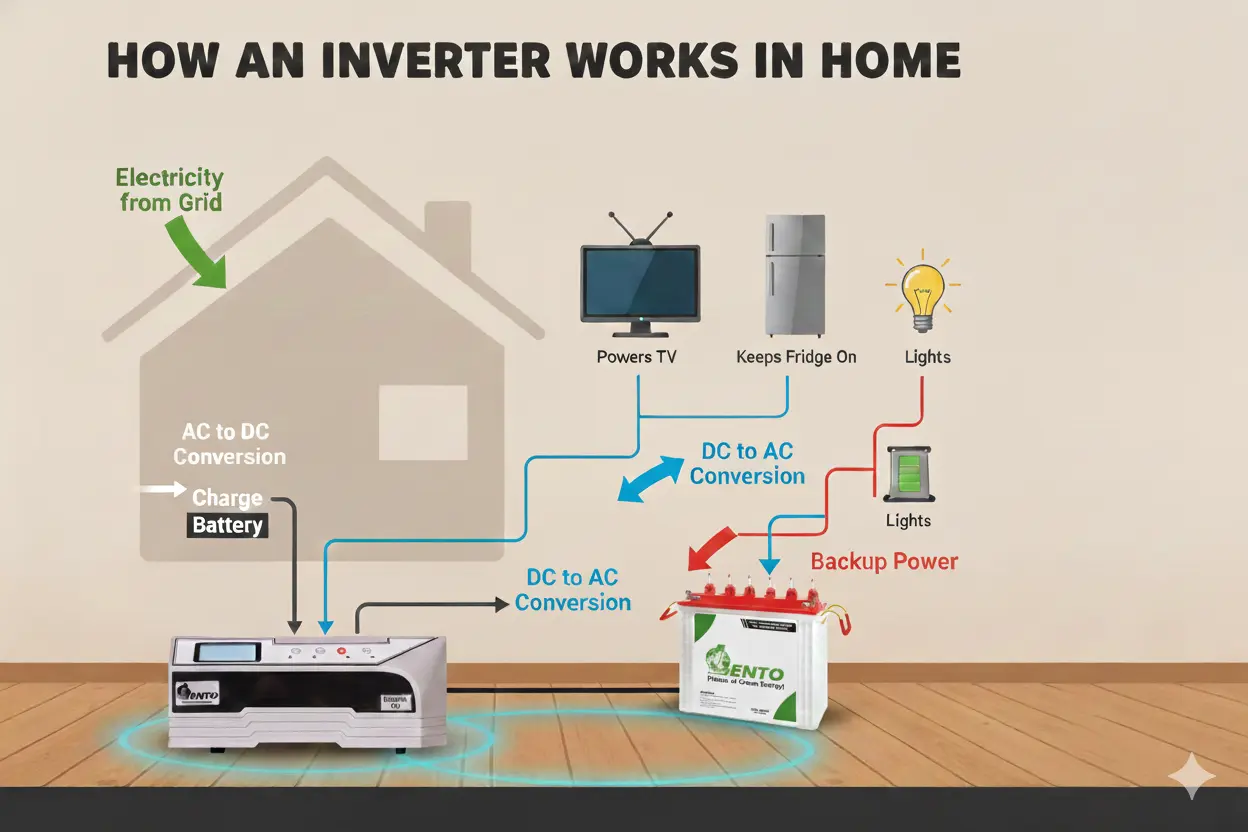
How Inverter Works in Home
03 January 2026
Power cuts are a reality in many regions, and over the years, I’ve seen how a home inverter quietly becomes one of the most important electrical appliances in a household. Yet, many users install an inverter without truly knowing how an inverter works in home conditions. This lack of clarity often leads to wrong usage, unrealistic expectations, and avoidable problems.
In this blog, I’ll explain how a home inverter works, step by step, in simple language. Whether you are a homeowner planning your first inverter or a business owner managing residential projects, this guide will help you understand the system clearly and confidently.
Why Home Inverters Are Essential Today
Modern homes depend heavily on electricity. From lighting and fans to internet routers and security systems, even short power interruptions can cause discomfort. A home inverter acts as a dependable backup system that automatically supplies power when the main grid fails.
What I often tell customers is this: an inverter is not just about backup time; it’s about continuity and peace of mind. Once you understand how an inverter works in home setups, you can use it more efficiently and extend its lifespan.
Basic Concept of How an Inverter Works in Home
At its core, an inverter converts stored energy into usable electricity. Homes receive alternating current from the grid, while batteries store energy in direct current form. The inverter bridges this gap by converting DC power from the battery into AC power suitable for household appliances.
This conversion happens instantly when a power cut occurs. The transition is so fast that most people don’t even notice it. This automatic operation is what makes home inverters practical and reliable.
Main Components of a Home Inverter System
To understand how an inverter works in home use, it’s important to know the role of each component. A home inverter system is simple but well-coordinated.
Inverter Unit
The inverter unit is the brain of the system. It manages power flow, monitors voltage, and switches between mains supply and battery power. It also ensures that the output voltage remains safe for home appliances.
Battery
The battery stores electrical energy for backup use. Its capacity determines how long the inverter can power your home during an outage. A healthy battery is crucial for consistent performance.
Main Power Supply
The grid supply charges the battery when electricity is available. The inverter regulates this charging process to protect the battery and maintain efficiency.
Step-by-Step Working of a Home Inverter
I’ll now explain the working process in a practical sequence, exactly how it happens in daily life.
When mains power is available, electricity flows directly to your home appliances. At the same time, the inverter charges the battery in a controlled manner. During this phase, the inverter acts as a charger and monitoring device.
When a power cut occurs, the inverter instantly detects the absence of grid power. It switches to battery mode and starts converting stored DC power into AC power. This converted power is then supplied to selected appliances through the inverter output.
Once mains power returns, the inverter switches back to grid supply and resumes battery charging. This entire process is automatic and requires no manual intervention.
Types of Home Inverters and Their Working Style
Different homes have different power needs, and inverter technology has evolved accordingly. While the basic principle remains the same, the working style varies slightly.
Square Wave and Modified Wave Inverters
These are basic inverter types often used for simple loads like lights and fans. Their working mechanism is straightforward, but they may not be ideal for sensitive electronics.
Pure Sine Wave Inverters
Most modern homes prefer pure sine wave inverters. They produce clean and stable power similar to grid electricity, making them suitable for all household appliances.
From my experience, pure sine wave inverters provide smoother operation and better appliance safety.
How Battery Charging Works in Home Inverters
Battery charging is a critical part of how an inverter works in home environments. The inverter does not simply push power into the battery. Instead, it follows a controlled charging process.
Initially, the inverter supplies higher current to recharge the battery quickly. As the battery approaches full charge, the inverter reduces current to prevent overcharging. This intelligent charging improves battery life and ensures safety.
Proper charging also depends on stable input voltage and correct battery selection.
Load Management in Home Inverter Systems
One common misconception is that an inverter can run everything in a home. In reality, load management plays a key role in performance.
Each inverter has a rated capacity. If connected appliances exceed this limit, the inverter may trip or drain the battery quickly. Understanding how an inverter works in home usage helps users prioritize essential loads like fans, lights, and communication devices.
Balanced load usage ensures longer backup time and reduces stress on the system.
Role of Inverter Efficiency in Daily Use
Efficiency determines how effectively the inverter converts battery power into usable electricity. Higher efficiency means less energy loss and longer backup time.
Modern inverters are designed to optimize efficiency under varying load conditions. However, efficiency can drop due to overheating, poor ventilation, or internal component wear.
Keeping the inverter in a clean, ventilated area significantly improves daily performance.
How Home Inverters Protect Appliances
Another important aspect of how an inverter works in home systems is appliance protection. Good-quality inverters regulate voltage and frequency to prevent damage.
They also include safety features like overload protection, short-circuit protection, and low-battery cut-off. These features protect both the inverter and connected appliances from electrical faults.
This is especially important for homes using sensitive electronics.
Integration with Solar Power in Homes
Many homes now combine inverters with solar panels. In such systems, solar energy charges the battery during the day, reducing dependence on the grid.
While the power source changes, the inverter’s working principle remains the same. It still converts DC power into AC power for home use. This integration improves energy efficiency and reduces electricity costs over time.
At lento, inverter systems are designed keeping both conventional and solar-compatible home requirements in mind.
Maintenance and Care for Smooth Inverter Working
Understanding how an inverter works in home settings also highlights the importance of maintenance. Simple practices can prevent most common issues.
Regular battery checks, clean connections, and proper ventilation go a long way. Ignoring maintenance often leads to reduced backup time and unexpected failures.
Preventive care ensures consistent performance throughout the inverter’s lifespan.
Lento India – Global B2B Solar Exporter
Lento India proudly exports solar and power solutions to 24 countries including Mexico, Chile, Peru, Ecuador, Dominican Republic, Afghanistan, Nigeria, Iraq, Uganda, Yemen, Syria, Iran, Oman, Morocco, Egypt, and Kuwait.
We supply solar panels, tubular batteries, SMF batteries, inverters, and Online UPS systems to global distributors, OEMs, and large-scale installers.
Lento India – Powering industries, homes, and communities across continents with trust and technology.
Conclusion: Knowing How Your Home Inverter Works Makes All the Difference
A home inverter may seem like a simple backup device, but its working involves careful coordination between power supply, battery, and internal electronics. When users understand how an inverter works in home environments, they make better choices, use power wisely, and avoid common problems.
With the right knowledge and a reliable system from lento, home power backup becomes dependable, efficient, and stress-free.
👉 Become our distributor in your state.
FAQs
1. How does an inverter work in home during a power cut?
It switches to battery power and converts stored DC energy into AC electricity for home use.
2. What happens to the inverter when mains power returns?
The inverter switches back to grid supply and starts charging the battery.
3. Can a home inverter run all appliances?
No, it can only support loads within its rated capacity.
4. Why does inverter backup time reduce over years?
Battery aging and improper usage gradually reduce storage capacity.
5. How important is battery capacity in home inverter working?
Battery capacity directly affects backup duration and system reliability.
6. Does inverter efficiency affect electricity consumption?
Yes, higher efficiency results in less energy loss and longer backup.
7. Can a home inverter protect appliances from voltage fluctuation?
Yes, good inverters regulate output voltage for appliance safety.
8. How does load affect inverter performance at home?
Higher load reduces backup time and increases battery stress.
9. Is ventilation important for inverter working?
Proper ventilation prevents overheating and improves performance.
10. Can home inverters work with solar power systems?
Yes, many home inverters are compatible with solar charging systems.